








O.Carm
Feast of St. Teresa of Avila
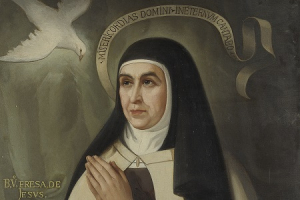
October 15th is the feast of St. Teresa of Avila or Teresa of Jesus. We join with our Discalced brother and sisters in celebrating the life of this remarkable Carmelite.
On March 12, 2022, we celebrated the 400th anniversary of the canonization of St. Teresa of Avila. Perhaps there has never been a canonization celebration at the Vatican matching the one held on March 12, 1622! Pope Gregory XV solemnly recognized the holiness of one woman, a Carmelite nun, Teresa of Avila, along with Ignatius of Loyola, Isidore of Madrid (also known as Isidore the Farmer), Francis Xavier, and Philip Neri. Never before had four people been declared saints in the same ceremony.
One must also be impressed with the fact that each of these new saints would continue to be major figures in the Church down to our current time. In the case of St. Teresa, she worked to establish enclosed monasteries according to what she understood was the “primitive rule” of the Order. Today many parts of the world benefit from Carmels founded in the tradition of Teresa, small oases of silence and prayer amidst the turmoil.
The saint's writings are recognized as masterpieces of 16th century Spanish literature and spirituality. Her reflections on the process for one to progress toward God through prayer and contemplation are considered benchmarks in the history of Christian mysticism. In 1970 she became the first female declared a “Doctor of the Church.”
Read St. Teresa's bio here
To learn more about the life of St. Teresa and her work and legacy, we suggest reading the books The Heirs of St. Teresa of Avila and "I Consider the Labor Well Spent" A Mini-Course on the Interior Castle, both published by Edizioni Carmelitane.
To access this and many other fine publications at Edizioni Carmelitane, click here.
To place your order please contact Edizioni Carmelitane at Questo indirizzo email è protetto dagli spambots. È necessario abilitare JavaScript per vederlo.
Celebrating At Home - 29th Sunday in Ordinary Time

Don’t give up!
(Luke 18:1-8)
Jesus tells this story of a persistent widow who wins the day against an unjust judge. St Luke says that the story is “about the need to pray continually and never lose heart”. God is not like the unjust judge, who delays in answering and finally gives in only when threatened. God will hear and answer the persistent cry of his people.
We, too, can be tempted to lose heart as we live in the midst of the evils of our own day. When will there be justice for the poor, the hungry, the disabled, and the disadvantaged, we wonder.
Sometimes in prayer, we realise that we are called to play our part with concrete actions which help to relieve the suffering of others. We know we cannot do it all by ourselves, but perhaps there is something that we can do.
St Luke uses this story to encourage his community of believers – to urge them not to lose heart as, surrounded by the evils of their day, they wait for the return of Jesus. They should keep faith and rely always on God’s goodness. Their persistence in prayer is an expression of their trust in God. Perhaps their prayer will show them what to do as they wait.
Just as Moses keeps faith with God in the battle against the Amalekites (first reading), so the disciples must remain in a faithful relationship with God. Prayer, understood as nourishing our relationship with God, rather than ‘saying prayers’, keeps us in this faithful relationship with God as we wait for Jesus’ return. That is the kind of faith Jesus wonders about in the final sentence.
- pdf Celebrating At Home - 29th Sunday in Ordinary Time [PDF](3.02 MB)
- default Celebrating At Home - 29th Sunday in Ordinary Time [ePub](3.37 MB)
- pdf Celebrando en Familia - 29 Domingo del Tiempo Ordinario(648 KB)
- pdf Celebrando in Casa - XXIX Domenica del Tempo Ordinario(646 KB)
- pdf Celebrando em Família - 29 Domingo do Tempo Comum(647 KB)
Jerez Museum Shows Life of St. Titus Brandsma
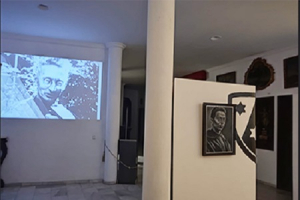
Recently the Provincial Council of the Betica Province (Southern Spain) inaugurated a temporary exhibition hall dedicated to St. Titus Brandsma, the Dutch Carmelite and recognized journalist in a provincial museum located in Jerez de la Frontiera. Brandsma's martyrdom in the Dachau Concentration camp in July 1942 resulted in his canonization on May 15, 2020 by Pope Francis at St. Peter's Square.
The exhibit contains sculptures, writings, and paintings by various European artists. It is a unique opportunity to learn more about the life and the gift of St. Titus to the Church.
The exhibit is located on the first floor of the Carmelite Museum. The museum is open to the public Thursday through Saturdays from 11 am until 6 pm and Sundays from 10 am until 2 pm. The display is open until November 26.
Documentary Film Shows Laudato Si’ to the World
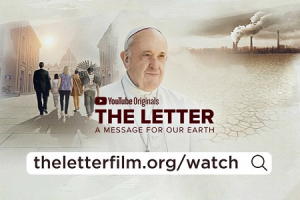
Pope Francis and his inspiring encyclical on the environment, Laudato Si’, has motivated millions of people to care for our common home and work against the climate crisis. Now the encyclical will be the focus of an upcoming feature-length documentary film entitled “The Invitation.” The film was released on October 4, the feast of St. Francis of Assisi.
“I wish to address every person living on this planet” wrote Pope Francis in the opening pages of his encyclical letter, and this is what Nicolas Brown, director of the film, from the production company Off The Fence, together with the Laudato Si’ Movement want to achieve with the film: that all the people of the world understand the Church’s concern for the cry of the earth and the poor.
“The Invitation” follows diverse ecological advocates from around the world: a climate refugee from Senegal, a young activist from India, two marine biologists from the United States, and the leader of an indigenous community in Brazil. They receive an “invitation” to meet Pope Francis at the Vatican.
Read more from the Laudato Si' website ...
The Letter (available on YouTube)
57th World Day of Communications Announced
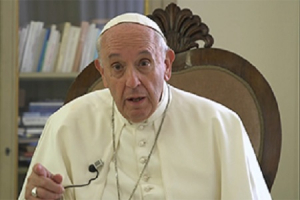
Speak with the Heart: Veritatem facientes in caritate
The Press Office of the Holy See announced the 2023 World Day of Social Communications on Thursday, September 29. The theme, "Speak with the heart: Veritatem facientes in caritate” (Doing the truth in charity) links to the theme for 2022-- "Listen with the Ear of the Heart"-- to form part of the path to the Church's celebration of the Synod in October 2023.
Speaking with the heart, explained a statement, means giving “a reason for your hope” and by doing so gently, “using the gift of communication as a bridge and not as a wall.”
It is an invitation to “go against the grain” at a time characterized by polarization and heated debates that exacerbate tempers – even in ecclesial life.
For more information ....
Gen Z Carmelite International Course 2021
The Carmelite Gen Z International Course took place from November 15-19, 2021 for participants from Europe, Africa and the Americas and from November 22-26 for those from Asia, Australia and Oceania.
The General Formation& Moderators were: José Cláudio de Alencar Batista, O. Carm., Delegate General, São Cristóvão, Brazil; Alejandro Lopez Lapuente Villalba, O. Carm., Salamanca, Spain; Robert Noel Rosas, O. Carm., Manila, The Philippines; Martin Pulickal, O. Carm., Thrissur, India; Daryl Moresco, O. Carm., Washington, D.C., USA and Benny Phang , O. Carm., President, Rome, Italy.
The keynote speakers, who spoke at the course, from Brisbane, Washington DC and Rome, were Cicilia Evi Yuwono, Brian Rhude, Benny Phang , O. Carm., Craig Morrison, O. Carm. and Donna Lynn Orsuto.
The Carmelite Gen Z from America, Africa, Europe who joined the meeting were: Daniel Ulises, O. Carm (El Salvador), João da Costa, O. Carm. (Portugal), Luca Zerneri, O. Carm. (Spain), Ashley Salima, O. Carm. (Zimbabwe), and in representation of Asia, Australia and Oceania participated: Joseph Tuan Bui, O. Carm. (Vietnam), John Lorenzo Morales, O. Carm. (Filipinas), Justin Shaji, O. Carm. (India) and Thomas Onggo, O. Carm. (Indonesia).
The conferences were held at Zoom for 5 days:
DAY 1
15 & 22 November 2021
Introduction
Psychological Perspective of Gen Z
DAY 2
16 & 23 November 2021
Socio
Cultural Realities of Gen Z
Morality for Gen Z
DAY 3
17 & 24 November 2021
Meet & Talk to Gen Z
Mapping the Generational Challenge
DAY 4
18 & 25 November 2021
Jesus Walks with Gen Z
Sharing the Gift of Carmel with Gen Z
DAY 5
19 & 26 November 2021
Final Statement,
Lectio Divina,
Evaluation
Read or Download:
-
pdf MORALITY FOR GEN Z: Offering the Formation of Good Conscience and Virtues(19.73 MB)
-
pdf THE BEDROOM CULTURE OF GEN Z: Psychological perspective and strategies to engage Gen Z(5.19 MB)
-
pdf JESUS WALKS THE ROAD TO EMMAUS (Luke 24:13-33) with Generation Z the Woke Generation(7.26 MB)
-
pdf MAPPING THE CHALLENGE in the Inter Generational Relationship(1.82 MB)
-
pdf LECTIO DIVINA The Rich Young Man Matthew 19:16-26(220 KB)
- GEN Z CARMELITE INTERNATIONAL COURSE 2021 Watch on YouTube
Celebrating At Home - 28th Sunday in Ordinary Time

An invitation for all
(Luke 17:11-19)
A major theme in St Luke’s Gospel is that the message of Jesus is for all: men and women, rich and poor, old and young, healthy and sick, gentile and Jew. No one is excluded.
It is no accident that the one grateful leper in this week’s Gospel is not a Jew but a Samaritan – an outsider, excluded by race, religion and his illness. He joins the others in asking a Jewish Rabbi for mercy.
In curing the ten lepers, Jesus gives them back to their families, their communities, their religious practice. No longer confined to isolated places for fear of spreading disease, they are free to take up their lives again. In short, as well as healing them physically, Jesus gives them back their lives.
All ten are cured, but only one, the Samaritan, fully experiences his healing as a moment of salvation; a moment when the mercy of God has broken into his life. Jesus says that it is the Samaritan’s faith that enables him to see what the other nine do not. The man is so moved by this realisation that he turns back to Jesus breaking into shouts of joy, praising God at the top of his voice.
The Samaritan’s faith has drawn him deeper into his relationship with God who heals him and sets him free. And that is God’s great desire for each of us.
The way of Jesus (and, therefore, of his disciples) is not to exclude, but to proclaim God as the God of all by working for healing, restoration and the good of all people. And to recognise and celebrate the presence of God we read in the concrete realities of our lives.
- pdf Celebrating At Home - 28th Sunday in Ordinary Time [PDF](3.63 MB)
-
default
Celebrating At Home - 28th Sunday in Ordinary Time [ePub](6.70 MB)
- pdf Celebrando en Familia - 28 Domingo del Tiempo Ordinario(911 KB)
- pdf Celebrando in Casa - XXVIII Domenica del Tempo Ordinario(816 KB)
- pdf Celebrando em Família - 28 Domingo do Tempo Comum(820 KB)
Elective Chapter of the Monastery in Porlamar, Venezuela
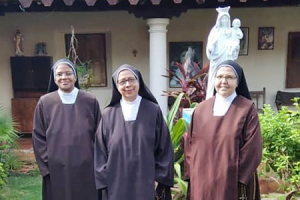
The elective chapter of the Monastery de la Anunciación in Porlamar, Venezuela, took place on September 23, 2022.
The monastery was founded on January 7, 1983, by four nuns from the Barcelona monastery, one from Tarrega and one from Vilafranca del Penedés. Permission had been obtain from the Congregation for Religious and Secular Institutes on November 18, 1982. The monastery now has 7 nuns with three from Porlamar.
The results of the elective chapter were as follows:
Prioress | Priora | Priora:
Hna Norma del Carmen Sánchez, O. Carm.
1st Councilor | 1ª Consejera | 1ª Consigliera:
Hna Mariela del Carmen León, O. Carm.
2nd Councilor | 2ª Consejera | 2ª Consigliera:
Hna Ludys Emilia González, O. Carm.
Director of Novices | Maestra de Novicias | Maestra delle Novizie
Hna Mariela del Carmen León, O. Carm.
Treasurer | Ecónoma | Economa:
Hna Ludys Emilia González, O. Carm.
Sacristan | Sacristán | Sacrestana:
Hna Roselys del Valle López, O. Carm.
Elective Chapter of the Monastery in Utrera
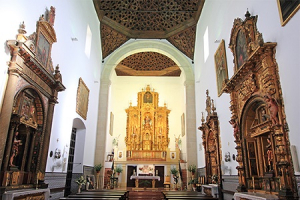
The elective chapter of the Monastery of the Purísima Concepción in Utrera, Spain, took place on September 28-29, 2022.
The monastery was founded in 1580 by the nuns of the Ecija monastery. In 1956, nuns from the Utrera monastery founded a monastery in Kakamega, Kenya. Although that monastery closed, seven sisters left to found a new community in Machakos, Kenya, in 1999.
The results of the elective chapter were as follows:
Prioress | Priora | Priora:
Sor María de Lourdes Lario Reverte, O. Carm.
1st Councilor | 1ª Consejera | 1ª Consigliera:
Sor Rosamaría Nduku Mbithi, O. Carm.
2nd Councilor | 2ª Consejera | 2ª Consigliera:
Sor Ana María Reina Jiménez, O. Carm.
3rd Councilor | 3ª Consejera | 3ª Consigliera:
Sor María Lucía Mutio Mbithi, O. Carm.
4th Councilor | 4ª Consejera | 4ª Consigliera:
Sor María Paulina Mumbua Ngotho, O. Carm.
Director of Novices | Maestra de Novicias | Maestra delle Novizie
Sor Rosamaría Nduku Mbithi, O. Carm.
Treasurer | Ecónoma | Economa:
Sor Ana María Reina Jiménez, O. Carm.
Sacristan | Sacristán | Sacrestana:
Sor María Lucía Mutio Mbithi, O. Carm.
Relic of St. Titus Placed in Sanctuary of New Martyrs
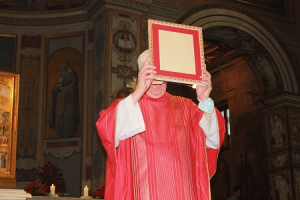
The General Congregation of the Order of Carmelites, meeting in Rome since Sept. 5, traveled to the Basilica of St. Bartholomew on the Island (San Bartolomeo all’Isola) on Friday, September 16, the final day of the meeting, to deliver an autographed letter from St. Titus Brandsma. The relic from the new saint was placed in the Sanctuary of New Martyrs in the church.
The Sanctuary of New Martyrs (Santuario dei Nuovi Martiri), was established following the Jubilee Year of 2000. The year before the jubilee, St. John Paul II established a "Commission of the New Martyrs" to investigate Christian martyrdom in the 20th century. The commission worked for two years on the premises of St. Bartholomew's Basilica, collecting some 12,000 files.
Andrea Riccardi, founder of the Community of Sant'Egidio, says, "I entered the great archive of the New Martyrs Commission, where letters, reports, memoirs are collected that, in recent years, have arrived in Rome from all over the world. I began to leaf through them. They were official letters from bishops' conferences around the world. But also memoirs from simple groups of religious. I read and got hooked. There were thousands of stories of contemporary men and women: Christians who had been killed as such."
The pope wanted the basilica to become the Memorial Site of the New Martyrs. The proclamation was solemnly celebrated on Oct. 12, 2002. The Orthodox Patriarch of Romania, Teoctist, witnessed the placement large icon dedicated to the Witnesses of the Faith of the 20th century was placed on the high altar.
On April 7, 2008, Pope Benedict XVI honored the memory of the Witnesses of the Faith of the 20th and 21st centuries with a visit to the Community of Sant'Egidio on its 40th anniversary. The six altars, the pope explained, "Remember the Christians who fell under the totalitarian violence of Communism, Nazism, those killed in America, in Asia and Oceania, in Spain and Mexico, in Africa. We ideally retrace many painful events of the past century. So many fell while fulfilling the Church's evangelizing mission: their blood mingled with that of native Christians to whom the faith had been communicated."
In his role as spiritual director of the National Union of Catholic Journalists, Brandsma encouraged publishers to oppose the publication of Nazi propaganda in Catholic newspapers. The refusal of Catholic newspapers to print Nazi propaganda sealed Titus's fate.
He had agreed to personally deliver to each publisher a letter from the Catholic bishops. This letter instructed the publishers not to comply with a new law requiring them to publish official Nazi announcements and articles. Titus met with fourteen publishers before being arrested by the Gestapo in Nijmegen on January 19, 1942.
Interned in Scheveningen and Amersfoort, Holland, he was deported to Dachau in June of that year.
Under that harsh regime, his health deteriorated rapidly and he was transferred to the camp hospital as early as the third week of July. He was subjected to chemical experiments before being killed by lethal injection on July 26, 1942. On the day of his death, the Dutch bishops published a pastoral letter strongly protesting the deportation of Jews from Holland.
Before his execution, Titus had prayed that God would help the nurse who would give the injection to repent of her actions in the camp. He also gave her his rosary beads, although she protested, saying she was a non-practicing Catholic. A few years later, the same woman went to a Carmelite priory to ask for forgiveness and was a witness in the beatification trial, which took place in Rome, Nov. 3, 1985.
Brandsma was canonized by Pope Francis in St. Peter’s Square on May 15, 2022.
St. Titus’ letter is on loan to the church.


