








Displaying items by tag: Calendar of Feasts and Memorials
St. Teresa of Jesus and Some of Her Insights
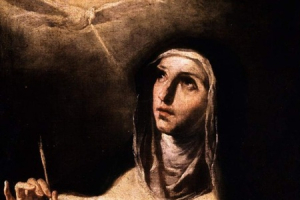
October 15 | Feast
Saint Teresa of Ávila is a 16th-century Carmelite mystic and Doctor of the Church. Also known as Saint Teresa of Jesus, she is remembered today for her practical spiritual wisdom and insights into prayer in her writings. She is also known for her wit. We provide 10 quotes from her writings for your reflection on October 15, her feast day.
“the Lord asks only two things of us: love for His Majesty and love for our neighbor.”
“Let nothing perturb you, nothing frighten you. All things pass. God does not change. Patience achieves everything.”
“Love turns work into rest.”
“In fact, all of your theological concepts may only serve to cool the fire of love in the will.”
“For prayer is nothing else than being on terms of friendship with God.”
“God save us from gloomy saints!”
“Beg our Lord to grant you perfect love for your neighbor and leave the rest to Him.”
“Never suppose that either the evil or the good that you do will remain secret, however strict may be your enclosure.”
“Those who risk all for God will find that they have both lost all and gained all”
“Untilled ground, however rich, will bring forth thistles and thorns; so also the mind of man.”
Read more ...
To learn more about the life of St. Teresa and her work and legacy, we suggest reading the following books from Edizioni Carmelitane:
The Heirs of St. Teresa of Avila, Edited by Christopher C. Wilson, PhD
"I Consider the Labor Well Spent" A Mini-Course on the Interior Castle, Joel Giallanza, CSC
A Spirituality of Truth: Philosophical Explorations of St. Teresa of Jesus, Macario Ofilada Mina
To access these and many other fine publications at Edizioni Carmelitane, click here.
St. Thérèse of the Child Jesus and the Holy Face
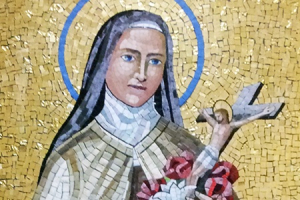
St. Thérèse of the Child Jesus and the Holy Face, Virgin and Doctor of the Church
October 1 | Feast
Saint Thérèse was born at Alençon in France on 2nd January 1873. Her parents were Louis Martin and Zélie Guérin. Following her death on September 30, 1897, of tuberculosis at the age of 24, she became known around the world as St. Thérèse of the Child Jesus and the Holy Face through the publication of her autobiography now known as Story of a Soul.
In 2025, the Church celebrates the 100th anniversary of St. Thérèse's canonization. During his homily at the canonization, the Pope Pius, “If everyone follows this path of spiritual childhood, everyone will see how easily reformation of human society can be achieved, which we have proposed since the beginning of our pontificate. On the wall of the niche in the crypt of St. Peter’s Basilica where Pius XI is buried, there is a mosaic of the saint.
Thérèse’s simple yet powerful spirituality has captured the imagination of Catholics and non-Catholics alike for the last century. Her sense of commitment led her to a profound experience of the love of God and of neighbor. She never had an easy life, but she did live with a great sense of peace and joy.
Read more about the life of St Therese
St. Thérèse, Her Family and Her Spirituality
Proclamation of St. Therese of Lisieux as Doctor of the Church
Edizioni Carmelitane published a book to celebrate the 150th anniversary of her birth in 1873 and the 100th anniversary of her beatification as well as the 100th anniversary of her canonization in 2025. More information is available here:
Singing the Mercies of the Lord Writings on Saint Thérèse of Lisieux
Also available as an ebook
Third Order Carmelite Fulton J. Sheen Beatified
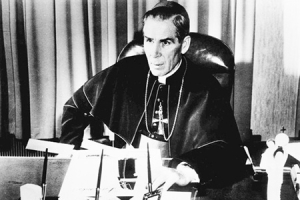
Former bishop of Rochester, New York, television personality in the 1950s, and renown preacher and speaker, Fulton John Sheen, was beatified in a ceremony in St. Louis, Missouri, on September 24, 2026. He was also a member of the Carmelite Third Order. He was professed by the Prior General, Kilian Lynch, in the chapel of Whitefriars Hall in Washington, DC., on July 17, 1948.
On the occasion of the beatification of this Third Order Carmelite, the prior general issued a letter to the Carmelite Family in the official languages of the Order. His letter can be found here.
In his homily at the beatification in St. Louis, Cardinal Luis Antonio Tagle began by greeting all present in the name of Pope Leo. Cardinal Tagle said, “Pope Leo rejoices at the beatification of his fellow countryman, his fellow Illinoisan, and brother bishop.”
At his regular Wednesday General Audience in St. Peter’s Square, the Pope spoke about the beatification and held up Archbishop Sheen as an example for everyone engaged in evangelization. Known affectionately as “Uncle Fultie,” Archbishop Sheen had a national program on the relatively new medium of television. An estimated 30 million viewers regularly watched Sheen’s Life Is Worth Living which aired from 1952 to 1957. He won an Emmy Award for this work.
“Tomorrow in Saint Louis, Missouri, Venerable Fulton Sheen will be beatified,” the pope said. “May the example and intercession of this holy bishop, known for his evangelizing work through the media, inspire many others likewise to find new ways of spreading the Gospel message with joyful enthusiasm."
In his letter declaring Bishop Sheen Blessed, Pope Leo described him as “a tireless preached of the Gospel through the modern means of communications and a diligent shepherd animated by missionary zeal.”
Cardinal Tagle, in his homily, highlighted two aspects of Sheen’s life that stand out in particular: his identity as an evangelizer, or proclaimer of the Gospel, and his vocation as a missionary shepherd.
For the Cardinal the American bishop’s fame as a communicator was secondary to his vocation as a missionary. Cardinal Tagle spoke of Sheen as having a communion with Christ and a communion with people, especially the poor and vulnerable. Tagle noted that the Mass’s three readings likewise place evangelization and mission at the center.
Cardinal Tagle retold the story of a conversation between Sheen and Pope Pius XII: Asked how many conversions he could claim, Sheen replied that he had never counted them, lest he be tempted to think they belonged to him. He described himself instead as “simply a porter” who was sometimes able to lead people to the open door of God’s house.
The evangelizer, the Cardinal explained, does not own the people he encounters, nor does he take credit for what God accomplishes in them. He simply opens the door.
The ceremony was held at The Dome at America’s Center in Saint Louis, Missouri. An estimated 50,000 were in attendance, “exceeding all expectations and hopes” according to one commentator. The entrance procession alone took some 26 minutes.
St. Albert of Jerusalem, Bishop and Lawgiver
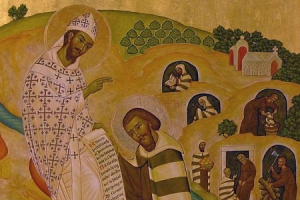
September 17 | Feast
There are very few facts known about the birth of Albert. The first biographical data comes from the Canons of Mortara. Albert entered into this order around 1170. Around 1180 Albert began developing connections with the pope and the Roman curia. Between 1181 and 1183 he undertook two missions at the behest of Alexander III and Lucio III. The following year he was nominated bishop.
He was bishop of Vercelli for 20 years but continued to be involved in diplomatic activity on behalf of the popes. Some of his work was settling conflict between people or cities. But he was also very active in the area of legislation and organizational structure. He would ultimately provide these gifts in service to the hermits on Mount Carmel.
In 1204 the Canons of the Holy Sepulchre elected Albert as patriarch of Jerusalem. Pope Innocent III added the responsibilities. Of papal legate for the Holy Land and Middle East. Albert arrived in Palestine in 1206, residing at Acre since Jerusalem was occupied by the Saracens. Here too Albert became the mediator of various disputes. In fact, this role as mediator has led some to conclude that Albert became involved with the hermits on Mount Carmel because of a dispute among the members.
When exactly Albert wrote his formula vitae for the hermits is open for discussion. This document was addressed to someone named “B” which later traditions named “Brocard.” Albert becomes referred to in the Carmelite Order as “the lawgiver” for his development of a rather short document outlining the life of the hermits on Mount Carmel. Albert’s formula vitae which will eventually become the Rule of the Order.
By the 16th century Albert’s feast was celebrated on April 8. Later it was customary to celebrate his feast on September 17. There were attempts to have Albert proclaimed as a martyr but the Order continues to celebrate him as “bishop and legislator of our Order.”
Read more about the life of St. Albert ...
Read about the Carmelite Rule | Text of the Rule ...
Watch here the Reflections on St. Albert of Jerusalem with Br. Patrick Mullins O. Carm.
Watch here the Interview with Br. Patrick Mullins O. Carm, an expert on St. Albert.
Books Published by Edizioni Carmelitane on St. Albert of Jerusalem:
Celebrating St. Albert and His Rule. Rules, Devotion, Orthodoxy and Dissent
Edited by Michelle Sauer and Kevin Alban, O. Carm.
The Bollandist Dossier on St. Albert of Jerusalem
Daniel Papenbroeck, SJ | Edited and translated by Patrick Mullins, O. Carm.
St. Albert of Jerusalem and the Roots of Carmelite Spirituality
Patrick Mullins, O. Carm.
The Life of St. Albert of Jerusalem. A Documentary Biography. Part 1
Patrick Mullins, O. Carm.
The Life of St. Albert of Jerusalem. A Documentary Biography. Part 2
Patrick Mullins, O. Carm.
Albert and His Rule
Michael Mulhall, O. Carm.
A Pattern for Life. The Rule of St. Albert and the Carmelite Laity
Patrick Thomas McMahon, O. Carm.
The Carmelite Rule. Proceedings of the Lisieux Conference. 4-7 July 2005
Various Authors
Saint Teresa Margaret Redi (OCD), Virgin
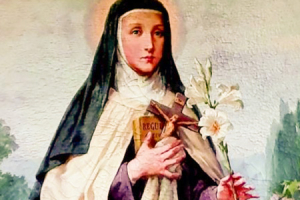
1 September Optional Memorial
St. Teresa Margaret Redi, OCD., was recognized as an intensely spiritual religious with a profound devotion to the phrase "God is love." She was also noted for her humble service to the sick.
One of the girls who had graduated from the boarding school several years before approached one of Anna Maria’s teachers to thank her for the education and the Christian formation, as she was entering the Carmelites. Anna Maria saw the deep joy on this young woman’s face and instantly knew that she, too, desired to enter the Carmelites.
In the spring of 1764, she applied to the Monastery of St. Teresa in Florence and was admitted in November. She took the name Teresa Margaret of the Sacred Heart and professed her vows in March of 1766.
Teresa was assigned the role of community nurse, and she tenderly cared for the suffering sisters in her care, particularly those experiencing mental illness. Teresa devoted herself to caring for her fellow sisters and cultivating her robust interior life. As a Carmelite sister, Teresa maintained the disposition of joy that drew her to the Order, despite rebukes and harsh treatment.
Teresa died at the age of twenty-three, on March 11, 1770, in the midst of an outbreak of a disease in the monastery. She continued caring for other ill nuns until she reached her deathbed. Teresa’s body, swollen from disease, at the time of her funeral, had miraculously been restored to its healthy form.
To read more ...
Blessed Jacques Retouret, Priest and Martyr

26 August Optional Memorial
Excerpts from the Homily of St. John Paul II at the Beatification of 110 Victims including Carmelite Jacques Retouret
Martyrdom is a special gift of the Holy Spirit: a gift for the entire Church. It finds its culmination in today’s liturgy of Beatification, in which we give special glory to God: “Te martyrum candidatus laudat exercitus.” God, who through a solemn act of the Church—Beatification—crowns their merits, at the same time reveals the gift of grace bestowed upon them, as the liturgy proclaims: “Eorum coronando merita, tua dona coronas” (Missale Romanum, Praefatio de Sanctis I).
The new Blesseds, faced with the choice of abandoning the demands of the faith or dying for it, strengthened by God’s grace, placed their own fate in His hands. The martyrs renounced defending themselves not because they held life in low esteem, but because of their total love for Jesus Christ.
9. This morning, dear Brothers and Sisters, our thoughts turn to the sixty-four French priests who died along with hundreds of others on the “pontoons of Rochefort.” As Saint Paul exhorted Timothy, they “fought the good fight of the faith.” They even endured a long ordeal for having remained faithful to their faith and to the Church. They died because they remained steadfast to the very end in affirming their close communion with Pope Pius VI.
In profound moral solitude, they were committed to maintaining a spirit of prayer. “Tormented” by hunger and thirst, they uttered not a single word of hatred toward their tormentors. Slowly, they allowed themselves to be identified with the sacrifice of Christ, which they celebrated by virtue of their ordination. Here they are, then, presented to our gaze as a living sign of the power of Christ at work in human weakness.
In the depths of their distress, they retained a sense of forgiveness. The unity of the faith and the unity of their homeland appeared to them as more important than anything else. We can therefore joyfully echo the words of Sacred Scripture: the souls of these righteous ones are in God’s hands. “They seemed to perish. Their departure was regarded as a misfortune, but they themselves are at peace.”
Read more ...
Blessed Angelus Augustine Mazzinghi, Priest
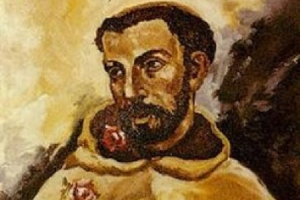
17 August Optional Memorial
Bl. Angelo Mazzinghi was a noted preacher, prior, and reformer, teacher of theology and was known for his pious devotion to the Holy Eucharist, the Blessed Virgin Mary and the Carmelite Rule.
The exact date of his birth is unknown but was certainly before 1386. He is sometime referred to as Angelo Agostino but Agostino is his father’s name. He was received into the Carmelite Order in 1413.
He was the first member of the reformed observance of Our Lady of the Woods (S. Maria delle Selve) and served as the prior of several of the Carmelite communities. Around 1415 he was already ordained and was assigned to preach at the Selve in the years 1435-1430 and 1437 and then he was prior at Florence in the years 1435-1437.
He taught theology in both Florence and Frascati but was noted for his preaching. On one particular occasion of preaching, according to fellow Carmelite Nicholas Calciuri who was a witness, roses and lilies poured from Angelo’s mouth, which two angels wove into a crown. In his iconography, he is often shown with flowers falling from his mouth as he preaches.
Before his death he retired to a Carmelite house where he spent the remainder of his life in contemplation and meditation. Bl. Angelo died in Florence in August 1438 at the age of 53. He was buried in Santa Maria del Carmine in Florence. His relics were moved to the Brancacci Chapel in 1739 and to the main altar in 1930.
Pope Clement XIII approved of his devotion and beatified Blessed Angelo on March 7, 1761. The Florentines called him “Blessed Angiolino.”
To read more ...
Blessed Isidore Bakanja, Martyr
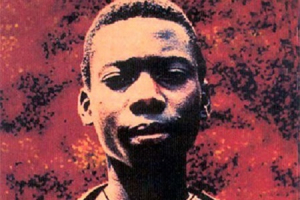
12 August Optional Memorial
On the surface, Bakanja was a simple, unassuming boy from one of many Congolese villages. But he stood out for his goodness of character. Those who knew him, like Remacle Linganga, the labor leader of Coquilhatville, remembered him as a very affable and sweet person, who did not like unnecessary disputes, friendly with anyone regardless of color, and devoid of malice. However, he was by no means just an accommodating person. For he was intelligent and knew what he wanted, what was good to accept and what was to be avoided. He was loyal and of good character, a real man despite being still very young. Without getting lost in idle chatter he willingly dialogued with other workers from whom he learned many things. Above all he was sure to listen especially when talking about useful and interesting things.
There was one topic that particularly captured his attention, and that was when the talk refered to the God of Jesus. He would listen, reflect, and ask questions. So he learned that those speaking about this Jesus were men called missionaries, who had come from Belgium. Bakanja already had a faith of his own but it was somewhat confused. Wanting to better understand who this God these missionaries came to talk about is, he decided to go to them in Boloko-Nsimba, a village quite close to Coquilhatville. The missionaries gave quite satisfactory answers to his questions, answers capable of giving a new and decisive turn to his life.
It was no small point for him to learn that God, creator of heaven and earth and everything that exists, cared for human creatures, without exception, regardless of race or color, and that, moreover, he sent his Son Jesus for them. It was even amazing, almost unbelievable, that God even cared for him, just for him, and that God loved him personally, that Jesus his Son became man out of love for human creatures.
Soon Bakanja literally fell in love with Jesus and also with his Mother Mary. He was just delighted with everything he was learning. His state of mind was like that of one who had discovered a treasure. The treasure he discovered was greater-than anything he could have imagined, so it was worth striving for. It was Jesus himself who compared the Kingdom of God to a treasure whose discovery filled those who find it with joy to the point that they are willing to leave everything else behind in order to possess it. Then, and this was the best discovery, Bakanja was able to discover that he himself was God's treasure, because Jesus gave his own life even for him.
Isidore Bakanja lived his faith simply, but with great intensity and joy. He cultivated it with catechesis that made him discover on an ever more profound level the great things of God. Christianity, taken seriously, gives the right flavor to life. Isidore cared deeply about knowing God and also about praying to him. After all, praying, for Bakanja, is nothing more than being in a relationship as friend with his Lord with whom he knows himself to be heard, and with his mother Mary whose garment he wears. The faith of this adolescent seeps out from the serenity that pervades him and his desire to share it; he decided that the gift he received is not only for himself, but is for others as well, perhaps for everyone. The mother of Jesus, through her scapular, will be like a flag pointing to the treasure she carries in her heart. For, in truth, it is too great to keep only for herself.
To read more ...
St. Mary of Jesus Crucified (OCD), Virgin
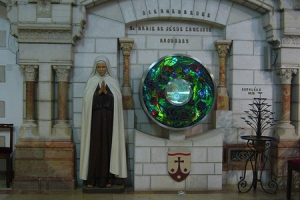
25 August Optional Memorial
Selection from the Homily of Pope Francis for the Canonization of Mariam of Jesus Crucified Baouardy
The Acts of the Apostles have set before us the early Church as she elects the man whom God called to take the place of Judas in the college of the Apostles. It is has to do not with a job, but with service. Indeed, Matthias, on whom the choice falls, receives a mission which Peter defines in these words: “One of these men... must become a witness with us to his resurrection”, the resurrection of Christ (Acts 1:21-23). In this way Peter sums up what it means to be part of the Twelve: it means to be a witness to Jesus’ resurrection. The fact that he says “with us” brings us to realize that the mission of proclaiming the risen Christ is not an individual undertaking: it is to be carried out in common, with the apostolic college and with the community.
An essential aspect of witness to the risen Lord is unity among ourselves, his disciples, in the image of his own unity with the Father. Today too, in the Gospel, we heard Jesus’ prayer on the eve of his passion: “that they may be one, even as we are one” (Jn 17:11). From this eternal love between the Father and the Son, poured into our hearts through the Holy Spirit (cf. Rom 5:5), our mission and our fraternal communion draw strength; this love is the ever-flowing source of our joy in following the Lord along the path of his poverty, his virginity and his obedience; and this same love calls us to cultivate contemplative prayer. Sister Mariam Baouardy experienced this in an outstanding way. Poor and uneducated, she was able to counsel others and provide theological explanations with extreme clarity, the fruit of her constant converse with the Holy Spirit. Her docility to the Holy Spirit made her also a means of encounter and fellowship with the Muslim world.
To read more ...
St. Teresa Benedicta of the Cross (OCD), Virgin and Martyr
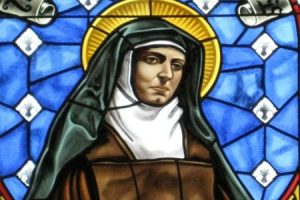
9 August Memorial (Feast in the provinces of Europe: Patron of Europe)
Selection from the Homily of St. Pope John Paul II for the Canonization of Edith Stein
Because she was Jewish, Edith Stein was taken with her sister Rosa and many other Catholic Jews from the Netherlands to the concentration camp in Auschwitz, where she died with them in the gas chambers. Today we remember them all with deep respect. A few days before her deportation, the woman religious had dismissed the question about a possible rescue: “Do not do it! Why should I be spared? Is it not right that I should gain no advantage from my Baptism? If I cannot share the lot of my brothers and sisters, my life, in a certain sense, is destroyed.”
From now on, as we celebrate the memory of this new saint from year to year, we must also remember the Shoah, that cruel plan to exterminate a people — a plan to which millions of our Jewish brothers and sisters fell victim. May the Lord let his face shine upon them and grant them peace (cf. Nm 6:25f.).
For the love of God and man, once again I raise an anguished cry: May such criminal deeds never be repeated against any ethnic group, against any race, in any corner of this world! It is a cry to everyone: to all people of goodwill; to all who believe in the Just and Eternal God; to all who know they are joined to Christ, the Word of God made man. We must all stand together: human dignity is at stake. There is only one human family. The new saint also insisted on this: “Our love of neighbor is the measure of our love of God. For Christians — and not only for them — no one is a ‘stranger.’ The love of Christ knows no borders.”
5. Dear brothers and sisters! The love of Christ was the fire that inflamed the life of St Teresa Benedicta of the Cross. Long before she realized it, she was caught by this fire. At the beginning she devoted herself to freedom. For a long time Edith Stein was a seeker. Her mind never tired of searching and her heart always yearned for hope. She traveled the arduous path of philosophy with passionate enthusiasm. Eventually she was rewarded: she seized the truth. Or better: she was seized by it. Then she discovered that truth had a name: Jesus Christ. From that moment on, the incarnate Word was her One and All. Looking back as a Carmelite on this period of her life, she wrote to a Benedictine nun: “Whoever seeks the truth is seeking God, whether consciously or unconsciously.”
To read more ...


