








O.Carm
JPIC Webinar on Christian Spirituality

Carmelite Calls for Action on Climate Crisis
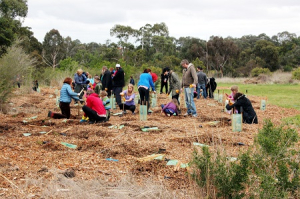
2023's Record Heat Must Spur Action, Not Despair
In an article in Earthbeat—A Project of the National Catholic Reporter news service, Carmelite Eduardo Scarel, a member of the Province of Aragon, Castille, and Valencia (ACV) suggests that Catholics and others should feel empowered to take action by the latest dire forecasts on climate change.
Numerous scientific bodies, using different data sources and analyses, all reached the conclusion that 2023 was the hottest year on planet Earth since record-keeping began in the 1850’s. Greenhouse gas emissions released from burning coal, oil and gas trap heat in the atmosphere and are the primary drivers of climate change. While factors like El Niño and declining levels of cooling aerosols in the atmosphere contributed some to 2023's record-shattering temperatures, scientists were clear the main factor was emissions from fossil fuels.
The year 2023 surpassed the previously hottest year, 2016, by the largest margin ever. The hottest 10 years on record have all occurred in the past decade. Looking ahead, 2024 has a one-in-three chance of exceeding 2023's record heat and is virtually certain to rank among the five hottest years.
In December at the COP28 U.N. Climate Summit, nations for the first time agreed on the need to transition from fossil fuels — a step that scientists and environmental activists have urged for years but one that had never been included within a U.N.-negotiated document.
While the text from the summit lacks specifics on how or when to end the use of fossil fuels, Catholics and other people of faith have a role to play in holding their respective countries accountable —as Pope Francis called for in a speech to heads of state and government at COP28, the U.N. Climate Change Conference on December 2 in Dubai. Cardinal Pietro Parolin, Vatican secretary of state, delivered the talk in the stead of Pope Francis.
Celebrating At Home - 5th Sunday in Ordinary Time
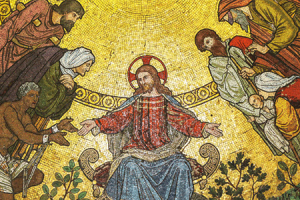
On the journey with Jesus
(Mark 1:29-39)
The story of Jesus’ first day of ministry in Capernaum continues in the Gospel for this Sunday. After leaving the synagogue where he has healed the possessed man Jesus goes to Simon’s house. He heals Simon’s mother-in-law and restores her to her rightful place as hospitality provider - a sacred ministry in Jewish households. No words are spoken. Jesus simply holds her hand and helps her up. In doing so he would have broken taboos about touching a sick person, and touching a woman to whom he was not related. But in Mark’s Gospel law and custom cannot stand in the way of God’s healing power.
That evening, after sunset, after the Sabbath day was over, people begin to bring the sick and possessed to Jesus for healing.
Notice how ‘local’ all these elements of Mark’s story are: a local man in the local synagogue, a local woman in her own house, local people crowd around the door, local people are brought for healing.
In all the healing stories, Mark presents Jesus in conversation with each individual. There are no ‘en masse’ healings – each person gets individual treatment – sometimes with words, sometimes by touch, sometimes both. There is a sense of intimacy in Jesus’ healing ministry.
Interestingly, the devils seem to know exactly who Jesus is, but the human beings take much longer to recognise Jesus.
In the early morning Jesus goes off to pray by himself.
Jesus prays both in public worship in the Synagogue and in moments of quiet communion with God. Mark helps us understand that both are necessary for would-be disciples. Jesus begins and ends his day in prayer.
When they find Jesus the disciples beg him to return to the town, but Jesus has other ideas. His preaching and healing is not only for the people of Capernaum, but for the whole people of Galilee.
No doubt, the disciples enjoyed being in the presence of such a wonder-worker as Jesus! But Jesus’ focus is not himself; it is his mission of proclaiming the Good News of God’s love through healing words and actions. The healing stories underline the idea that contact with God through the person of Jesus brings healing and wholeness, not death and destruction.
The preaching of Jesus together with the healing/ wholeness stories is fundamentally about the transformation of real, living human beings into the new People of God.
- pdf Celebrating At Home - 5th Sunday in Ordinary Time [PDF](3.06 MB)
- default Celebrating At Home - 5th Sunday in Ordinary Time [ePub](5.10 MB)
- pdf Celebrando en Familia - V Domingo del Tiempo Ordinario(508 KB)
- pdf Celebrando in Casa - V Domenica del Tempo Ordinario(497 KB)
- pdf Celebrando em familia - V Domingo Do Tempo Comum(700 KB)
Bl. Candelaria of St. Joseph, Virgin
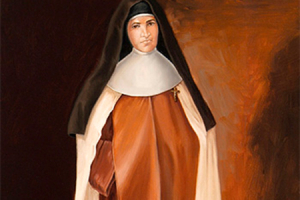
1 February Optional Memorial in Latin America
Bl Candelaria was born Susana Paz-Castillo Ramírez in 1863. She enthusiastically welcomed the call of God to holiness, and since her youth, stood out in practicing living and effective charity, with which she cared for, consoled and healed the sick and wounded that strife had left on the streets of her birth city.
Homily at the Beatification Mass for Bl Candelaria
Cardinal José Saraiva Martins
1. Listening to the words of Jesus in the Gospel just proclaimed, the stupendous reflections of St. Augustine come to mind, when he affirms that if, unfortunately, because of a fire the four Gospels were destroyed and only the words "God is love" were saved, the substance would have remained intact. In what religion is love everything, as in Christianity? The Christian faith is an act of love, as Benedict XVI reminded us in his first encyclical. The exordium of today's Gospel passage is emblematic: "Jesus says to his disciples: 'If you love me, you will keep my commandments.'" In this "if you love me" is the synthesis of Christianity.
He who loves does everything out of love, even the impossible things, without being weighed down by them, because he observes the interior law, which is more demanding than any external discipline. And because the language of love is not words but the union of the one who loves with the beloved, in the seven verses of this Sunday's Gospel Jesus speaks seven times of union. Indeed, to be in: expresses the fascinating verb of supreme and total union: the disciples are "in" Christ and Christ "is in" the Father.
2. The Church's liturgy, with wise pedagogy, is preparing us for the great Solemnity of Pentecost. The first reading, taken from the Acts of the Apostles, presents us with the Holy Spirit, received through the imposition of the hands of the Apostles. The Gospel, on which we are meditating, also speaks of the Holy Spirit whom the disciples will receive as the Paraclete: which in Greek sometimes means Comforter, sometimes Advocate, or both. St. John insists in his Gospel on the title Paraclete, since historically the Church, after Easter, had a living and strong experience of the Spirit as consoler, defender, ally in internal and external difficulties, in persecutions and in everyday life. In the first centuries, when the Church is persecuted, she has the daily experience of trials and condemnations; it is then that she sees in the Comforter the divine advocate and defender against her human accusers. The Comforter is experienced as the one who assists the martyrs and who, before the judges, in the tribunals, puts on their lips the word that no one is able to refute. After the era of persecutions, the accent shifts and the predominant meaning is that of comforter in the tribulations and anguish of life.
In contemplating the Paraclete we feel the strength to honor and invoke the Holy Spirit, and to be ourselves other "paracletes," "comforters," in the full sense of the word, according to the divine measure. If it is true that the Christian must be alter Christus, another Christ, it is also true that he must be alter Paraclitus, another consoler.
To be consolers, paracletes, is a quality that all the saints have had in general: like the Good Samaritan, they have worked to soothe the wounds of so many brothers and sisters with the balm of mercy and the oil of Christian hope. With a soul full of joy today, contemplating the life and example of the new Venezuelan Blessed, and her charism that is transmitted in her work, through her daughters, the Carmelite Sisters of the Third Carmelite Order in Venezuela, we observe that a true "art of consoling" stands out as a dominant characteristic. In her simplicity, Mother Candelaria lived and proposes to us, with all its actuality, a true theology of consolation. This explains the facts of her daily life that, even with a simple word or gesture, always lived with her constant and ardent prayer and a lively and deep faith, she was able to get close to so many sick people. Certainly, it was God who "consoled" through her.
In the testimonies collected for her cause of beatification, it is striking to note how her love for God was intimately united to her love for her neighbor. In fact, from a very young age she dedicated herself to the service of others, in the care of the sick or in the catechesis of young people and adults, with her maternal attention to the sisters of her congregation. A life consumed by spending hours and hours at the bedside of the sick, to the point of starving herself to be able to feed the sick in a hospital and to make hard journeys to find money for the hospitals.
And so, year after year, always - and perhaps this is one of the most attractive characteristics of Blessed Candelaria–with great simplicity, without drama, always serene and ready to listen, without ever complaining about the people who made the life of Christian service difficult for her. A charity that reached the heroism: like being left without a bed to sleep in, for having given it to a sick person; preferring to take care of the most contagious sick or people who were enemies of the faith; assisting with maternal gentleness the lost women who were hospitalized. Her total dedication to her neighbor was such that even the most unbelieving doctors were amazed by the generous dedication of this small and simple sister.
4. The Blessed whom we venerate today testifies, with her entire life, that supernatural love is the basis of existence, that only love can change the life of human beings according to their deepest needs and that love consists in the gift of self, overcoming resistance and individualism in order to carry out the divine will.
The present beatification, manifesting this aspect of Blessed Candelaria's spirituality, invites us too, with docility to the Holy Spirit, to be dispensers of God's "consolation."
Blessed Candelaria accompanies us and invites us to take care of the terminally ill, of those suffering from AIDS, to concern ourselves with alleviating the loneliness of the elderly and the difficulties of so many different forms of poverty, to dedicate the necessary time to visiting the sick in hospitals. And how can we fail to think of those who dedicate themselves to helping children, victims of all kinds of abuses? We must also defend the rights of threatened minorities, such as some indigenous peoples of Latin America, and be the voice of the voiceless.
But her testimony, the one I am most interested in that reaches each one of us and all those who in the future will find the eloquent lesson of Blessed Candelaria, in addition to the moral values, which are great, is what is at its origin. I am referring to the living and active presence of the Risen Christ in her, which is palpably manifested in her boundless charity. In this sense, the Blessed who today has been raised to the honor of the altars belongs to that multitude of Christians who strongly manifest and show the presence of Christ in the men and women of today, pilgrims, who at times, forgetting their goal, walk without direction.
In today's Gospel Jesus tells the Apostles that he will ask the Father to send them the Comforting Spirit, so that he may always remain with them. And this "abiding" of the Spirit in our heart "transforms us into Christ," making us in the world, and in history, that is, in today's society–in the concrete environment in which we live–his living presence and credible witness. This happened in Mother Candelaria and it can happen in us. The Spirit forms Christ in us and makes us his imitators in our time and throughout our lives, as the Holy Father reminds us: "One does not begin to be a Christian by an ethical decision or a great idea, but by an encounter with an event, with a Person, which gives a new horizon to life and, with it, a decisive orientation" (Deus Caritas Est, 1).
The holiness of life of this flower of Venezuela, who is Mother Candelaria, one of the eminent fruits of the history of Catholicism in Latin America, affirms us in the experience so well described by Benedict XVI at the beginning of his pontificate: "There is nothing more beautiful than to have been touched, to have been surprised by the Gospel, by Christ. Nothing is more beautiful than to know him and to communicate friendship with him to others" (Homily, Sunday, April 24, 2005: L'Osservatore Romano, English edition, April 29, 2005, p. 7). Therefore, while we rejoice in the beatification of Mother Candelaria and give thanks to God for it, let us allow ourselves to be surprised by the Gospel and make Christ the reason for our life.
An Ancient Recipe for a Carmelite Liqueur Found
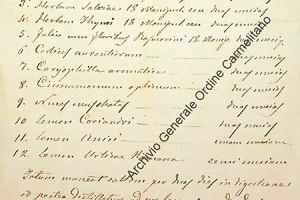
A Curiosity from the General Archives of the Order
The Carmelite LiqueurAmong the treasures of our archives we have found the ancient recipe for spiritumcarmeliticum, as devised by a certain Father Bernardo, presumably at the end of the 18th century. We do not know Father Bernardo's surname or the convent he belonged to, but surely his bitter must have been highly appreciated if his recipe reached as far as the General Curia of the Carmelites.
To be able to reproduce it, obtain very pure wine alcohol, herbs of lemon balm, sage and thyme-with the recommendation that they are not dried, but very fresh, picked during the season of their bloom-orange peel, rosemary flowers, artichoke flavoring, cinnamon, nutmeg, plus coriander, anise and nettle seeds. Let everything marinate for at least two days, stirring occasionally, then distill and drink--but in moderation!
[First published in ABIGOC (Archives and General Library of the Carmelite Order)]
Elections in Peru (PCM) Celebrated
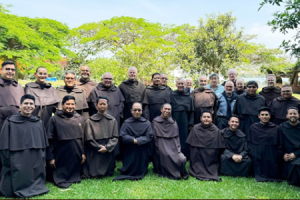
The Provincial Commissary of Perú (PCM) Celebrates Its Annual Meeting and Holds Elections
The Carmelites of the Provincial Commissariat of Perú (PCM) celebrated their annual meeting which included the triennial elections on January 11, 2024. The gathering, was held at Villa Carmelitas in Lurín. Míċéal O'Neill, the prior general, accompanied by Luis Maza Subero, the Councillor for the Americas, participated.
The Province of the Most Pure Heart of Mary established the Order in Perú in 1949.
The following members were elected to leadership at the meeting:
Commissary Provincial | Comisario Provincial | Commissario Provinciale
Raúl Maravi Cabrera, O. Carm.
1st Councilor | 1er Consejero | 1o Consigliere
Miguel Bacigalupo del Corral, O. Carm.
2nd Councilor | 2do Consejero | 2o Consigliere
Eduardo Rivero Cárdenas, O. Carm.
Ancient Carmelite Foundation in Cyprus Located
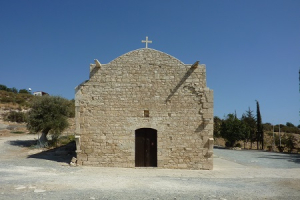
13th Century Carmelite Foundation in Limassol, Cyprus Located
Pottery discovered during an initial excavation at Panagia Karmiotissa in Limassol on Cyprus has been dated back to the 13th century and is thought to be linked to the Carmelites. The Cyprus Department of Antiquities held a conference at the end of the first season at the site.
According to published reports, the site was selected because of historical documents, geographical features, place names, and local lore, all of which suggested it was the location of a Carmelite foundation in the 13th century.
The Carmelite historian, Joachim Smet, wrote in his monumental history of the Order that besides the original foundations of Fortamia (1238) on Cyprus, the Order is known to have had houses in Limassol, Paphos, Famagusta, and Nicosia. These are on a list added to the Constitutions of 1369.
An architectural analysis of the existing church suggests it was dates to the 14th century. This discrepancy necessitates further excavation to explore deeper historical layers. Three exploratory trenches were opened: two on the northern terraces and one behind the current church’s apse.
Besides the pottery from the 13th century, the trenches have revealed evidence of two post-Byzantine habitation phases, including several postholes. Behind the church’s apse, numerous human-sized pits aligned east to west were uncovered, suggesting former grave sites likely associated with the church’s cemetery.
A flight of stairs cut into the natural bedrock and oriented towards a location underneath the church indicates earlier structures than the current church building. In addition, ground-penetrating radar surveys inside the church, hint at significant structures below the church floor.
Lectio Divina February 2024
Opening Prayer
Lord our God, help us to love You with all our hearts and to love all people as You love them.
We ask this through our Lord Jesus Christ, Your Son, who lives and reigns with You and the Holy Spirit, One God, forever and ever. Amen.
Blessed Archangela Girlani, virgin
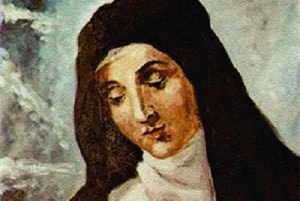
January 29th | Optional Memorial in the Italian Provinces
Bl. Archangela took the Carmelite habit in the monastery of Parma in 1477 at the age of 17 where she took the name Archangela. She eventually became prioress of the monastery at Parma, and then prioress at the new foundation at Mantua from 1492 until her death.
It is written in an old manuscript that Blessed Archangela lived her religious life so intensely that, just as the monastery was entitled "Saint Mary in Paradise", she and the other nuns, even though still here on earth, lived as if already absorbed into heaven.
Read more ...
Presentation of a Book on Fr. Serafino Maria Potenza

The book L'attività di padre Serafino Maria Potenza (1697-1763) attraverso i documenti d'Archivio, by Simona Durante, published by Edizioni Carmelitane, was presented on Thursday, January 18, 2024, at Centro Internazionale Sant'Alberto (CISA) in Rome.
The presentation was attended by Fr. Vincenzo Criscuolo, ofmcap, former general relator of the Dicastery for the Causes of Saints, Professor Luca Carboni, of the Vatican Apostolic Archives, and the author. Among the many participants were secretary Monsignor Fabio Fabene, undersecretary Bogusław Stanisław Turek and other members of the Dicastery.
Fr. Vincenzo Criscuolo gave opening remarks and thanked the author for her magnificent work in dissecting the figure and work of Potenza within the 395 pages of the volume.
Prof. Luca Carboni also praised the author's work and mentioned how this book is the best example of the archivist's role, which is to trace "a fruitful dialogue between different eras."
The book traces the life of Father Serafino Maria Potenza and his activity as Postulator General of the Carmelite Order, following the causes of beatification and canonization that he worked on and which he presented to the Sacred Congregation of Rites, the dicastery then competent in the matter.
In this regard, Giovanna Brizi, Postulator General of the Order, pointed out that although Potenza did not conclude any of the causes of beatification he dealt with during his mandate as Postulator General of the Order, "he sowed the seed that would later germinate in the activity of the postulators who came after him, because this is also the mission of us as postulators."
To frame the figure of Potenza, the author analyses the historical context of his time as well as "the broad panorama of Carmelite holiness."
In preparing the book, Durante made use of direct access to the various funds of the Carmelite Archives to locate material pertaining to Fr. Serafino. She also turned to the Archives of the Order's General Postulation, where she was able to ascertain that "most of the documentation, relating to the 18th century, refers, in some way, to Fr. Serafino Maria Potenza."
For Fr. Mario Alfarano, Archivist and General Librarian, Durante's book is an example of the importance of the archivist's role for the younger generation, and he emphasized how collaboration between the different funds was a key factor in the research and preparation of the book.
L'Osservatore Romano, the official newspaper of the Holy See, published a review of Simona Durante's book (accessible to subscribers here: https://www.osservatoreromano.va/it/news/2024-01/quo-016/alla-scoperta-di-uno-scopritore.html).
The book can be purchased at the online bookstore of the publisher Edizioni Carmelitane.


