








O.Carm
Celebrating At Home - 16th Sunday in Ordinary Time
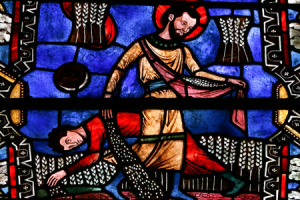
The Patient Gardener
(Matthew 13:24-30)
The section of St Matthew’s Gospel from which we are now reading concerns the Kingdom of God. Jesus uses this expression frequently in his teaching. The Kingdom is not heaven, it is the life and heart of God. We live in the Kingdom when we live according to the mind and heart of God. The Kingdom, or reign of God, breaks into human reality when human beings live, breathe and act out of the life of God; when the heart of God becomes ours; when we allow God to speak and act in and through us.
Jesus frequently uses parables in his teaching - stories drawn from real life, designed to get his listeners to think, ask questions and make decisions.
Today’s parable is a story about wheat and darnel growing together in a field. Apparently darnel, a weed, looks so similar to wheat that it is almost impossible to tell the two apart until the ears appear at harvest time. Only then can you really tell the difference between the two plants. Before that, there may be some signs to do with the direction in which the spikelets grow. Perhaps that is what the servants see and report it to the owner.
They ask if the owner wants them to remove the darnel. The owner says to leave both plants to grow together until harvest when the difference in the plants will be obvious. That will be the time to do the weeding.
So, what does it all mean?
No doubt, there were people in Matthew’s community who thought that the Reign of God would come swiftly and with vehemence and immediately crush what was contrary to it. Others had grown anxious about the fact that the coming of the Kingdom seemed much delayed and wanted to get on with the job of weeding out the ‘evil ones’ according to their own judgement.
The parable, however, urges patience and to leave final judgement to God. What appears to be darnel may yet turn out to be wheat. Only time will tell.
The parable is also a reflection on the mixture of good and evil in the world. But it calls us to reflect, too, on the mix of good and evil we find in our own hearts. What will we turn out to be?
The parable also raises the question: can darnel turn into wheat given God’s patience and mercy?
Historic Marian Statue Damaged in Valletta, Malta
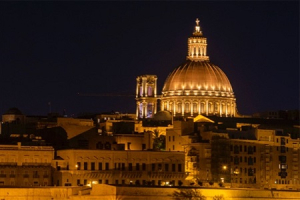
Historic Marian Statue Damaged During Preparations for July 16 Celebrations
According to local accounts, a 100-year-old statue, standing in St George's Square in Valletta, Malta, in preparation for the Feast of Our Lady of Mount Carmel on July 16th was heavily damaged. Pictures show the statue face down on the ground. It had been sitting on its historic pedestal. The pedestal was also damaged.
Fr Alex Scerri is the prior of the Carmelite church. He said, "we do not allow anyone or anything to rob us of the joy and love we have for the much-loved Feast of Our Lady of Mount Carmel in our capital city."
The damage was caused by equipment being used by a film crew. The sponsors of the celebration, the Għaqda Festa Madonna tal-Karmnu Valletta, said it “was considering no longer putting up the traditional street decorations after what it described as the latest in a series of obstacles faced by volunteers.”
According to the reports, the association alleged that equipment, machinery, and trucks connected to a film being shot in Valletta caused damage to the century-old statue and its pedestal. A police report has been filed.
The Culture Minister of the Maltese government says that an agreement had been reached for the Malta Film Commission to cover all costs arising from the damage. He also said that any restoration works required would be carried out by a restorer chosen by the Għaqda Festa Madonna tal-Karmnu. Others have questioned why the Malta Film Commission, a publicly funded body, was covering the cost of repairing the damaged statue and pedestal. Taxpayers should not be made to bear the financial burden of mistakes caused by private commercial interests.
A spokesperson for the association said it was still too early to determine whether the statue could be fully repaired because of its age.
The incident raised the opportunity for people to be reminded of the movement throughout Europe against the number of tourists clogging European cities. Barcelona is just one of the cities rethinking policies because of “overtourism.” Approximately 30 million people visit annually, and half are day-trippers all wanting to congregate in just a small area of a few city blocks. To save the City of Barcellona and its housing market, officials are revoking all short-term tourist rental licenses by 2028.
Although not directly related to tourism, the organizing association says that organizing the annual feast had become increasingly difficult. They claim traditional celebrations were repeatedly being put in second place. They cited that outdoor catering areas were often given priority over feast decorations and religious celebrations, while film productions were now creating further difficulties. Disruptions caused by preparations for the movie production included trucks and cranes obstructing the route of the feast procession. The route of the procession would have to be altered because of the crane erected along its usual route. Two years ago, the procession for Our Lady of Mount Carmel was stopped in Merchants Street until an electrical cable crossing the road could be removed.
The Valletta Local Council said the city's heritage "deserves to be respected and protected with the utmost responsibility," adding that it “would continue monitoring the situation to ensure responsibility was assumed where appropriate and that the damage was professionally restored.”
Zimbabwe Commissariat Turns 80 in 2026
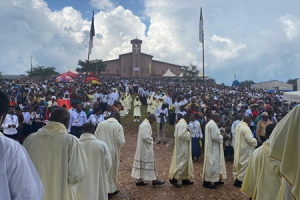
The Provincial Commissariat of Zimbabwe Celebrates 80 Years During 2026
The Carmelites in Zimbabwe are celebrating 80 years of Carmelite presence in that country during 2026. Adopting the theme “Rooted in Faith: Growing in Hope: 80 Years of Carmelite Presence in Zimbabwe,” the celebrations will be various and many throughout the year. In 1946, three Carmelites, Donal Lamont, Anselm Corbett, and Luke Flynn, left Ireland to bring Carmel to an area which was initially evangelized by the Trappists, the Jesuits, and the Marianhill Missionaries.
In an editorial in the Commissariat of Zimbabwe’s publication, Carmeletter, the appropriateness of the oak tree as the symbol for this jubilee year was presented. The oak brings to mind strength, durability, and reliability. The wood from the tree is used to make furniture and barrels that endure the passage of time. Neither wind nor storms can dislodge the tree because of its deep roots anchoring it securely. And as an oak tree has branches reaching up, the Carmelites in Zimbabwe continues to grow, looking forward to a strong future.
In fact, the Commissary Provincial, Shelton Zimondi, challenges that the jubilee not be a mere reflection on the past but “a look to the future with hope and confidence. Our hope is informed by our history, our past, and our faith.”
At a Eucharist in Whitefriars Street in Dublin for the celebration, the Ambassador of Zimbabwe to the United Kingdom and Northern Ireland, Retired Colonel Christian M. Katsande spoke of the Carmelites “bringing not only their religious vocation but also a deep commitment to serve the people of Zimbabwe.”
He also spoke of Donal Lamont who later became the bishop of the Diocese of Umtali (now called Mutare) as “not only a man of deep faith, but also a man of great courage.” Lamont’s pastoral letter “Purchased People” and his “Speech from the Dock” when he was standing trial under the Ian Smith government, “gave voice to the moral responsibility of the Church to stand with the oppressed.” While his words led to his expulsion from the country, they also “inspired many and contributed to the growing spirit of justice and liberation that saw the country of Rhodesia transform into the independent nation of Zimbabwe.”
Many other Carmelites—from Australia, the USA, and elsewhere—have also served the people well but quietly. More important than the buildings, the Commissary today is flourishing with Zimbabwean vocations. The future is indeed bright.
One of the projects for the anniversary year is a series of videos on the Commissary.
You can access the first of these here
Makorokoto! Congratulations!
St. Teresa of Jesus "of the Andes," Virgin
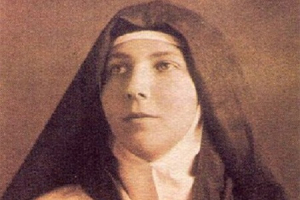
July 13 | Optional Memorial in Latin America
Second Reading from the Office of Readings for July 13
Jesus alone is beautiful; he is my only joy. I call for him, I cry after him, I search for him within my heart. I long for Jesus to grind me interiorly so that I may become a pure host where he can find his rest. I want to be athirst with love so that other souls may possess this love. I would die to creatures and to myself, so that he may live in me.
Is there anything good, beautiful or true that we can think of that would not be in Jesus? Wisdom, from which nothing would be secret. Power, for which nothing would be impossible. Justice, which made him take on flesh in order to make satisfaction for sin. Providence, which always watches over and sustains us. Mercy, which never ceases to pardon. Goodness, which forgets the offenses of his creatures. Love, which unites all the tendernesses of a mother, of a brother, of a spouse, and which, drawing him out of the abyss of his greatness, binds him closely to his creatures. Beauty which enraptures ... what can you think of that would not be found in this Man-God?
Are you perhaps afraid that the abyss of the greatness of God and that of your nothingness cannot be united? There is love in him. His passionate love made him take flesh in order that by seeing a Man-God, we would not be afraid to draw near him. This passionate love made him become bread in order to assimilate our nothingness and make it disappear into his infinite being. This passionate love made him give his life by dying on the cross.
Are you perhaps afraid to draw near him? Look at him, surrounded by little children. He caresses them, he presses them to his heart. Look at him in the midst of his faithful flock, bearing the faithless lamb on his shoulders. Look at him at the tomb of Lazarus. And listen to what he says of the Magdalene: “Much has been forgiven her, because she has loved much.” What do you discover in these flashes from the Gospel except a heart that is good, gentle, tender, compassionate; in other words, the heart of a God?
He is my unending wealth, my bliss, my heaven.
Vitam Coelo Reddiderunt
|
30-06-26 |
28-12-34 |
26-08-54 |
26-08-57 |
04-06-60 |
Blessed Jane Scopelli, Virgin
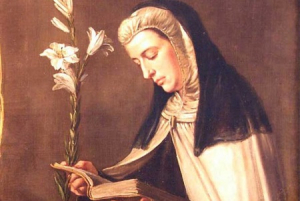
9 July Optional Memorial
Read more about Blessed Jane Scopelli here
Celebrating At Home - 15th Sunday in Ordinary Time
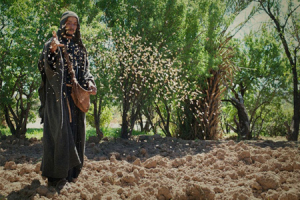
Becoming Rich Soil
(Matthew 13:1-9)
The section of St Matthew’s Gospel from which we are now reading concerns the Kingdom of God. Jesus uses this expression frequently in his teaching. The Kingdom is not heaven, it is the life and heart of God. We live in the Kingdom when we live according to the mind and heart of God. The Kingdom, or reign of God, breaks into human reality when human beings live, breathe and act out of the life of God; when the heart of God becomes ours; when we allow God to speak and act in and through us.
This section about the Kingdom of God is the centrepiece of St Matthew’s Gospel. Matthew uses seven parables and explanations to unfold Jesus’ teaching about the Kingdom.
Last week’s Gospel offered reassurance to those overburdened by religious law and often unable to fulfil it that they were not forsaken by God. Jesus says he is the one who will reveal what God is really like through gentleness and humility and by providing rest (not more burdens) for their souls.
This week we begin the series of parables about the Kingdom with the parable of the Sower. The Sower sows, the seed falls, sometimes the sower’s work succeeds, sometimes it does not. The different soils represent different human responses to hearing the word of God. Not everyone receives the message or responds well to the invitation.
The parable teaches us that God will try anything to get a harvest. The sign of success is the fruit-bearing of the recipients. That’s when God’s word sown in our hearts becomes our word, too.
Those who do respond to the invitation to life in the Kingdom yield the harvest of goodness and Godliness.
Iberian Carmelite Family Gathers
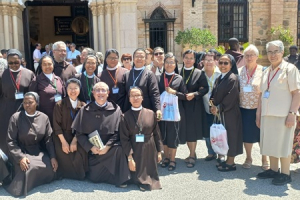
The Carmelite Family of the Iberian Region Gathers for Days Together
A annual gathering of the Carmelite Family of the Iberian Region is a long-standing event that brings together the various sectors that share the charism of the Carmelite Order in Spain and Portugal—the Iberian Peninsula.
Included in these gatherings are priests and brothers as well as nuns from the contemplative communities. Religious from the various congregations and institutes that are affiliated with the Order also participate. Lay people from secular Carmel, confraternities, parish communities, and alumni are also welcome to come. There are also young people and educators from the Order’s schools and youth movements.
This time of the year gives each of the people attending to recognize themselves as part of one family who share common experiences, realities, and projects.
These gatherings always center on deepening the Carmelite identity. Drawing inspiration from the Rule of St. Albert, the days are filled with lectures, roundtable discussions, and workshops which focus on prayer, fraternity, and maintaining a contemplative stance in the midst of the world.
The work of evangelization and prophetic service is shared among the participants. There is usually a strong presence of Karit, Solidarity for Peace which is the NGO of the Carmelite Family in the Iberian Region. The organizations goal is to promote joint solidarity projects in various parts of the world.
The liturgies— the celebration of the Liturgy of the Hours in common and the Eucharist— are at the heart of the gatherings. Participants celebrate together the deep Marian devotion that unites them under the patronage of Mount Carmel.
This was the 31st such gathering of the Carmelite Family from the Iberian peninsula.
Prior General's Schedule for July 2026
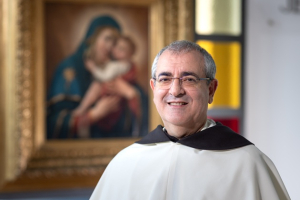
Fr. Desiderio García Martínez, O. Carm., the prior general, has the following schedule planned for the month of July 2026:
June 30-July 7: Fraternal Visit -- Ougadougou and Bobodioulasso, Burkina Faso
July 8-30: Visits to the Monasteries of the Federation of St. Mary Magdalene de' Pazzi (Italy)
Blessed Maria Crocifisso Curcio, Virgin

July 4 | Optional Memorial in the Italian provinces
GREETINGS BY HIS HOLINESS BENEDICT XVI AT THE CONCLUSION OF THE BEATIFICATION CEREMONY
I now greet the pilgrims who have come from various regions of Italy and the world to honor Blessed Maria Crocifissa Curcio. My heartfelt thoughts go out to each and every one of you, especially to those who are part of the spiritual family of the Missionary Carmelite Sisters of Saint Teresa of the Child Jesus.
This newly beatified woman placed the presence of the merciful Jesus—whom she encountered and adored in the Sacrament of the Eucharist—at the center of her life. A genuine passion for souls characterized the life of Mother Maria Crocifissa, who zealously practiced “spiritual reparation” to reciprocate Jesus’ love for us. Her life was one of constant prayer, even as she went about serving others, especially poor and needy young women. May Blessed Maria Crocifissa Curcio continue to watch over from heaven the Congregation she founded and all her devotees.


