








O.Carm
Celebrating At Home - 12th Sunday in Ordinary Time

Life in the Kingdom of God
(Mk 4:35-41)
In Mark’s Gospel the Kingdom is not something yet to come, it is a present reality. It is the presence and action (reign) of God among his people. That may not always been readily seen, but it is there none the less.
Last Sunday Mark used two parables to talk about the reality of the Kingdom. Over the next few Sundays he begins to talk about the mystery of the Kingdom present in Jesus and what living in the Kingdom requires. None Mark’s stories are about some awesome display of power. Mark’s stories make it clear that Jesus is about saving human beings, healing them and calming hearts disturbed by life’s storms. In Jesus is the power of life and liberation.
Sudden storms on Lake Galilee were well-known and still happen today.
Many of our ‘boats’ and those of our loved ones have been tossed about on turbulent seas since the sudden arrival of Coronavirus and everything that has happened since. Many of us know exactly the kind of fear and uncertainty that the disciples felt as they were tossed about in the darkness on the stormy lake in this Sunday’s Gospel. Many may also feel that Jesus is asleep somewhere.
And yet, signs of Jesus are all about us: in people trying their best to look after others, to provide meals and shelter, to keep themselves and their loved ones safe, to work for peace in the midst of conflict to bring comfort and to pray.
Vulnerability is an uncomfortable experience. Mark helps us understand that life in the Kingdom begins with faith and confidence in God especially in the midst of epic struggles which threaten to overcome us.
The disciples’ question is ours, too. Who is Jesus for us? A magician, a wonder-worker, or a person who found the way to let the reign of God’s grace out of his heart and into the lives of those around him?
- pdf Celebrating At Home - 12th Sunday in Ordinary Time [PDF](314 KB)
- default Celebrating At Home - 12th Sunday in Ordinary Time [ePub](6.82 MB)
- pdf Celebrando en Familia - XII Domingo del Tiempo Ordinario(538 KB)
- pdf Celebrando in Casa - XII Domenica del Tempo Ordinario(556 KB)
- pdf Celebrando em família - Décimo Segundo Domingo do Tempo Comum(545 KB)
2024 Irish Provincial Chapter Confirms New Leadership
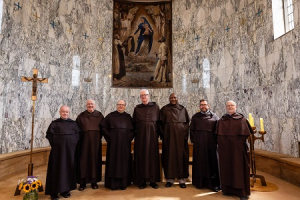
The Irish Provincial Chapter was held in Gort Muire Carmelite Centre (Dublin) from Sunday, June 9th to Friday, June 14, 2024. On the Sunday evening, the members of the Chapter gathered in the Chapel for a Liturgy to open the Provincial Chapter. After the service the members moved to the Chapter Room where the Prior General, Mícéal O’Neill gave an address. In his address he said:
“Dear brothers, the 2024 provincial chapter will be very different to previous chapters in this province. I am thinking mainly of the work of preparation. The three words that are associated with the Synod of Bishops that now occupies so much of the attention of the Church, namely, participation, communion and mission, apply very precisely to this 2024 provincial chapter.”
The Prior General then proposed the appointment of Mr. Danny Curtin as the moderator – facilitator of the chapter. The members of the Chapter approved the proposal that members of the Order, not of the Irish Province, who are living in Ireland could attend and participate in the Chapter. They also approved the proposal that our lay collaborators could attend and participate in the relevant sessions of the Chapter, including members of the lay family on Thursday, June 13, 2024.
The Prior Provincial, Michael Troy, then gave his Relatio during which he said,
“We need to respond to the invitation of Pope Francis — to have the courage to allow ourselves to be pushed beyond our securities, including the security we find in our pastoral activities. What does the Church in Ireland & Zimbabwe expect from Carmelites today? What do we bring to the Church and world today?”
The Prior General then confirmed the new Prior Provincial, Simon Nolan, in office. He also confirmed in office the Provincial Councillors, Fintan Burke, Simplisio Manyika, Brain McKay and James Eivers. The Provincial then confirmed in office the Commissary Provincial, Ezevia Murambiwa. The Provincial announced that he had asked Vitalis Chiromba, a member of the Zimbabwean Commissariat to be the Assistant Provincial.
This is the first time that a member of the Zimbabwean Commissariat had been elected as a Provincial Councillor (Simplisio Manyika) and a Zimbabwean appointed to be the Assistant Provincial (Vitalis Chiromba). In many ways, it reflects the desire for unity and deeper relationships between the two geographical parts of the province.
With Ms. Julie McCullough, the Province’s Director of Safeguarding, the members spent some time considering the area of safeguarding. Julie noted that the Province achieved all seven standards in the recent review by the National Safeguarding Board.
Under the facilitation of Mr. Curtin, the Province developed a unified vision for the Province (in both Ireland and Zimbabwe) under three interconnected areas: (a) renewing the ways of we relate to each other as brothers; (b) working with a model of intentional encounter and accompaniments; and (c) working in a synodal way and in co-responsibility.
On Thursday, the members of the Chapter were joined by the lay people who had been invited to join in the common discernment. During this session the lay members of the Carmelite Family stated that they saw so much potential in the vision which they wanted to share with the friars. They wanted to work together and be co-responsible.
On Friday, after approving the revised Statutes for the Province, the proposals with regard to Zimbabwe and committing to the vision for the Province, the members of the Chapter returned to the Chapel for a closing liturgy. The Chapter concluded with the singing of the Flos Carmeli.
Prior Provincial | Prior Provincial | Priore Provinciale
Simon Nolan, O. Carm.
Assistant Provincial | Asistente Provincial | Assistente Provinciale
Vitalis Chiromba, O. Carm.
1st Councilor | 1er Consejero | 1o Consigliere
Fintan Burke, O. Carm.
2nd Councilor | 2do Consejero | 2o Consigliere
Simplisio Manyika, O. Carm.
3rd Councilor | 3er Consejero | 3o Consigliere
Brian McKay, O. Carm.
4th Councilor | 4to Consejero | 4o Consigliere
James Eivers, O. Carm.
Commissary Provincial Zimbabwe | Comisario Provincial Zimbabwe | Commissario Provinciale Zimbabwe
Ezevia Murambiwa, O. Carm.
June Schedule of the Prior General

Fr. Míċeál O'Neill, the prior general, has the following schedule planned for the month of June 2024:
June 01 - 05: Completion of the canonical visitation of the province of Rio de Janeiro
June 09 - 14: Provincial Chapter of the Irish Province, in Dublin
June 16 - 22: Provincial Chapter of the Italian Province in Sassone, Roma
June 23 - 30: Fraternal visits in Italy.
Memorial of Saint Elisha, Prophet

June 14 | Memorial
St. Elisha, prophet
The biblical cycle of Elisha (2 Kgs) is strongly linked with that of Elijah. Elisha's calling is placed after the theophany of the Horeb (1 Kgs 19: 16-21). According to the divine order, he is the one who is to succeed the Tishbite; Elisha therefore becomes Elijah’s servant and disciple (2 Kgs 3:11).
Like Elijah, Elisha is presented by the Church Fathers as a Christ figure, as a thaumaturge. He is also presented as a model for monastic life. Numerous Church Fathers attest to Elisha's virginity following that of Elijah. The medieval Carmelites reproduced these lines insisting that Elijah and Elisha were the first to consecrate themselves to God in virginity. Prayer also plays a primordial role in Elisha's life: it is the source of the miracles the Lord performs through him. Elisha is also portrayed as someone withdrawn from society. His initial renunciation, sacrificing his oxen and plow before following Elijah, is an example to exhort him to detach himself from worldly concerns (Jer., Ep. 71:3). For Cassian, Elisha is one of the founders of monasticism and, in a more special way, a teacher of poverty (Inst. 7:14,2).
Elisha is constantly present as Elijah's disciple, his spiritual son, his heir, the disciple par excellence. Elisha is not Elijah's only disciple but within this group of disciples, Elisha occupies the first place.
Call of Elisha
Elijah set out, and came upon Elisha, son of Shaphat, as he was plowing with twelve yoke of oxen; he was following the twelfth. Elijah went over to him and threw his cloak on him.
Elisha left the oxen, ran after Elijah, and said, “Please, let me kiss my father and mother good-bye, and I will follow you.” Elijah answered, “Go back! What have I done to you?”
Elisha left him and, taking the yoke of oxen, slaughtered them; he used the plowing equipment for fuel to boil their flesh, and gave it to the people to eat. Then he left and followed Elijah to serve him. (1 Kgs 19:19-21)
Read more ...
Recent Publication from Edizioni Carmelitane:
Les prophètes Élie et Élisée au Moyen Âge Latin
Tome 1. Vllle-IXe siècles. L'époque carolingienne
Tome 2. Xe-début XIIe siècle. Des commentaires carolingiens à la
Glossa ordinaria
Tome 3. La renaissance et le tournant du XIIe siècle
Tome 4. XIIIe siècle. L'essor des universités
Coffret: Tome 1, 2, 3 et 4
Celebrating At Home - 11th Sunday in Ordinary Time

What is the Kingdom of God Like?
(Mk 4:26-34)
Parables are meant to leave the hearers wondering. They are not straight-forward answers to questions. They are food for thought.
In the Gospels Jesus is rarely concerned about facts and figures, dates and times. By using parables Jesus is trying to engage his listeners at a deeper level. He wants his teaching to seize their hearts. He wants them to discover the truth of what he is saying for themselves. It is part of the business of conversion - coming to see with new eyes.
It is wonderful to see Jesus, again and again, looking at life and at what’s happening around him, for things and images that might help the people to detect and to experience the presence of the Kingdom.
In Mark’s Gospel the Kingdom is not something yet to come, it is a present reality. It is the presence and action (reign) of God among his people. That may not always been readily seen, but it is there none the less. It may seem to have humble beginnings (like the small seed in the second parable), but the experience of it grows into something all-consuming.
The story of the seed that grows all on its own
The farmer who plants the seed knows the process: first the seed, then the green shoot, the leaf, the ear and the grain. The farmer knows how to wait and will not cut the stalk before it is time, but he does not know from where the power comes for the soil, the rain, the sun and the seed to make a seed turn into fruit. That’s what the Kingdom of God is like. It’s a process. There are stages and points of growth. It takes time and happens in time. The fruit comes at the right time but no one can explain its mysterious power.
The story of the tiny mustard seed that turns into something very big
The mustard seed is small, but it grows, to the point where the birds can make their nests in its branches. That’s what the Kingdom is like. It begins as something very small, it grows and spreads its branches providing shelter and shade where new life grows. (From Lectio Divina, June 2021 - www.ocarm.org)
Thinking about the Kingdom today sets a context for our continued listening to Mark’s Gospel and a reminder that God is at work in the world.
Jesus’ proclamation of the Kingdom is central and fundamental – the work of uncovering the often-hidden reign of God and returning humanity to God’s original plan for his family.
- pdf Celebrating At Home - 11th Sunday in Ordinary Time [PDF](3.47 MB)
- default Celebrating At Home - 11th Sunday in Ordinary Time [ePub](5.07 MB)
- pdf Celebrando en Familia - Undécimo Domingo del Tiempo Ordinario(522 KB)
- pdf Celebrando in Casa - XI Domenica del Tempo Ordinario(503 KB)
- pdf Celebrando em família - Décimo Primeiro Domingo do Tempo Comum(530 KB)
Memorial of Bl. Hilary Januszewski, priest and martyr
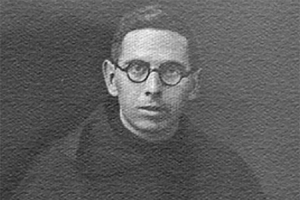
June 12 | Optional Memorial
Hilary Januszewski was born on 11 June 1907 in Krajenki (Poland) and was given the name of Pawel. He received a Christian education from his parents, Martin and Marianne. In 1927 entered the Order of Carmel. He completed his noviciate in Leopoli and on 30 December 1928 made his simple profession. At the end of his philosophical studies in Cracow he was sent to Collegio Internazionale Sant'Alberto, Rome. He was ordained priest on 15 July 1934. He obtained his lectorate in theology and the prize for the best students of the Roman Academy of St. Thomas and in 1935 returned to Poland to the monastery in Cracow.
On 18 September 1940 the gestapo deported four friars from the Carmel in Cracow. In December, when other friars were arrested, Fr. Hilary decided to present himself in exchange for an older and sick friar. From that day his Calvary began. He was sent to the prison of Montelupi (Cracow), then to the concentration camp of Sachsenchausen and in April 1941 to the concentration camp of Dachau. There he was a model of prayer life, encouraging others and giving hope for a better tomorrow. Together with the other Carmelites, among whom was Saint Titus Brandsma, they often joined in prayer.
Meanwhile in barrack 25 of the concentration camp, typhus was spreading. To help the sick, 32 priests presented themselves to the authorities. A couple of days later, Fr. Hilary Januszewski spontaneously joined the group. His apostolate lasted 21 days because, infected by typhus, he died on 25 March 1945, a few days before the liberation of the concentration camp.
Read more ...
A multi-lingual book on Bl. Hilary Januszewski is available from Edizioni Carmelitane. The book, giving the reader insight into this Carmelite's life and ultimate gift of his own life for other prisoners, is written in Polish, English, Italian and Spanish and can be purchased at a special price for his feast day for only 12,00 EUR (shipping expenses not included).
The Festival and Night of the Archives

Archivissima 2024 – The Festival and Night of the Archives
From June 6 to 9, cultural initiatives of the Archivissima 2024 event - The Festival and Night of the Archives, dedicated to the theme #Passions, will take place throughout Italy. For this occasion, the Carmelite Archives and General Library have organized a panel discussion entitled: Aut pati aut mori. The Symbolism of the Heart in Carmelite Female Iconography.
Together with Ruggiero Doronzo, art historian and author of several books, and Carmelite Charló Camilleri, spiritual theologian, we will dialogue on the symbolism of the heart in female Carmelite mysticism of the modern age (16th-18th centuries), starting from its representation in the chalcographic engravings kept in the General Archives of the Carmelite Order, with special reference to the figures of St. Teresa of Avila, St. Maria Magdalena De' Pazzi and the venerable Rosa Maria Serio.
Doronzo authored the book Iconografia Carmelitana al Femminile which was published by Edizioni Carmelitane. More information at the webstore of Edizioni Carmelitane.
The event will take place on June 7, 2024, at 6:30 p.m. at the St. Albert International Center, Via Sforza Pallavicini 10, Rome.
(This article first appeared in ABiGOC 5/2024 — The General Archives and Library of the Carmelite Order)Celebrating At Home - 10th Sunday of Ordinary Time

The New Family of Jesus
Mark 3:20-35
Today’s Gospel opens with the chaotic scene of a huge crowd gathered around the house where Jesus is. It’s such a busy scene that Jesus and the disciples have no time even to have a meal.
This spectacle provokes both the relatives of Jesus and some scribes from Jerusalem into action. The relatives think Jesus is mad; the scribes think he is possessed.
Intentionally or not, both the relatives and the scribes seem intent on closing down the mission of Jesus.
The relatives, convinced that Jesus is out of his mind, and quite possibly embarrassed at the spectacle he is making of himself, set out to take charge of (capture) him, probably intending to take him back to Nazareth and sort him out.
The scribes from Jerusalem try to close down Jesus’ mission by accusing him of being in league with the devil, using Satan’s power in his healing miracles.
Jesus points out how absurd this claim is since the miracles he works with the power of the Holy Spirit bring healing, freedom and liberation, not deeper enslavement to the power of evil. A house divided against itself, he says, cannot stand.
Jesus also tells a parable about a strong man and a burglar. Most people would think that the strong man is Jesus and the burglar is Satan. In fact, it is the other way around! Using the power of God, it is Jesus who has tied up Satan and breaks into his house to free those imprisoned by evil. Jesus warns of the seriousness of accusing him of being an agent of Satan – identifying the Holy Spirit of God with the unclean spirits of the demonic world.
Then the family of Jesus now appear, outside the house. Unable to get to him because of the crowd, they send a message to him, asking to see him. Jesus doesn’t respond directly to the request but asks and answers the question, “who are my mother and brothers?” Pointing to the people gathered around him inside the house, Jesus says, “Here are my mother and my brothers. Anyone who does the will of God, that person is my brother and sister and mother.” The old family is left outside, and the new family of Jesus is gathered with him inside.
Being part of the family of Jesus doesn’t depend on blood relationship with him but on recognising that he comes from God and doing God’s will.
Belonging to the new family of Jesus is joining him in the business of incarnating, making real in flesh and blood, God’s deep love and mercy for all his people.
- pdf Celebrating At Home - 10th Sunday of Ordinary Time [PDF](2.87 MB)
- default Celebrating At Home - 10th Sunday of Ordinary Time [ePub](3.93 MB)
- pdf Celebrando en Familia - Décimo Domingo del Tiempo Ordinario(307 KB)
- pdf Celebrando in Casa - X Domenica del Tempo Ordinario(465 KB)
- pdf Celebrando em família - Décimo Domingo do Tempo Comum(466 KB)
New Leadership Appointed in the Czech Delegation
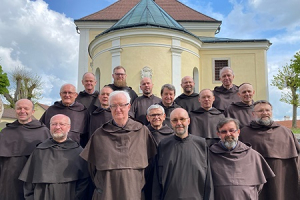
During the first full assembly of the General Delegation of Bohemia and Moravia, held on April 16-18, 2024, (CITOC 68/2024), the participants discussed leadership for the Delegation.
Following consultation of the members, the General Council appointed Fr. Serafim Smejkal to be the new General Delegate. Fr. Marian Masařík and Fr. Vojtěch Kodet were appointed as his councilors.
Carmelite Basilica Joins Cultural Festivities in Rome
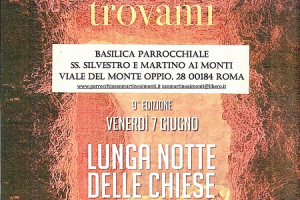
The Basilica SS. Silvestro and Martino ai Monti joins the 9th Edition of the Long Night of the Churches ("Lunga Notte delle Chiese") that will take place on Friday, June 7.
The Long Night of Churches is the first "white night" of places of worship in which music, art, and culture are merged in the key of reflection and spirituality.
The theme that will be a common thread in the 2024 edition is a word that sounds like an invitation: “FIND ME ! “. This invitation is meant to be an answer to the question that was asked in the previous edition, namely, “WHERE ARE YOU?”
The program for the event at the Basilica SS. Silvestro and Martino ai Monti is:
8:30 PM: STORYTELLING ABOUT THE BASILICA
Storyteller: Fr. Lucio Maria Zappatore
9:30 P.M.: MUSICAL INTERLUDE
Director: M° Daniele Perri
10 P.M.: “ALL'OMBRA DER CUPPOLONE”
poems in Roman dialect about the last three Popes (L.M.Z.)
10:30 P.M.: MUSICAL INTERLUDE
Director: M° Daniele Perri
11 PM: VISIT WITH FLASHLIGHTS TO THE “TTTULUS AEQUITII”
12 MIDNIGHT: CLOSING OF THE BASILICA
The Long Night of the Churches is an event organized by the BellunoLaNotte.com association with the collaboration of the participating dioceses. The idea originated in 2016 from the already implemented and successful “Lange Nacht der Kirchen” project that has been taking place in Austria and South Tyrol for several years already, involving hundreds of churches at the same time.
More information can be found at: www.parrocchiasanmartinoaimonti.it
See the full program at https://www.lunganottedellechiese.com/


