









O.Carm
Celebrating At Home - 14th Sunday in Ordinary Time

Lifting the Burden; Lightening the Load
(Matthew 11:25-30)
The Gospel today is a joyful, ecstatic outburst of feeling by Jesus.
Matthew’s community must have been deeply troubled by the fact that the ‘learned and clever’ religious leaders of their day did not accept the message of Jesus. Surely they, of all people, should have been able to recognise the truth. But in this passage, Matthew explains that it is not from a position of knowledge or power that one recognises who Jesus is. Rather, it is from an attitude of openness and simplicity, such as we often find in children.
Matthew also makes the point that Jesus does not approach us like a warlord, with threats of punishment, but in humility and gentleness.
The tone of the reading is set by Jesus’ warm and intimate address of ‘Abba’ (Father) which occurs five times in this short passage. This intimate relationship is characterised by God’s entrusting all of things to the Son, and the Son in turn revealing them to those who have faith. These, in turn, are drawn into intimate relationship with God.
The rules and laws of religious leaders in Jesus’ day often added to the burden experienced by those regarded as simple and sinful. Whereas Jesus always tried to lift burdens from people.
Jesus invitation in today’s Gospel is for everyone. It could be an invitation for us to look at our lives and ask what burdens we impose on others. Do our concerns, anxieties, our need for power, wealth and status, exact a high price from others and ourselves?
Are we a burden or a blessing for each other? What can we do to make life easier for each other - to lift the burdens and share the load?
Castellina's “La Famiglia” Joins Third Order
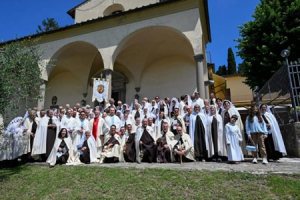
The “La Famiglia” of Santa Lucia alla Castellina Fully Incorporated into the Third Order
On May 30 and 31, 2026, a solemn ceremony took place for the of the canonical sanation of the Tertiaries of the “La Famiglia” Movement of Santa Lucia alla Castellina. This group was founded by Fr. Agostino Bartolini and the Servant of God Amata Cerretelli. The official celebration took place over two days: the first day at the Basilica del Carmine in Florence and the second day at the Convent of Santa Lucia alla Castellina.
Saturday’s celebration was presided over by the prior general, Desiderio García Martínez, in the presence of the Order’s secretary general, Giampiero Molinari; the prior provincial of the Italian Province, Giandomenico Meloni, who read the decree of sanation; Sebastian Benchea; Raffaele Duranti; Giulio Pase; the Carmelite Tertiary Don Cristian Meriggi (exorcist of the Diocese of Florence); Agostino Gelli, and Nicola Sozzi, assistant to the Fraternity and the northern zone of the TOC of the Italian Province. Also present was a delegation from the executive committee of the Carmelite Third Order of the Italian Province.
On Sunday, in the church of the Convent of Castellina, the second day was presided over by the prior general, in the presence of the Order’s secretary general, Sebastian Benchea, and Vincenzo Boschetto, provincial assistant of the Third Order, who read the sanation decree.
The two celebrations were joyfully led by the Tertiaries, who experienced a profound moment of communion and fellowship with all those gathered for this important occasion, followed by a delicious reception in the cloister of the Church of the Carmine (on the first day) and on the terrace of the Convent of Santa Lucia alla Castellina (on the second day).
Giving praise to God for this historic event, the Tertiaries of the Movement were “fully incorporated into the Carmelite Third Order, with all the rights and duties that this entails, including participation in the spiritual goods of the Carmelite Family.”
Lectio Divina July 2026
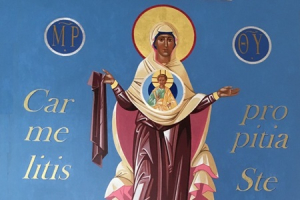
Opening Prayer
Father,
you call your children to walk in the light of Christ.
Free us from darkness and keep us in the radiance of your truth.
We ask this through our Lord Jesus Christ, your Son, who lives and reigns with you and the Holy Spirit, one God, for ever and ever. Amen.
Elective Chapter Held at Lake Elmo Hermitage
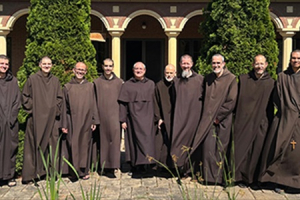
Elective Chapter of the Carmelite Hermitage of the Blessed Virgin Mary in Lake Elmo, Minnesota Held on June 24
The elective chapter of the Carmelite Hermitage of the Blessed Virgin Mary in Lake Elmo, Minnesota (USA), was held in a spirit of fraternity and discernment under the presidency of the prior general, Desiderio García Martínez, with the participation of the General Councilor for the Americas.
The eight solemnly professed members proceeded with the election of its leadership in accordance with the norms of the Order. The community elected John Mary Burns as prior, Elijah Schwab as sub-prior (First Councilor), Peter Peach as Second Councilor, and Christopher Burnside as Third Councilor.
In his address, the prior general reflected on the exercise of authority as a ministry of humble service rooted in the Carmelite Rule. He encouraged the community to continue fostering unity, co-responsibility, and healthy formation, while maintaining vigilance in safeguarding, transparency in governance, and sound financial administration. He also highlighted the importance of maintaining a strong bond with the wider Carmelite Order.
Fr. Desiderio further noted that a revision of the hermitage’s statutes will need to be initiated in order to bring them into closer alignment with the Constitutions of the Order. He emphasized that this process should be carried out with careful discernment and fidelity to the charism.
Additionally, he underscored the importance of maintaining a proper balance between the development of physical structures, such as the new basilica project, and the ongoing task of building a healthy and vibrant community life.
Carmelite Church in Sassari Becomes Sanctuary
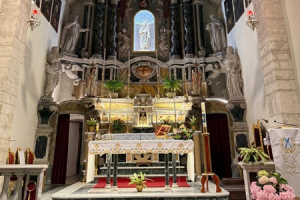
The Carmelite Church in Sassari Elevated to Sanctuary Status
The Italian Province of Carmelites was notified by the vicar general of the Archdiocese of Sassari in Sardinia that the Church of the Madonna del Carmelo in Sassari will be elevated to a sanctuary. The Carmelites had asked for this to be considered in April 2025.
In a letter to Gian Domenico Meloni, the prior provincial of the Italian Province, Mons. Antonio Tamponi, the vicar general of the archdiocese, wrote that the new bishop, Francesco Antonio Soddu, has deemed “plausible and well-founded” the request from the Carmelites and has granted the request.
The archbishop has ordered that the necessary legal steps be taken to draft the decree of establishment. This will then be promulgated publicly at a later date, preferably during the novena in preparation for the feast of Our Lady of Mount Carmel on July 16th.
The letter also acknowledges the dialogue that has taken place between the Mons. Tamponi, then the diocesan administrator, and the Carmelite superior, Salvatore Asta, and members of the Carmelite Third Order.
Celebrating At Home - 13th Sunday in Ordinary Time

True Discipleship
(Matthew 10:37-42)
Today’s Gospel is the final in this section of Matthew’s Gospel about the spread of the Kingdom and the role of the disciples.
Matthew often uses events as a beginning point for Jesus’ sermons. The section we have been listening to began with the call of Matthew and was followed by the instructions given to the disciples before setting out on mission. We heard part of that last Sunday.
So far in this sermon we have heard Jesus teach that the truly virtuous are those who exercise mercy; disciples are to proclaim the Kingdom of God with works of compassion and mercy; they are not to let fear compromise the message, but are to trust always in God.
Today’s Gospel passage highlights both the cost and rewards of true discipleship. The disciples’ relationship with Jesus must be the centre of their lives and the context for all other relationships.
Hospitality and welcome are concrete expressions of discipleship because the disciple is one who witnesses to the compassion and mercy of God with open hearts and concrete good actions.
Even though the first paragraph of today’s Gospel sounds like an exclusive choice must be made between Jesus and family, the idea behind the text is more that: in our relationship with Jesus, all other relationships fall into their proper context.
Without being in right relationship with Jesus we can’t learn how to be in right relationship with others. It is our relationship with Jesus which brings depth and richness to all our other relationships. So, for example, our family relationships become more than just fulfilling a social custom. They become true relationships filled with love, mercy, forgiveness and respect.
The Pharisees and Scribes seldom made good disciples because they thought that religion was about doing religious things. They went to the synagogue, kept the Law, fasted, and so on, but their hearts were never changed by their religious observance. They were self-righteous, despised the poor and the ‘sinners’, and acted without justice or mercy.
The truth about our conversion to Jesus (our becoming Jesus) is not so much seen in easily identifiably ‘religious’ things but in concrete good actions and right relationships.
Our religious observance is meant to support and nourish our relationship with Jesus. It is not a substitute for it. That relationship has the power to change and transform us so that we can bear witness to Christ through lives of mercy, compassion, justice and integrity.
Carmelite Sisters Join Scottish Tartan Army Fever

World Cup 2026 Update
Carmelite Sisters of the Aged and Infirm Fall Under the Scottish Tartan Army Spell
The Carmelite Sisters for the Aged and Infirm in Germantown, New York, have caught the Scottish Tartan Army fever. They hosted John Mallon, co-founder of the Catholic production company, Sancta Familia Media, during these early days of the World Cup games. Hailing from Scotland, the home of the congregation’s foundress, Venerable Mother Angeline, Mr. Mallon made contact with the sisters to ask for hospitality. In fact, Mother Angeline and Mr. Mallon are both from Mossend, a small town in North Lanarkshire, Scotland.
Finding the Carmelite sisters to be “some of the nicest women you can ever meet,” Mallon set about teaching them various Scottish chants. In a video posted on the internet, they can be seen waving small Scottish flags and singing “No Scotland, No Party” and “We’ll Be Coming.” The video was posted by Sancta Familia Media.
Scotland easily manhandled Haiti with a final score of 1-0 in their first game. Unfortunately, Morocco just managed to squeak by Scotland 1-0 in their second game.
A decades-old tradition of the Scots is to climb atop the statue of the Duke of Wellington sitting on his horse in the middle of Glasgow and place a traffic cone on the Duke’s head. Today young Glaswegians will climb any statue to place a cone and they have followed that tradition in Boston during the 2026 World Cup. Youtube shows various bronze statues around the city of Boston being crowned with orange traffic cones. Hopefully the sisters will forgo learning that particular Scottish ritual.
All the prayers the sisters can muster will be required in the coming days. Scotland plays Brazil on June 24.
The video can be seen at: https://www.instagram.com/reels/DZsL_MDR69I/
Province of the Most Pure Heart of Mary Holds Chapter
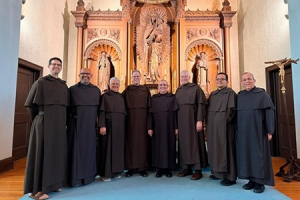
Province of the Most Pure Heart of Mary Holds Triennial Chapter in Niagara Falls, Canada in June
Over 60 members of the Most Pure Heart of Mary Province, ministering in Canada, the United States, Mexico, El Salvador, Honduras, Perú, and Italy gathered at the Mount Carmelite Spiritual Center in Niagara Falls, Ontario for their triennial Chapter. The Chapter took place from Monday, June 15 (registration) until Friday, June 19, 2026.
The theme of the Chapter was Legacy of Hope. A series of working sessions were facilitated by Dr. Matthew Manion of Villanova University. Besides the usual reports by the provincial council, presentations were also made on the history of the province, Laudato Si', the province's strategic plan, and finances. Legislation was worked on during a session on Thursday morning.
The prior general, Desiderio García Martínez, in his opening address to the Chapter, covered a wide range of topics, initially reminding all that a chapter is a period of discernment with success measured by the fraternity of the decisions made. He reflected on the three vows and our need perhaps to rediscover the beauty of the Carmelite charism. He concluded with some challenges, including formation, spirituality, culture, vocations, missions, reorganization, safeguarding underage and vulnerable adults, and the incorporation of the Carmelite family.
On Thursday evening a banquet was held to recognize those members of the province celebrating anniversaries in this three-year period. The bishop of St. Catherines joined the Chapter for lunch on Thursday. On Wednesday, the Chapter honored Virginia Parisi, long-time director of the Society of the Little Flower in Canada for her 42 years of service to the society and to the province.
During the chapter the following were elected:
Prior Provincial | Prior Provincial | Priore Provinciale
Carl Markelz, O. Carm.
Vice Provincial | Vice Provincial | Vice Provinciale
Samuel Citero, O. Carm.
1st Councilor | 1er Consejero | 1o Consigliere
Jorge Monterroso Mérida, O. Carm.
2nd Councilor | 2do Consejero | 2o Consigliere
Michael Joyce, O. Carm.
3rd Councilor | 3er Consejero | 3o Consigliere
Raul Maraví Cabrera, O. Carm.
4th Councilor | 4to Consejero | 4o Consigliere
Edgar Lucio Lezama Aparcio, O. Carm.
Celebrating At Home - 12th Sunday in Ordinary Time
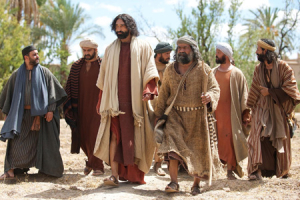
Be the Living Gospel
(Matthew 10:26-33)
The second part of Jesus’ instruction to the disciples as they set out for their mission is the text of the Gospel today.
The opening sentence sets the tone for the disciples’ mission: Do not be afraid - a phrase which is repeated twice more in this Gospel passage.
The first reading from the Old Testament book of the prophet Jeremiah reflects Jeremiah’s experience of rejection - no one wants to hear the message God has called him to give. In fact, they want to kill him. Jeremiah sounds desperate and afraid. But then the reading turns into a prayer of confidence and trust in God’s companionship and spiritual protection - God and Jeremiah will win out.
Preaching in the name of God is a risky and frightening business, as Jesus knows. So he urges the disciples not to be afraid of small beginnings, of those who can kill only the body, or that God would abandon them. He reminds them that God is always mindful of them and accompanies them on their mission. He urges them to be brave and bold in proclaiming the truth about God and in confessing their belief in Jesus before others.
Matthew’s audience, like Jesus, Jeremiah and the disciples, knew all about persecution and rejection. Their question is also ours: if we allow fear to silence us how will the Good News of Jesus Christ ever be heard in the world? If we don’t speak, who will? If we don’t act, who will?
It is not really a matter of talking at people and quoting at length from the Bible. As St Francis of Assisi said, ‘Preach the Gospel at all times. When necessary use words’.
Solemnity of Our Lady of Mount Carmel
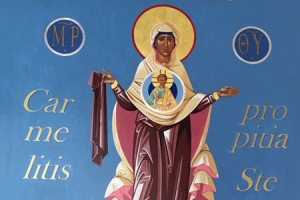
Message from Desiderio García Martínez, O. Carm., Prior General
‘All Tears Reach Heaven’
Dear Carmelite family: Happy Feast of Our Lady of Mount Carmel!
Once again, the Solemnity of Our Lady of Mount Carmel is fast approaching. This year we recall that, on September 24, 1726, Benedict XIII extended the celebration of the feast of Our Lady of Mount Carmel to the whole of Christendom. We give thanks to God for all the blessings our Order has received during these eight centuries of history, especially for having a Mother to whom we can turn and who cares for us. St Thérèse of the Child Jesus, with some surprise, acknowledged this: “For I have, Blessed Virgin, two mothers to whom I can turn, one on earth and the other in Heaven, whereas you have no Mother in Heaven to love, for you are the Mother yourself.”
1. Mary fills us with gratitude. In Bethlehem, Mary wrapped her Son in swaddling clothes (cf. Lk 2:12). That gesture reminds us that Jesus, as well as being true God and true man, was cared for and loved from the moment of his birth. In Sacred Scripture, “being wrapped in swaddling clothes” is a sign of protection and maternal love: “When I was born […] the first thing I did, like everyone else, was to cry. I was brought up with tender care and swaddling clothes …” (Wis 7:3–4); on the contrary, nakedness, “not being wrapped in swaddling clothes,” indicates vulnerability and helplessness: “No one took an interest in her […] No one bathed her, nor rubbed her with salt, nor wrapped her in swaddling clothes […] they abandoned her…” (cf. Ezek 16:4–5). How difficult it is to care for the lives of others without first, with gratitude, recognising one’s own as a miracle and an undeserved gift! Kierkegaard noted that gratitude is, apart from being the noblest feeling that can spring from the human heart, the “deepest spiritual response to the gift of one’s own existence.” Gratitude is, in fact, a good gauge for measuring our human and spiritual quality. Grateful people make everything easy and a blessing; instead of complaining about what they lack, they value what they have; they shun facile criticism and gossip... Mary, our Mother, teaches us to make our lives a Magnificat, a song of thanksgiving.
2. Mary clothes us in light. The Carmelite Order was founded in the Holy Land at the end of the 12th century. Amidst great danger, we were forced to migrate to Europe. To whom do we turn in the midst of adversity and tribulation? To our Mother. She defended us. We celebrate with joy the 775th anniversary–according to Carmelite tradition–of the presentation of the Holy Scapular to Saint Simon Stock. This is not an amulet that guarantees our salvation, but a sacramental that reminds us of our responsibility to wear the garment of baptism. A very special garment, made of linen, which, according to Scripture, represents the “good works” of the saints (cf. Rev 19:8). Linen is extracted from a plant, which must be beaten, again and again, until it is softened and the whiteness of its fibres is extracted. The Holy Scapular is a suit of armor that defends us from the blows (like the linen) that we receive in the battles of this life. Mary defends us and shows us how to persevere in always doing good. As a Hebrew epitaph once prayed: “A good deed done on earth causes a thread of light to be born in heaven. Many good deeds done on earth cause many threads of light to be born in heaven. For what purpose? To weave and knit together a garment. A garment of light that gives glory to the Master of all works.” Mary earnestly teaches us to clothe ourselves in this armor (cf. Rule 19), woven from many “threads of light”: mercy, gentleness, peace, justice, forgiveness, joy, hope, love, etc.
3. Mary clothes us in humanity. On the May 25, Pope Leo XIV’s first encyclical, Magnifica Humanitas, was published, addressing the protection of human dignity in the age of artificial intelligence. He has asked the whole Church to read and reflect upon it. In the face of the growing link between technology, power and violence, a new civilisation of love is proposed to us as an alternative. Pope Leo XIV invites us to invoke Mary, Mother of Life, who looks upon us with mercy. We could cite many testimonies that would compel us to bow down before the suffering of the innocent: those who struggle to find work and make ends meet; those who emigrate from their countries without access to education and healthcare; war, famine, broken love. One example is sufficient. It is that of a prominent figure in French culture, Emmanuel Mounier, the believing philosopher, who felt the weight of his young daughter’s irreversible illness, as she lived in a vegetative state:
As I approached this silent cradle, I felt as though I were approaching an altar, a sacred place where God spoke through a sign. A piercing and profound sadness; profound, yet light and transfigured. And, around it, a sense of adoration… I have no other word for it. Never have I known so intensely what prayer is as when I spoke to that forehead which gave no reply, when my eyes ventured towards that lost gaze that looked towards the infinite behind me. Mystery… and it can only be a mystery of goodness. One must dare to say: a grace too lofty, a living host among us, silent as the Host, resplendent as She… – Mounier says to his wife –: For how many months did we wish she would die if she was going to remain like this! But… is this not mere bourgeois sentimentality? What does “being unhappy” mean to her? Who can assure us that she is? Who knows if we are not being asked to keep and adore this host among us…? My little Françoise, to me you are the very image of faith [Letter to Paulette Mounier, 1964, 671].
His testimony is deeply moving. Let us implore the Mother and Beauty of Carmel to teach us to see God’s invisible work and to view the world from below, from the perspective of the most vulnerable. The Joys of Our Lady of Mount Carmel are very old and popular poems, composed mainly to honour the Virgin Mary. They bring together ancient stories from the Carmelite tradition: “For you are our comfort, the most powerful means. Be our loving refuge, Mother of God of Mount Carmel.” The biblical scholar Miguel Aiguani, O. Carm. (1320–1400), affirmed that Mary is an “impregnable castle,” a secure stronghold in which to take refuge when we feel that life is threatened by death. St John Chrysostom insisted that “there is no motherhood without tears.” Tears nourish the soul. God gathers those tears, as the psalmist says, in His “skin flask.” Not a single tear is lost; they all go straight to the heart of God (cf. Ps 55). Tears intercede so that the Church’s mission may be more fruitful. Weeping for the pain of our neighbor or for the rejection we have suffered has a sanctifying and restorative power.
May Our Lady, whom we proclaim Mater et Decor Carmeli, protect us and, through her heavenly intercession, grant us the strength, hope and joy we need to reflect God’s goodness as we serve humanity.
Fraternally in Carmel,


