






O.Carm
Celebrating At Home - 7th Sunday in Ordinary Time

Generous Relationships
(Luke 6:27-38)
This week, Jesus’ radical teaching focusses on lavish generosity in human relationships. The opening words, ‘Love your enemies,’ set the tone of the rest of the text.
Again, at first glance the words of Jesus seem absurd and almost impossible to follow. Should we really offer the other cheek to someone who strikes us?
Are we really meant to give the rest of our clothes to someone who steals our coat? Are we really meant not to fight to get our property back from the one who steals from us? Is this what Jesus really is asking us to do?
The point of this kind of prophetic speech by Jesus is to stimulate his audience (and us) to reflect on the whole pattern of behaviour in human relationships.
Jesus is not really suggesting rules to be followed literally in certain circumstances. Rather, we are being invited to reflect on how we can respond to unreasonable demands and personal injuries with nothing but generosity and abandoning all claims to retribution and restitution.
What Jesus is suggesting are responses to insults and injuries which break cycles of violent retaliation and provide pathways to peace and reconciliation.
By doing this, Jesus says, we can allow the utter generosity of God to shine through us. Doing good only to those who do good to us is not enough to convey the generosity and welcome of God. Only acting with overwhelming generosity and compassion allows the mercy, generosity and compassion with which God meets each of us to be clearly seen in concrete actions.
When we act according to the generosity, mercy and compassion of God, refraining from judgement and condemnation and granting pardon, we meet God’s overwhelming abundance of generosity to ourselves.
- pdf Celebrating At Home - 7th Sunday in Ordinary Time [PDF] (3.55 MB)
- default Celebrating At Home - 7th Sunday in Ordinary Time [ePub] (2.60 MB)
- pdf Celebrando en Familia - VII Domingo del Tiempo ordinario (479 KB)
- pdf Celebrando in Casa - VII Domenica del Tempo ordinario (489 KB)
- pdf Celebrando em família - Sétimo Domingo Do Tempo Comum (487 KB)
Elective Chapter of the Indonesian Province Held

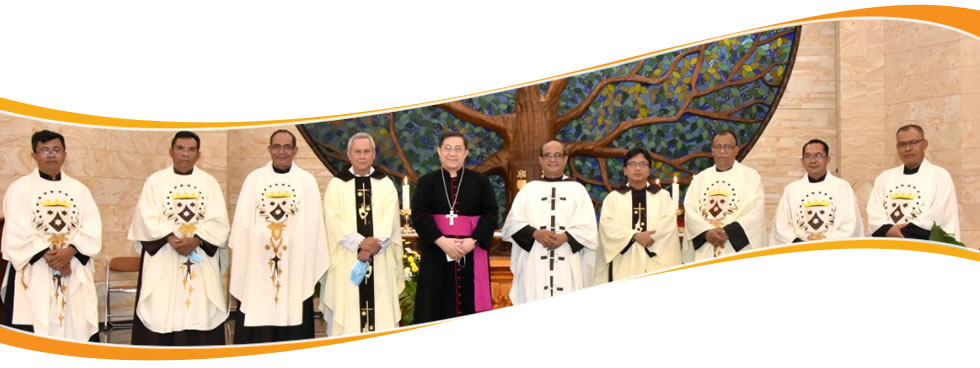
The members of the Indonesian Province of the Carmelite Order held their elective chapter on February 10-15, 2025.
In 1923, the territory of the Diocese of Malang was entrusted to the Dutch Province o the Carmelite Order. On July 6, the first members of the Province arrived in Malang. After 15 years, their number had grown to 25 and the first Indonesian Carmelite had been ordained priest. On March 19, 1960, the foundation was established as a General Commissariat. Seven years later, this was raised to a province.
In 1965 the first foundation was made outside the Diocese of Malang on the island of Sumatra in the Diocese of Medan. Four years later, the province establshed a foundation in the Diocese of Endehena on Flores Island. In 1973, the Diocese of Jakarta was founded.
As of 2023, the Province has a Commissariat in Sumatra and the East. It also has a mission in China. There is the beginnings of a foundation in Hong Kong.
In 2023 the Province has 405 members in 64 houses. Thirteen members live in other provinces. The homepage for the province is: www.karmelindonesia.org
Three major decisions were taken by this Chapter. The commitment to the new East Indonesia Province was formalized. Support will be in the form of finance, formation, and guidance. For three years the Indonesian Province will financially support the new entity based on the number of solemnly professes members.
Due to the change in the culture and situation of the province, the formation manual will be revised based on psychology, sociology, and technology. The present situation of the Church and Order will also be taken into consideration.
The third major decision is a commitment to play bigger role in the Order due to the situation faced by our Order, especially with the European provinces which there are few vocations. This is building on the support that the Indonesian Province is already giving to many parts of the Order through personnel.
The following members were elected to leadership at the meeting:
Provincial | Provincial | Provinciale
FX Hariawan Adji, O. Carm.
Vice Provincial | Vice Provincial | Vice Provinciale
Ignasius Budiono, O. Carm.
1st Councilor | 1er Consejero | 1o Consigliere
Ignatius Loyola Joko Purnomo, O. Carm.
2nd Councilor | 2do Consejero | 2o Consigliere
Fransiskus de Sales Borta Parlindungan R, O. Carm.
3rd Councilor | 3do Consejero | 3o Consigliere
Stanislaus Lirmanjayasastra, O. Carm.
4th Councilor | 4do Consejero | 4o Consigliere
Alexander Dimas Pele Alu, O. Carm.
Prior General's Schedule for February 2025

Fr. Míċeál O'Neill, the prior general, has the following schedule planned for the month of February 2025:
February 1: Venezuela, celebration of the centennary of the affiliation of the Carmelite Sisters of Madre Candelaria to the Carmelite Order
February 3-7: Canonical visitation of the Italian Province (Part 1)
February 9-23: Provincial Chapter of the Indonesian Province; Visit to Carmelites in Sumatra
February 25-28: Fatima: Congress of the Carmelite Third Order
Prayer for the TOC General Assembly in Fatima Announced
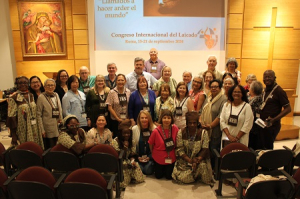
The General Assembly of the Lay Carmelite Order of the Blessed Virgin Mary (historically known as the Third Order of Carmel, TOC) will be held in Fatima from February 25 to March 2, 2025.
The Committee for the event has prepared a prayer text that we can use to accompany in faith all participants who will be working for our Third Order.
Let us join in prayer that the assembly will be fruitful and fruitful!
Message on the World Day of Consecrated Life

Prior General Marks the World Day for Consecrated Life with a Reflection for the Carmelite Family
On Sunday, February 2, the Church celebrated the feast of the Presentation of the Lord as well as the 29th World Day for Consecrated Life. The celebration for Consecrated Life began in 1997 under St. John Paul II. Pope Francis joined with religious men and women for the celebration of First Vespers. He spoke of the three evangelical counsels: poverty, chasstity, and obedience. He said, “They manifest the goodness of those things in the order of love, rejecting everything that can obscure their beauty— selfishness, greed, dependence, violent use and misuse for the purpose of death and destruction—and embracing instead all that can highlight that beauty: simplicity, generosity, sharing, and solidarity.”
To mark the celebration within the Carmelite Family, Fr. Míċeál O’Neill, the prior general, has written his reflections on three themes-- consecrated life, fraternal affirmation and correction, and the significance of the jubilee year for us, Carmelite religious. He says that he writes these words “not as the answer to all our challenges but as part of a reflection that is ongoing in our Order.”
The Jubilee of Consecrated Life will be celebrated worldwide on October 8-12, 2025, as part of the yearlong Jubilee.
Carmelite Sisters Celebrate 100 Years of Affiliation

An Irishman signed the decree, 100 years later, another Irishman confirms it
Altagracia de Orituco, Guárico State, Venezuela, was the scene for the celebration of the centenary of the affiliation of the Congregation Hermanas Carmelitas de Madre Candelaria, to the Order of Carmel on February 1, 2025. The Congregation was founded by Mother Candelaria de San José in November 1903 and affiliated to the Order on March 25, 1925. In an historical coincidence, the Irishman Elias Magennis, as prior general, received the affiliation while 100 years later, another Irish prior general, Míceál O'Neill, O. Carm., confirmed the affiliation.
The fraternal, cultural, and religious sharing was not long in coming; in the “De la Cumaná” field the stage was set to achieve a real celebration. The faithful of the town came to be part of the celebration. With songs of praise, dynamics and dance presentations, the festive day began.
It should be noted that before starting the liturgical celebration, those present were able to learn a little more about the life of the second Venezuelan Blessed and the Carmelite family, thanks to the presentation of Fr. Luis Maza, O. Carm, General Councilor for the Americas. He highlighted the heroic virtues developed in Mother Candelaria.
“She had the infused Charism of Carmel from her beginning, since she took the name of St. Joseph who is the patron saint of the Carmelite Order.” He continued with great emotion, “She was an affable woman who listened to the voice of God in her interior; and also, the voice of the brothers and sisters in need.”
He added: “Carmel is a large family comprised of: friars, nuns, congregations of active sisters, hermits, and apostolic groups. We all live under the Rule of St. Albert as a “Gift of Jesus,” embracing the Gospel, being contemplatives in prayer, fraternity and service in the midst of the people. We strive to be a prophetic sign of justice and solidarity.”
Finally, he emphasized that: “An Irishman [Prior General Elias Magennis] signed the decree of the annexation of the Congregation to the Carmelite Order in 1925; and 100 years later another Irishman confirms it.” At the conclusion, the group moved into the celebration of the Eucharist.
Celebrating At Home - 6th Sunday in Ordinary Time

Blessings & Woes
(Luke 6:17, 20-26)
Over the next three Sundays we will listen to almost the whole of Luke’s Sermon on the Plain.
Luke has used Matthew’s Sermon on the Mount but changed and shortened it significantly. It is important to realise that both Sermons are more than only the Beatitudes which begin them.
In Luke, Jesus’ words are addressed to the disciples, not to the gathered crowd, so we might think of the sermon as a teaching about discipleship.
The whole of the Sermon is quite confronting and challenging, especially those verses which form today’s Gospel reading. The Sermon begins with four blessings and four woes.
At first glance it is very odd to call people who are poor, hungry, weeping and hated blessed, fortunate or happy. But we have to hear the words of Jesus in the context of the religious teaching and general thinking which belonged to his time. Then, it was generally thought that those who suffered these things were experiencing the effects of either their own personal sinfulness or that of an ancestor. Similarly, those with wealth, plenty of food and high status were considered blessed and rewarded by God.
In the beatitudes Jesus reverses this way of thinking and effectively says that the opposite is true: God is, in fact, on the side of the poor and suffering. They experience suffering through no fault of their own (e.g., sin), it is simply the situation in which they find themselves. As the woes (‘Alas for you…’) make clear, the rich have a great deal to lose. The poor and suffering are fortunate in Jesus’ view because they have a need which the overflowing generosity of God can fill.
They are in situations which attract God’s impulse to save. The Kingdom of God is already among them.
All things being equal, being wealthy, well-fed, happy and enjoying a good reputation are perfectly desirable. But in Jesus’ view all things are not equal. Often the poor are poor precisely because the rich are rich. The powerless suffer at the hands of those who have power and influence. ‘The rich get richer, and the poor get poorer’ is a saying that endures even to this day.
Throughout his Gospel, Luke has Jesus insist repeatedly on the need for his followers to embrace poverty and to be under no illusions about the danger of wealth. Those who remain possessed by their possessions and the privileges they bring are unable to receive the gift of salvation, but even they can join the blessed through their care of the poor.
- pdf Celebrating At Home - 6th Sunday in Ordinary Time [PDF] (2.84 MB)
- default Celebrating At Home - 6th Sunday in Ordinary Time [ePub] (2.19 MB)
- pdf Celebrando en Familia - VI Domingo del Tiempo ordinario (488 KB)
- pdf Celebrando in Casa - VI Domenica del Tempo ordinario (497 KB)
- pdf Celebrando em família - Sexto Domingo Do Tempo Comum (495 KB)
Leadership of the European Area Meet in Rome

Gathering together
An assembly of all the leaders of the European Area (made up of the provincials, commissaries general, delegates general and their delegates) took place at St Albert’s International College (CISA) in Rome on January 13 and 14, 2025. For the first time, this meeting also included the regional superior for the very distinct group of Carmelites of the St. Thomas Province in India living and ministering in Germany. This was the sixth meeting of the entire European Area since the General Chapter (of which four were in-person meetings in Rome and a further two meetings were held online because of the pandemic).
First Day: Reviewing the Past
The Eucharist to begin the meeting was celebrated by Tadeusz Popiela, O. Carm, the prior of St Albert’s. Reflecting the many nationalities of the Area, each session of the meeting began with one of the assembly reading the Jubilee Prayer in their own language.
During the meeting, the assembly discussed and evaluated the retreat and gathering for young Carmelites in Europe that had taken place in Nocera Umbra (Italy) the previous summer. Patrick Mullins, O. Carm., directed this retreat for more than thirty participants which included also a visit to nearby Assisi. Overall, it was seen as a very positive experience which many wanted to repeat. It was agreed that a gathering of the young Carmelites in Europe would be arranged for 2026 and, if possible, also on an earlier date.
The leaders of the European Area were also happy to hear of the various initiatives for the Jubilee Year and especially of the high numbers of “Expressions of Interest” that had been received for the Carmelite “Jubilee of Youth” Gathering in Rome in the summer of 2025.
As the European Area is divided into three (sub) regions (Italy-Malta, Iberia and North-Europe), the presidents of each of these regions (Joseph Saliba, David del Carpio Horcajo and Brendan Grady) presented a report on their region’s work with regard to the ministry of vocations, the care of creation and the other activities that were taking place within their region. During the meeting, time was also dedicated for each Regions to meet separately and examine their own issues.
Each leader present presented a report on what was going well in their province, general commissariat or general delegation, on the challenges that they are facing and on their initiatives for the Jubilee Year. It was particularly interesting to note how many of our churches (sanctuaries and shrines) had been designated as Jubilee Churches in the dioceses. Working in small groups, the assembly evaluated our Carmelite situation in Europe.
After these reports, the assembly discussed formation within Europe. They listened to the report sent by Alejandro López-Lapuente Villalba, director of novices, on the situation of the European international novitiate that takes place in the Convent of St. Andrew in Salamanca. Other provincials who have formation houses in their reality shared their situation with the assembly.
Day Two: Celebrating Jubilee & Partnerships
The leaders of the European Area met in the morning of the second day and made their Jubilee Pilgrimage through the Holy Door of the Basilica of St Peter’s. Following this, the prior general, Míċeál O’Neill, presided at the celebration of the Eucharist in the Irish Chapel of Saint Columbanus in the Vatican Grottoes of St Peter’s Basilica. During his homily, the Prior General described the mosaic behind the altar and noted that “it is the Gospel and the person of Christ that Europe has to rediscover in all simplicity and truth and we by placing Christ and his Gospel at the centre of our lives, can be the witnesses and the helpers in that quest.”
The prior general’s homily is being distributed along with this summary of the meetings.
After the Eucharist, the members visited the Church of Santa Maria in Traspontina where they met with the prior, Giuseppe Midili, O. Carm., and the other members of the community. Having visited the church and having heard of the expanded vision for Traspontina (as both a parish and also a place for welcoming all pilgrims especially members of the Carmelite Family who come to Rome), the group shared breakfast together.
Gathering once again in assembly, the participants listened to a presentation by the prior general on paternity and partnership. He noted how much the structure of the Order had changed since 1989, with a large numbers of formation candidates now coming from what were previously called the “emerging realities” of the Order. As time goes on, a necessary paternity (which guides the new and fragile realities) is gradually replaced by partnership (where entities want to work together for the benefit of each partner). Afterward the presentation, the leaders spent some time discussing the topic in both regional groups and together in full assembly.
The text of the prior general’s talk is being distributed along with this summary of the meeting of the leadership
In addition, the assembly reflected on the value of the annual European Area meetings over the last six years. They considered them to be very worthwhile. After some discussion, it was agreed to recommend to the General Chapter that they would continue to be held every year (during the next six-year period) rotating between Rome and a location elsewhere. Apart from the forthcoming General Chapter, the date for the next meeting of the European Area was fixed for January 2026 in Rome. The meeting concluded with the singing of Flos Carmeli.
Read here the pdf Thoughts and Reflections for the Meeting of the European Area (112 KB) by the Prior General, Míċeál O'Neill, O. Carm.
Vitam Coelo Reddiderunt

|
23-1-25 |
|
|
|
|
|
28-01-24 |
02-06-37 |
12-10-63 |
12-10-67 |
Triennial Chapter of the Carmelite Nuns in Sutri Held

Triennial Chapter of the Carmelite Nuns of SS.ma Concezione Monastery in Sutri, Italy Held
The Elective Chapter of the Carmelite Monastery of the SS Concezione in Sutri (Italy) was held on February 2, 2025, the Feast of the Presentation of the Lord in the Temple.
The monastery was founded in 1515 or, possibly 1489 by the Carmelites of the Congregation of Mantua who had a house of the Congregation in Sutri. St. Paul of the Cross, the founder of the Congregation of the the Passionists, gave spiritual exercises and meditations at the monastery. In 1641 Sr. Clara Androsilla and other sisters founded the Veliternine monastery.
More recently, the nuns of the Carpineto Romano monastery came to help restore the community of Sutri which was close to closing.
The monastery belongs to the S.M. Maddalena de' Pazzi Federation.
The following nuns were elected:
Prioress | Priora | Priora:
Sr M. Martina del Sacro Cuore, O. Carm.
1st Councilor | 1ª Consejera | 1ª Consigliera:
Sr Teresa di Gesù Bambino, O. Carm.
2nd Councilor | 2ª Consejera | 2ª Consigliera:
Sr M. Francesca Romana della Redenzione, O. Carm.
Treasurer | Ecónoma | Economa
Sr Teresa di Gesù Bambino, O. Carm.
Formator | Formadora | Formatrice
Sr M. Martina del Sacro Cuore, O. Carm.