





O.Carm
Fr. Dimas Appointed Delegate General for Formation
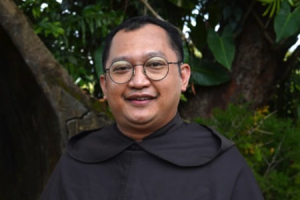
Dimas Pele Alu Appointed New Delegate General for Formation
Alexander Romualdus Dimas Pele Alu, O. Carm., has been appointed the Delegate General for Formation by the General Council.
He was born in Batu, Indonesia, on June 19, 1988. He completed his secondary education at the Seminari Menengah Roh Kudus in Tuka, Bali. He made his temporary profession at the Chapel of the Regina Apostolorum Monastery in Batu on July 12, 2009, and later his solemn profession at the Sacred Heart of Jesus Parish in Kayutangan, Malang, on July 9, 2015. He was ordained a priest at the Maria Bunda Karmel Cathedral in Malang on August 25, 2016.
Alexander pursued higher education in philosophy and theology, earning a Bachelor’s Degree in Philosophy and Theology from STFT Widya Sasana in Malang (2009–2013) and a Master’s Degree in Philosophy and Theology from the same institution (2014–2016). He further specialized in biblical studies, completing a Master’s Degree in Sacred Scripture at The Catholic University of America in Washington, DC (2018–2020). Currently, he serves as a lecturer at STFT Widya Sasana in Malang and as a formator for post-novitiate friars at the St. Titus Brandsma Friary in Rajabasa-Malang.
Br. Lester Hallig Appointed Co-Secretary General
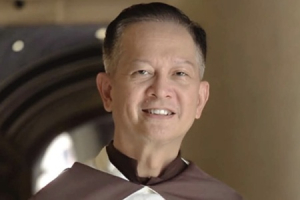
Br. Marc Jozef Lester G. Hallig, O. Carm., Appointed Co-Secretary General According to Constitution # 321
Marc Jozef Lester G. Hallig, O. Carm., is a Carmelite brother currently serving in the Philippine Province of St. Titus Brandsma. His journey reflects a commitment to both academic and spiritual service, having graduated Magna Cum Laude with a Master of Arts in Theology, majoring in Sacred Scriptures, in 2024.
In his current ministry, he balances educational and communications-related roles with historical research. He serves as an instructor for synthesis and integration papers at Our Lady of the Angels Seminary College and the Inter-Congregational Theological Center. Recently, in 2026, he took on the role of co-founding editor for Prothesis, an academic journal focused on philosophy and theology. As a hagiographer and postulator, he is also currently tasked with the solemn duty of investigating the lives of Isagani Miro Valle and Engelbert Van Vilsteren as potential candidates for sainthood.
Before his perpetual profession, he enjoyed a fruitful career as journalist in media and communications. He served as an editor in chief for various national magazines and was an editor and long-time contributor to the national broadsheet, The Philippine Star. Today, he integrates this background in journalism and media with his Carmelite religious life through various spiritual and research-oriented engagements.
Vitam Coelo Reddiderunt

|
9-02-26 |
|
|
|
|
23-03-26 |
|
|
|
Catalonian Province Holds Elective Chapter in Olot
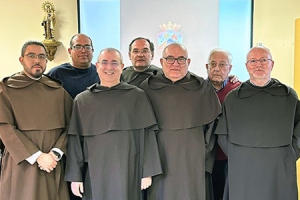
Catalonian Province of Most Holy Redeemer Holds Elective Chapter in Olot, Spain
The Catalonian Province held its 2026 Provincial Chapter in the Carmelite house in Olot. The Chapter took place March 24-26, 2026.
The Prior General, Desiderio García Martínez, O. Carm., presided over the opening Eucharist. Later on, in his address to the Chapter, the Prior General reminded the participants that Father Bartolomé Xiberta, O. Carm., (a famous theologian and member of the Catalonia Province who died in 1967) used to say, “I cannot understand how anyone could serve Jesus and Mary without joy.” The prior general asked God, through the intercession of Father Xiberta, to continue strengthening the Carmelite vocation of the members of the Province.
Monsignor Jordi Font, a diocesan priest and rector of the seminary who holds doctorates in theology and in liturgy, then gave the chapter participants a very profound reflection on the Prophet Elijah.
As normal, various reports were presented during the chapter including the report of the outgoing Prior Provincial (Javier Domingo Garmón Calvo, O. Carm.), the report of the Delegate of Venezuela (Frederick Kenny Castro Salazar, O. Carm.) and the reports of the priors of the three communities Olot (Jordi Ma Gil O. Carm.), Barcelona (Raúl Masana, O. Carm.) and Terrassa (Manuel Bonilla, O. Carm.). Further reports were also presented regarding the Nuns of the Province, financial aspects and formation.
Good discussion was held around various proposals which looked to discerning the future of the province, formation, and regarding the various ministries of the province. Significant time was spent on reflecting on Carmel in Venezuela.
Some of the oldest foundations in the Order were part of mid-13th century Catalonia: Perpignan (1265) and Narbonne (from 1321). In 1336 the vicariate of Perpignan was erected, which three years later was called “Perpignan and Majorica”; in 1342 it was erected into a province named Majorica and from 1354 was called the province of Catalonia.
In 1835, all the convents of the province of Catalonia were suppressed by the civil authorities.
Towards the end of the 19th century, with the efforts of the brothers of Majorica (1875), the work of restoration began, culminating in the restoration of the “Province of Spain” (1889); this was divided in 1906 into the Baetic and Aragon-Valencian provinces. From this, in 1932, houses were detached to establish the General Commissariate of Catalonia, which, in 1950, was again raised to the status of a province. Before the restoration of the province, beginning in 1894, the brothers worked on the restoration of the provinces of Rio de Janeiro, Bahia, and Pernambuco, and later also Poland; they carried out missionary work in Puerto Rico and have been active in Venezuela since 1922. Beginning in 1933, it had provincial commissariats in Brazil (Minas Gerais) and Venezuela.
The 2023 Status Ordinis reflects that the province has 27 members living in six houses. The titular of the province is the Most Holy Redeemer.
The following members were elected to lead the province for the next triennium:
Prior Provincial | Prior Provincial | Priore Provinciale
Luis José Maza Subero, O. Carm.
1st Councilor | 1er Consejero | 1o Consigliere
Frederick Kenny Castro Salazar, O. Carm.
2nd Councilor | 2do Consejero | 2o Consigliere
Nicolás Ubaldo Carrizalez Castillo, O. Carm.
3rd Councilor | 3er Consejero | 3o Consigliere
José López Villalba, O. Carm.
4th Councilor | 4to Consejero | 4o Consigliere
Joan Güell i Casademont, O. Carm.
Celebrating At Home - Easter Sunday
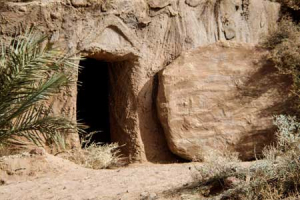
An Empty Tomb, Lives Changed For Ever,
Enduring Presence (John 20:1-9)
It’s not hard for us to share Mary’s sense of emptiness and bewilderment when she arrives at the tomb.
If we were to read the next few verses from John’s Gospel, we would read a story of overwhelming joy as Mary Magdalen meets the risen Jesus. When Jesus speaks her name, Mary recognises him and
sadness and emptiness give way to joyful reunion.
It’s a story of transformation - how things can change when we meet the risen Jesus.
In a way, we are all caught in tombs which hold loved ones, our experiences of hurt and harm, our fears and anxieties, especially now.
What we seem to need above all at this time is presence. Yet, this is the time when we experience absence most of all - being apart from loved ones, family and friends.
The practice of the presence of God can help us - just frequently reminding ourselves that we always in the presence of God, that we can talk to God as one friend to another, that God is in this moment with us, that God is on our side no matter what comes our way, that God is our constant companion.
Eventually, we will begin to feel more deeply God’s presence, not just beside us, but within us. Eventually, the fears and anxieties, the past hurts, and disrupted relationships begin to melt away.
Where once there was only absence, now there is calm, loving, healing Presence and we know we are not alone. Our tombs begin to empty and joy becomes possible again.
Resurrection is all about death giving way to life, the impossible becoming possible, absence becoming presence.
May all your tombs be empty!
- pdf Celebrating At Home - Easter Sunday of the Resurrection [PDF] (3.28 MB)
- default Celebrating At Home - Easter Sunday of the Resurrection [ePub] (3.34 MB)
- pdf Celebrando en Familia - El Domingo de Pascua (579 KB)
- pdf Celebrando in Casa - La Pasqua (588 KB)
- pdf Celebrando em família - Domingo de Páscoa (588 KB)
Celebrating At Home - Good Friday
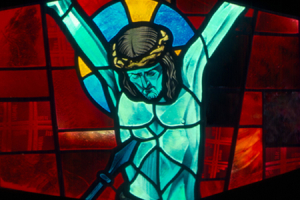
Love Revealed in the Passion
(John 18:1 - 19:42)
Jesus left with his disciples and crossed the Kedron valley. There was a garden there, and he went into it with his disciples. Judas the traitor knew the place well, since Jesus had often met his disciples there, and he brought the cohort to this place together with a detachment of guards sent by the chief priests and the Pharisees, all with lanterns and torches and weapons. Knowing everything that was going to happen to him, Jesus then came forward and said, ‘Who are you looking for?’ They answered, ‘Jesus the Nazarene.’ He said, ‘I am he.’ Now Judas the traitor was standing among them. When Jesus said, ‘I am he’, they moved back and fell to the ground. He asked them a second time, ‘Who are you looking for?’ They said, ‘Jesus the Nazarene.’ Jesus replied, ‘I have told you that I am he. If I am the one you are looking for, let these others go.’ This was to fulfil the words he had spoken: ‘Not one of those you gave me have I lost’.
Simon Peter, who carried a sword, drew it and wounded the high priest’s servant, cutting off his right ear. The servant’s name was Malchus. Jesus said to Peter, ‘Put your sword back in its scabbard; am I not to drink the cup that the Father has given me?’
Simon Peter, with another disciple, followed Jesus. This disciple, who was known to the high priest, went with Jesus into the high priest’s palace, but Peter stayed outside the door. So the other disciple, the one known to the high priest, went out, spoke to the woman who was keeping the door and brought Peter in. The maid on duty at the door said to Peter, ‘Aren’t you another of that man’s disciples?’ He answered, ‘I am not.’ Now it was cold, and the servants and guards had lit a charcoal fire and were standing there warming themselves; so Peter stood there too, warming himself with the others.
The high priest questioned Jesus about his disciples and his teaching. Jesus answered, ‘I have spoken openly for all the world to hear; I have always taught in the synagogue and in the Temple where all the Jews meet together: I have said nothing in secret. But why ask me? Ask my hearers what I taught: they know what I said.’ At these words, one of the guards standing by gave Jesus a slap in the face, saying, ‘Is that the way to answer the high priest?’ Jesus replied, ‘If there is something wrong in what I said, point it out; but if there is no offense in it, why do you strike me?’ Then Annas sent him, still bound, to Caiaphas, the high priest.
As Simon Peter stood there warming himself, someone said to him, ‘Aren’t you another of his disciples?’ He denied it saying, ‘I am not.’ One of the high priest’s servants, a relation of the man whose ear Peter had cut off, said, ‘Didn’t I see you in the garden with him?’ Again Peter denied it; and at once a cock crew.
Pilate then had Jesus taken away and scourged; and after this, the soldiers twisted some thorns into a crown and put it on his head, and dressed him in a purple robe. They kept coming up to him and saying, ‘Hail, king of the Jews!’ and they slapped him in the face.
From that moment Pilate was anxious to set him free, but the Jews shouted, ‘If you set him free you are no friend of Caesar’s; anyone who makes himself king is defying Caesar.’ Hearing these words, Pilate had Jesus brought out, and seated himself on the chair of judgement at a place called the Pavement, in Hebrew Gabbatha. It was Passover Preparation Day, about the sixth hour. Pilate said to the Jews, ‘Here is your king.’ They said, ‘Take him away, take him away. Crucify him!’ Pilate said, ‘Do you want me to crucify your king?’ The chief priests answered, ‘We have no king except Caesar.’ So in the end Pilate handed him over to them to be crucified.
When the soldiers had finished crucifying Jesus they took his clothing and divided it into four shares, one for each soldier. His undergarment was seamless, woven in one piece from neck to hem; so they said to one another, ‘Instead of tearing it, let’s throw dice to decide who is to have it.’ In this way the words of scripture were fulfilled: They shared out my clothing among them. They cast lots for my clothes. This is exactly what the soldiers did.
Near the cross of Jesus stood his mother and his mother’s sister, Mary the wife of Clopas, and Mary of Magdala. Seeing his mother and the disciple he loved standing near her, Jesus said to his mother, ‘Woman, this is your son.’ Then to the disciple he said, ‘This is your mother.’ And from that moment the disciple made a place for her in his home.
After this, Jesus knew that everything had now been completed, and to fulfil the scripture perfectly he said, ‘I am thirsty.’ A jar full of vinegar stood there, so putting a sponge soaked in vinegar on a hyssop stick they held it up to his mouth. After Jesus had taken the vinegar he said, ‘It is accomplished’; and bowing his head he gave up the spirit.
After this, Joseph of Arimathaea, who was a disciple of Jesus though a secret one because he was afraid of the Jews asked Pilate to let him remove the body of Jesus. Pilate gave permission, so they came and took it away. Nicodemus came as well - the same one who had first come to Jesus at night-time and he brought a mixture of myrrh and aloes, weighing about a hundred pounds. They took the body of Jesus and wrapped it with the spices in linen cloths, following the Jewish burial custom. At the place where he had been crucified there was a garden, and in the garden a new tomb in which no one had yet been buried. Since it was the Jewish Day of Preparation and the tomb was near at hand, they laid Jesus there.
Celebrating At Home - Holy Thursday
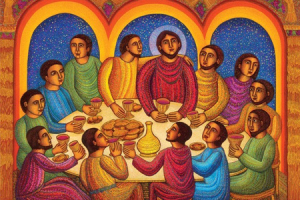
Washing Feet, Sharing Bread and Wine:
Love Poured Out in Service
The liturgy on Holy Thursday is a meditation on the essential connection between the Eucharist and Christian love expressed in serving one another. Christ is not only present in the Eucharist but also in the deeds of loving kindness offered to others through us.
We are the ones who make ‘real’ the presence of Jesus in every smile, kind word and loving action.
Fulton J. Sheen: New Blessed with Carmelite Ties
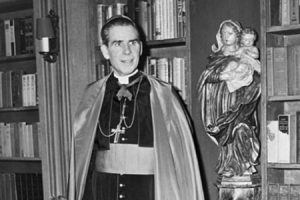
Bishop Fulton J. Sheen
A New Blessed with Carmelite Connections
The year 2023 was the 75th anniversary of Venerable Archbishop Fulton J. Sheen becoming a professed member of the Third Order of the Carmelites. He made his profession on July 17th, 1948, in the chapel of Whitefriars Hall in Washington, DC. The prior general, Kilian Lynch, received the archbishop’s commitment.
Venerable Fulton Sheen is scheduled to be beatified on September 24, 2026, in St. Louis, Missouri. He was declared Venerable in 2012, with a miracle involving a stillborn baby’s recovery approved in 2019. The future archbishop was born in El Paso, Illinois in 1895, although he later served as auxiliary bishop of New York (1951-1966) and bishop of Rochester, New York (1966-1969).
According to Allan Smith, director of the Archbishop Fulton J. Sheen Mission Society of Canada, Sheen loved Carmel and he kept up a lifetime of correspondence with many communities of Carmelites. He is quoted as saying of the Carmelites who prayed for him – “Your Carmelite prayers and sufferings do more good than all our preaching and hectic actions. We make the noise, we get the credit, we enjoy the consolation of a victory, seen and tasted. You are responsible for it and yet you cannot see the fruits. But you will on the day, when the Cross appears in the heavens, and every man is rewarded according to his works.”
Sheen also said “I want to cling onto Carmel for I love its love of Jesus. I refuse to give it up and like the blind man of Jericho, I shall go on shouting on to you continually to cure my blindness and my ills.”
Archbishop Sheen loved St. Therese and her devotion to the Holy Face. He spoke and wrote often about her and this special devotion.
During his time as auxiliary bishop of New York, Sheen was a trailblazer for evangelizing using the then new medium called television. His program garnered 10 million viewers each week at its peak. His television show, Life Is Worth Living, won an Emmy Award for Most Outstanding Television Personality in 1953. The Emmy is still given today, an award recognizing one’s contribution by others in the television industry. Life Is Worth Living, aired from 1952-1957 discussing various aspects of Catholicism. Two similar programs, also featuring Sheen, followed in 1958-1968. Prior to television, Sheen appeared on the radio program The Catholic Hour from 1928-1952.
Sheen discussing moral issues of the day, often used a blackboard to make drawings and lists to help explain the topic. When the blackboard was filled, Sheen would move to another part of the television set, and request one of his "angels" (one of the TV crew) to clean the blackboard.
The website BishopSheenToday.com is one of the best resource libraries, on the new Blessed, featuring his many fine books, videos and audio recordings.
Prior General's Schedule for April 2026
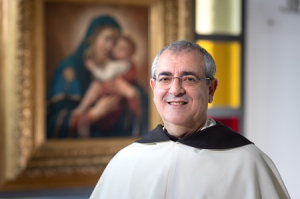
Fr. Desiderio García Martínez, O. Carm., the prior general, has the following schedule planned for the month of April 2026:
April 7-10, 2026: Provincial Chapter and Union of the Provinces ACV and Bética (España)
April 13-17, 2026: Provincial Chapter of the British Provine
April 18-20, 2026: Canonical Visitation of the French Delegation
April 21-24, 2026: Chapter of the General Comissary of Portugal.
Inauguration of the Restored Chapel of St. Andrew Corsini
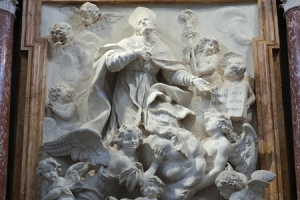
Inauguration of the Restored Chapel of St. Andrew (curated by Luca Venturi)
The traditional feast of St. Andrew Corsini, Carmelite Bishop of Fiesole, which takes place in the Basilica del Carmine in Florence on January 7, had a dual significance in 2026. There was the annual religious commemoration marking the passing of the Fiesole prelate in 1373. This year there was the inauguration of the restored chapel where Andrew’s remains rest.
The Holy Mass was celebrated by Bishop Stefano Manetti, bishop of Fiesole, in the restored chapel. Officials from the Ministries of the Interior and Culture, the Superintendence of Fine Arts, and the City of Florence, as well as members of the Corsini family, direct descendants of the holy bishop, attended.
In his homily, Bishop Manetti thanked all the various parties involved for working together to make such a beautiful and important restoration possible. He then recalled the figure of St. Andrew as an example of charity, apostolic zeal, and love for the poor.
The remarks by the various institutional representatives highlighted the importance of the work carried out, emphasizing the professionalism of the craftsmen involved as well as adherence to the timelines set by the PNRR project. The PNRR funds projects with European resources, focusing on the green transition, digitalization, sustainable infrastructure with a significant emphasis on urban regeneration and cultural heritage.
Special thanks also go to Fr. Raffaele Duranti who, as “host,” together with the community, oversaw the work of this very important restoration.
From Cammino OnLine (1/2026)