



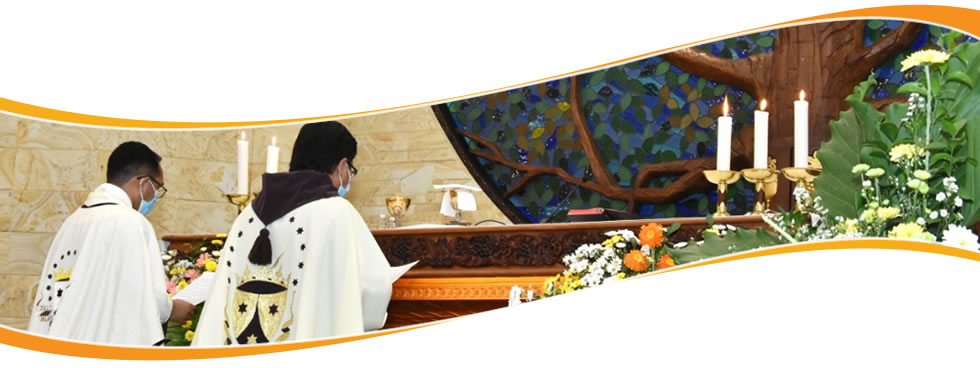


Letter of the Prior General of the Promulgation of the Rule for the Third Order
Curia Generalizia dei Carmelitani
Via Giovanni Lanza, 138
00184 Roma, Italia.
Prot. 115/2003
16th July 2003
Solemn Commemoration of
Our Lady of Mount Carmel
To my fellow Carmelites,
The text of the Third Order Rule, which I have pleasure in presenting, has had a long history. It has been claimed that the first such rule was written by Blessed John Soreth in 1455. It was to him that Pope Nicholas V addressed the famous bull "Cum Nulla" in 1451, thus putting the official seal of approval on lay people being members of the Order, living our spirituality in their own situation.
It was decided after the Second Vatican Council to submit the Third Order Rule to a process of updating. This process has lasted for more than thirty years and has involved the input of many lay Carmelites. An international commission was appointed by the General Council after the General Chapter of 1995 to oversee the final stages of this process. A new text was submitted to a meeting of lay Carmelites held in Rome during the Jubilee Year 2000 and the comments of the participants were incorporated into the final draft. The new General Council, elected at the General Chapter of 2001, wrote the final document to be presented to the Holy See for approval. This approval was received in 11 April 2003.
It has been a long process but worthwhile because now I believe that we have a fine document that will help lay Carmelites as they seek to live in allegiance to Jesus Christ. I wrote in the letter, "Into the Land of Carmel" to celebrate the 550th anniversary of the papal bull 'Cum Nulla': 'The Rule of St. Albert is the charismatic document that stands at the beginning of all forms of Carmelite life. In this brief text are the essential elements of the Carmelite charism in embryo. These elements have been worked out more fully through the years that followed and the Carmelite tradition has been enriched by the lives of countless individuals and especially by our saints. Every person who is called to live according to the Carmelite way has some effect upon the tradition and passes it on to others. Carmelite religious have Constitutions by means of which the Rule of St. Albert is applied to the conditions of the present day. In the same way, the Third Order have a rule which, like the Constitutions of the religious, seeks to make the connection between the Carmelite ideal and the present reality of those who pledge themselves to live by it."
Therefore with this decree I promulgate the Rule of the Carmelite Third Order otherwise known as the Carmelite Order Secular of the Blessed Virgin Mary of Mount Carmel. It is to be observed as from 8 December 2003. The time between the promulgation and the coming into effect (vacatio legis) is to provide an opportunity for studying the Rule and for adapting local statutes before it becomes obligatory. In order to reach as many people as possible in the shortest time, the promulgation of the text, and its publication, is through the medium of the internet. The original language of the Third Order Rule is Italian and this is the text which is normative in case of disputes over meaning. The General Curia will take responsibility for the translations into the other two official languages of the Order, namely English and Spanish, as well as Portuguese and French. These translations will be posted on the Order's web site as soon as possible so that as many lay Carmelites as possible will come to known the Third Order Rule as a source of inspiration for their life in Carmel.
The date of the promulgation (16 July) and the date of the coming into effect (8 December) were chosen in order to underline the position of Our Blessed Lady in the Carmelite's life. Mary is the Mother and Sister of all Carmelites, those consecrated in the religious life and those who live out their vocation as lay people. She teaches all of us to ponder over the events of life and to discern God at work in our world so that we can glorify God with her. May Our Lady of Mount Carmel guide us all as we seek to follow her Son faithfully.
Joseph Chalmers, 0.Carm.
Prior General
Lay Carmelites (Third Order)
The Lay Carmelite Order of the Blessed Virgin Mary (historically known as the Third Order of Carmel) is an association mainly of lay persons. Its members, responding to a special call of God, freely and deliberately commit themselves “to live in the following of Jesus Christ” according to the charism, traditions, and spirit of Carmel in union with the Prior General of the Carmelite Order. The members, though not in Religious Life, choose to live out their baptismal commitment according to the spirit of the Carmelite Order. Members are brothers and sisters of the Carmelite Family and share in the same call to holiness and in the same mission of the Carmelite Order.
The Carmelite Order is enriched by the faithful who, inspired by the Holy Spirit, order their lives according to the Gospel and in the Carmelite spirit. The Third Order and the other forms of Carmelite laity influence the spirit and the structure of the entire Carmelite family (Const. 2019 n. 114)


https://www.ocarm.org/en/itemlist/user/643-2022-03-04-14-55-17?start=1570#sigProId18db7fc4c2
In the Order, a General secretariat for the laity has been established. The General Councilor with responsibility for this area is Luis Maza Subero, O.Carm. The global plan for the Secretariat can be found below:
GENERAL SECRETARIATE FOR THE LAITY
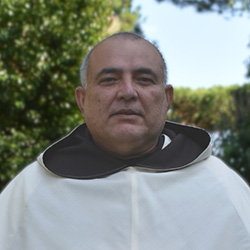
Luis José Maza Subero, O.Carm.
Never be afraid to go and bring Christ, into any environment, reaching out to the existential peripheries, and those also who appear to be farther way and more indifferent …. The Lord seeks everyone, wanting everyone to be able to feel the warmth of his mercy and love. The Lord tells us to be missionaries in the place where we live …. Because it is always good the share the joy of the Gospel. (ChV 117)
Every lay Carmelite is like a spark of love thrown into the forest of life: they must be able to enflame anyone who approaches them. (Third Order Rule, n.44)
The fruitfulness of the Carmelite charism is a reason for great joy. It is a proof of creative fidelity of people who under the influence of the Holy Spirit accept it with discernment and gratitude. Many people today take their inspiration from the Rule of St. Albert, thus adding to the Carmelite Family. In that family we find a plurality of ways of living in accordance with the charism: friars, nuns, affiliated congregations, Third Order and different expressions of lay life that seek their inspiration in Carmelite spirituality.
The diversity in the ways of living out the charism of our Order is an encouragement to us to open up new spaces for lay Carmelites, to foster their lay vocation which includes the three elements of formation, prayer and action aiding them to become witnesses to the lay mission in our society. Lay Carmelites are called to share in the mission of the Church and of our Order. In the words of Pope Francis, “we walk together, learning to listen and to discern, through our listening and our sincere dialogue with everyone”.
The mission of the lay Carmelite is caught up with the preferential service of the poor, living in close contact with the vulnerable and marginalised in our society. The Lay Carmelite must walk the streets, and be a Gospel leaven to those we meet there, supporting the initiatives of the Church and of our Order, as a Church that goes out, acting like the Prophet Elijah who defended the true face of God, denounced injustices and lived in the presence of the God revealed in the gentle breeze, prophets who know how to discern, where the Lord is, receiving from the Lord the gift of discernment (…) for the mission (…). “When the Lord chooses to give us a mission, and has work for us to do, he prepares us so that we can do it well, in the same way that he prepared Elijah” (Francis, Homily, 13th of June, 2014).
The concrete plans for 2019 to 2025 are as follows:
- Provide, through the Secretariat for Laity, a formation manual for lay Carmelites, making it available to all the lay communities, to help them in their formation in such aspects as mission, prayer, fraternity, solidarity, and care for our common home.
- Organise gatherings of formation directors of Third Order groups and of other expressions of lay Carmelite life on local and regional levels.
- Accompany the Carmelite Family in a spiritual process of synodality and discernment that will be an impetus to a pastoral and missionary conversion of the lay Carmelite faithful.
- Organise an International Meeting of Lay Carmelites during this six-year period, as a space for sharing experiences of the Carmelite vocation, its formation processes, and the ways in which in different situations, the Carmelite spirit is lived out. The Congress will be prepared with the help of an instrumentum laboris and will be held before the next General Chapter of the Friars 2025, with a view to formulating proposals for that Chapter.
- Develop communication and collaboration with the International Commission for Youth, in order to work on aspects that are common to both working groups.
- Foster the Carmelite charism among the people, with our preferential commitment to the poor, the vulnerable and the excluded.
- Raise awareness in our shared mission in the different situations and places that the Carmelite family finds itself, to promote the kind of evangelisation that will help us to grow in communion of life, of goods, sharing who we are, what we have, the great gift of the Carmelite charism.
- Update the register of groups of Lay Carmelites, as a way of increasing communication and collaboration between them.
- Develop, for Lay Carmelites, a strategic plan of communication in order to face the challenge of a digital culture, as a means of evangelisation, with a view to helping formation and communication among the different lay Carmelite realities in our Order.
The members of the General Secretariat are as follows:
- Luis José Maza Subero, O.Carm
- Maria Monica Feifei Enhudjiana, TOC (Indonesia)
- Amos Ochieng TOC (Kenya)
- Michele Bonanno, TOC (Italy)
- Rosario María Vera Martin, TOC (Betica, Spain)
- Paolo Daher, TOC (Brasil)
- Aideen Ryan, TOC (Ireland)
History
The History of the Carmelite Library
 The Carmelite Library started in 1948 when books on Carmelite matters were separated from other works in the General Library of St. Albert’s International College in Rome. The first two librarians, Br. Otger Steggink and Fr. Serapion Seiger completed this task. In 1949 the Carmelite Library was in a room next to the then Chapter Room on the ground floor. Soon afterwards, on the orders of the then Prior General, Fr. Kilian Lynch, Frs. Pio Serracino Inglott and Ludovico Saggi added to this initial nucleus a large collection of books and periodicals from many houses in Italy and in other provinces.
Following this, provision was made for the acquisition of books published by various publishers from commercial bookshops and also from antiquarian booksellers. This is the practice that continues still. Another source of books is the application of the decree laid down by the 1953 General Chapter, and confirmed in 1995, that provinces and members of the Order should send two copies of their publications on Carmelite matters to the Carmelite Library.
After a reorganisation of the interior of the building, the Carmelite Library moved to its present position on the first floor.
The cataloguing and development of the library owes much to the labours of Frs. Pio Serracino Inglott (between 1953 and 1983), and Leo van Wijmen (from 1983 until 1999).
Since 1972 the Library has been entrusted to the Carmelite Institute.
Biblioteca
The Bibliotheca Carmelitana is a private research library belonging to the Institutum Carmelitanum of the Carmelite Order. The library is situated in the Carmelite International Centre of St. Albert (CISA) at Via Sforza Pallavicini, 10 in Rome, Italy, near Castel Sant?Angelo.  It is on the near the end and on the Bus routes: The centre is close to the end of the number 40 bus route and the number 23 bus passes by the door.
A research library of Carmelite printed material dating from the late 15th century to the present. It contains over 22,000 titles and over 400 periodical titles from both the Ancient Observance and the Teresian (Discalced) branches of Carmelites. There is also a selection of microfilms and microfiches. The library is available for scholars of the Carmelite history and spirituality.
HOURS
The library is not open to the public, but we do welcome scholars and serious students who wish to do research in our library. The library is available by appointment with the librarian.
Monday to Friday:
Morning: 9.00 a.m. - 12.30 p.m.
Afternoon: 4.00 p.m. - 6.30 p.m.
Saturdays: 9.00 a.m. - 12.30 p.m.
Sunday: cloesed
Also closed from July 15 until the Monday after the first Sunday in September and from the Saturday before Christmas until January 6th. During the year it closes on designated civil and religious holidays.
For further information please contact the librarian:

Fr. Ton van der Gulik, O.Carm.
Biblioteca Carmelitana
Via Sforza Pallavicini, 10
00193 Roma, Italy
Tel.: [39] 06 - 681.00.824
Fax: [39] 06 - 683.07.200
E-mail: This email address is being protected from spambots. You need JavaScript enabled to view it.
Fr. Boby Sebastian attended World Food Day at FAO Rome
On the 15th of October 2010, the United Nations’ Food and Agricultural Organization (FAO) in Rome organized World Food Day in which Fr. Boby Sebastian (James Tharakunnel), O. Carm., executive secretary of the JPIC Commission of the Order participated.This event was an international one in which the representatives from around 170 countries had their presence and the key note address was given by the President of Rwanda Mr. Paul Kagame, the chief guest of the day. The message of Pope Benedict XIV was read by Monsignor Renato Volante, the permanent observer of the Holy See to FAO. The Director General of FAO presented Agricola Medal (Post-humous) to Dr Norman Borlaug, the man behind the Green Revolution. The theme of this year is “United Against Hunger”. There are one billion people in the world suffering due to hunger and malnutrition and how can we sit ideal? This year’s World Food Day is an opportunity for stakeholders to agree on some concrete ways to high light the “1 Billion Hungry” project as an initiative to raise global awareness, and also an opportunity for individuals to take responsibility as part of the situation to end world hunger.
In the afternoon there was a World Food Day Civil Society Forum in which the activities of the NGO’s and other religious institutes were highly appreciated by the FAO and it was an attempt by FAO to collect the concrete action plans from the Civil Society to fight against hunger.
Presentation by Fr. Eduardo Agosta Scarel at UISG Rome on Climate Change
Fr. Dr. Eduardo Agosta Scarel, O. Carm., from the Spanish Province of Castilla in Argentina gave a presentation on “Carmel Caring for Environment” for the Integrity of Creation Working Group (ICWG) of the Union of Superior Generals (UISG & USG) in Rome 11 October 2010 from 10 a.m.-12 noon. He presented the scientific aspects of Climate Change in the first part of his presentation with diagrams, statistics and reports etc. In the second part he pointed out the spiritual roots of the ecological crisis, the ecological and personal healing path and proceeded in proposing some of the practical steps by which we can protect our mother earth. This presentation was a very informative, inspiring, and challenging, therefore, all the participants appreciated it so much what Fr. Eduardo has spoken to us about. He is a member of the JPIC Commission of the Order, and he is also part of the Carmelite NGO.