





Displaying items by tag: Celebrating At Home
Celebrating At Home - 3rd Sunday in Lent

Come and Drink
(John 4:5-16, 19-26, 39-42)
The Gospels of the next three Sunday make clear that the Way from temptation to transfiguration is in and through Jesus Christ who is Living Water, Light and Life for the would-be disciple. They are three great stories from John about responding in faith:
• The Woman at the Well – coming to faith despite barriers, personal history, differences of religious tradition, circumstances of life.
• The Man Born Blind – Faith grows amidst all sorts of trials and the doubt of others.
• The Raising of Lazarus – Faith tested by the ultimate: death.
The first of the three ‘great Gospels’ of Lent is ours this weekend: the encounter between Jesus and the Samaritan woman.
The ground-work for the Gospel is laid in the first reading from Exodus. The people are thirsty, God gives them water even though they grumble against him and ‘put him to the test’. From the story of Jesus’ encounter with the woman we might gather that faith comes through personal encounter with Jesus who offers us the living water of his Spirit. Jesus offers us his spirit in spite of all kinds of barriers, our personal history or circumstances and our often stubborn reluctance. Faith is a journey – it takes time to understand what is being offered and who is offering it. Some barriers about religion or religious practice need to be transcended to enter fully into faith which does not depend on cultic rituals. Faith makes us into missionaries, evangelists, proclaimers of Good News.
Water is a powerful symbol of life. You can last many days without food, but only a few without water. In our Christian tradition water is a strong symbol of the life of God which sustains us and brings our hearts to life. That is why we use it in Baptism and to bless objects and ourselves. The living water Jesus promises is his Spirit. A spirit which heals and transforms; which revels in the experience of God’s love and mercy; which cannot help but proclaim God’s goodness.
Our fresh encounter with the spirit of Christ this Lent heals and transforms us, and makes us into a “living gospel for all to hear”.
- pdf Celebrating At Home - 3rd Sunday in Lent [PDF](2.98 MB)
- default Celebrating At Home - 3rd Sunday in Lent [ePub](5.41 MB)
- pdf Celebrando en Familia - Tercer Domingo del Tiempo de Cuaresma(768 KB)
- pdf Celebrando in Casa - III Domenica di Quaresima(759 KB)
- pdf Celebrando em família - Terceiro Domingo da Quaresma(759 KB)
Celebrating At Home - 2nd Sunday in Lent
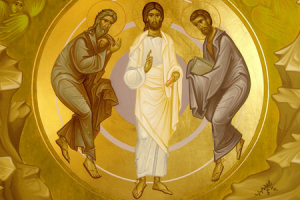
Transfiguration
(Matthew 17:1-9)
These Gospels tell us what Lent is about and what Christian life is about: a journey from temptation and doubt to transfiguration and faith. A journey away from allowing ourselves to be tempted to evil, and towards allowing ourselves to be tempted to good by the action of God’s Holy Spirit within us.
As the ‘Chosen One’ Jesus will let God’s glory be fully seen in the resurrection. On the one hand, this Gospel looks forward to the Passion and Resurrection of Jesus. On the other, it invites us to reflect on our journey from temptation to transfiguration.
The journey Jesus undertakes does not end in death, but in life. Through prayer we remain in contact with the heart of God which allows God’s love to transform and transfigure us and to ‘burst forth’ in goodness. That’s how we allow the glory of God to be seen in us and through us.
Transfiguration means to be shot-through with the presence of God. Being transfigured is about allowing the presence of God to completely transform us; it’s a revolution of mind and heart driven by God’s Spirit and enabled by our open heartedness.
Our life as Christians is about being transfigured by the Spirit of God so that God is seen in, and experienced through, us.
It takes faith and perseverance to dare to allow ourselves to be tempted by the passion, hope and vision of God rather than our own desires and wants. It takes great faith to trust in God’s word to us. But if we do, the living word of the Chosen One forms in us the heart of God.
- pdf Celebrating At Home - 2nd Sunday in Lent [PDF](3.15 MB)
- default Celebrating At Home - 2nd Sunday in Lent [ePub](4.87 MB)
- pdf Celebrando en Familia - Segundo Domingo del Tiempo de Cuaresma(746 KB)
- pdf Celebrando in Casa - II Domenica di Quaresima(747 KB)
- pdf Celebrando em família - Segundo Domingo da Quaresma(734 KB)
Celebrating At Home - 1st Sunday in Lent
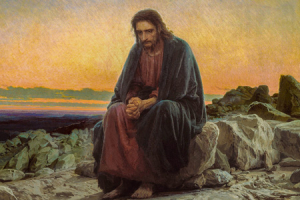
Temptation to Transfiguration
(Matthew 4:1-11)
We know that evil can do the same - destroy our wholeness of spirit, blacken our lives and reduce the beauty of human life to so much dust.
We begin Lent in the ash of acknowledging our own part in harbouring, creating and doing evil - those places in our hearts where the fire of anger, bitterness, selfishness or narrowness of mind and heart has left nothing but cold ash.
The ash is a reminder that our true life is not found in mortal things which eventually turn to dust, but in eternal things. We also know that out of ash new life can bud, grow strong, bloom into fullness - that’s the Easter miracle.
As always, the Gospels of the first two Sundays in Lent provide a road map for our Lenten journey from temptation (this Sunday) to transfiguration (next Sunday). We allow ourselves to be tempted out of the ash of selfishness and narrowness of heart and into a life of open-hearted goodness. We celebrate God’s graciousness to us by sharing what we have with those in need whether it be food, wealth, time, love, friendship or compassion. That’s what it means to ‘repent and believe the Good News’.
In these days when we are so conscious of the impact of human life on God’s creation, perhaps we could think about some permanent fasting from our excessive consumption of power, food and petrol in order to allow our earth to heal, to breathe and to continue to be a source of nourishment and life for the whole human family.
- pdf Celebrating At Home - 1st Sunday in Lent [PDF](3.36 MB)
- default Celebrating At Home - 1st Sunday in Lent [ePub](7.06 MB)
- pdf Celebrando en Familia - Primer Domingo del Tiempo de Cuaresma(930 KB)
- pdf Celebrando in Casa - I Domenica di Quaresima(920 KB)
- pdf Celebrando em família - Primeiro Domingo da Quaresma(899 KB)
Celebrating At Home - 6th Sunday in Ordinary Time

Excessive Generosity
(Matthew 5:17-37)
In the Jewish tradition, guidance about how to be at rights with God and neighbour is found in the Torah, the teaching contained in the first five books of the Hebrew Scriptures (Old Testament). It is especially important for St Matthew, writing his Gospel for Jewish believers, to show that Jesus is not opposed to Jewish teachings and traditions. He has not come to abolish the Law or the Prophets, but to complete or fulfil them.
But for Jesus it is not enough to follow these teachings only in external actions. The path that Jesus is calling his disciples to is a path of thorough-going transformation from within.
The short version of this Sunday’s Gospel begins with, ‘I tell you, if your virtue goes no deeper than that of the scribes and Pharisees, you will never get into the kingdom of heaven.’ Those listening to Jesus would have been deeply shocked by these words. The scribes and Pharisees were considered the righteous ones – those who stood most chance of getting into heaven. They were expert practitioners of the Law.
But Jesus is calling his disciples to a more abundant righteousness. He takes traditional interpretations of biblical teachings and corrects and extends them in a more generous interpretation.
A number of examples in today’s Gospel reading serve to make the point. As always, Jesus’ words go to the heart and from there address issue. For example: it is not enough to be able to say, ‘I have kept the commandment not to kill’. What about the anger in your heart that gives rise to a whole raft of insults, bitterness and injury against another person?
Virtue and righteousness are about being in right relationship with God and others. It is not about looking good on the outside, fulfilling the ‘letter of the Law’, but about being good on the inside; having the right attitude of heart so as to be in right relationship with God and neighbour. Such an attitude of heart will manifest itself in generous life-giving actions that make the world safe for others.
True Christian virtue always goes beyond merely what is required and always mirrors the excessive generosity of God.
- pdf Celebrating At Home - 6th Sunday in Ordinary Time [PDF](2.93 MB)
- default Celebrating At Home - 6th Sunday in Ordinary Time [ePub](4.00 MB)
- pdf Celebrando en Familia - VI Domingo del Tiempo Ordinario(776 KB)
- pdf Celebrando in Casa - VI Domenica del Tempo Ordinario(798 KB)
- pdf Celebrando em família - Sexto Domingo do Tempo Comum(805 KB)
Celebrating At Home - 5th Sunday in Ordinary Time

Vulnerable Risk-Takers
(Matthew 5:13-16)
Last Sunday, in the ‘Beatitudes’, Jesus called his disciples to be vulnerable risk-takers in the way they lived their lives.
Continuing the Sermon on the Mount this week, Jesus goes on to say that if they live this way, they will be like the salt that transforms the flavour of food and the light that transforms the darkness.
Undertaking this path of transformation produces the flavour and light of good works which lift burdens from our fellow human beings, not for the praise of the disciple but for the praise to God. In this way, these good works draw others into the circle of God’s friendship and the experience of the kingdom.
Disciples walk the path of vulnerability and risk in order to help lift burdens from human beings; to make the world safe for their brothers and sisters.
These good, life-giving actions towards our fellow human beings restore life, heal relationships and seek peace and justice.
This non-aggressive, non-grasping, non-competitive stance towards one another would hardly be described by many in today’s world as the way to a successful life. It is a real challenge to live by the Gospel in a world which fawns over and celebrates wealth, power, aggression, status and deceptive and combative behaviour. We, too, can be easily seduced.
We need to be bold and brave in our care for one another, like a light-filled city on a hilltop.
So, can we run the risk of being poor in spirit, gentle, a peacemaker, working for what is right, being merciful, or persecuted in the cause of right? Can we be vulnerable risk-takers?
As always, the first reading (see back page) provides an introduction to the Gospel text. The reading from Isaiah (58:7-10) gives some very practical examples of good works: share your bread with the hungry, clothe the naked, look after your family members. Then ‘your light will shine’. Integrity will be yours and God will walk with you. ‘If you do away with the angry word and the clenched fist, feed the hungry, give relief to the oppressed, your light will rise in the darkness and your shadows become like noon.’
A great ‘setting of the scene’ for the Gospel!
- pdf Celebrating At Home - 5th Sunday in Ordinary Time [PDF](2.93 MB)
- default Celebrating At Home - 5th Sunday in Ordinary Time [ePub](4.15 MB)
- pdf Celebrando en Familia - V Domingo del Tiempo Ordinario(451 KB)
- pdf Celebrando in Casa - V Domenica del Tempo Ordinario(455 KB)
- pdf Celebrando em família - Quinto Domingo do Tempo Comum(456 KB)
Celebrating At Home - 4th Sunday in Ordinary Time

Catching the Vision
(Matthew 5:1-12)
Last Sunday’s Gospel introduced the beginning of Jesus’ ministry in Galilee, his call to repentance, the choice of some disciples and the spread of his fame.
Now, over the next four Sundays, the church will take us on a journey through Jesus’ teaching in Chapters 5-7 of Matthew’s Gospel. These chapters form the Sermon on the Mount. Each Sunday’s Gospel builds on the one before – they are part of this first discourse in Matthew’s Gospel and need to be understood in a connected sense, not as a series of isolated sayings.
The text we know as the ‘Beatitudes’ introduces Jesus’ teaching about the kingdom, discipleship, the true meaning of the Law and true righteousness (virtue), interior disposition of the heart against external fulfilment of Law, trust in God and keeping the Kingdom as the focus of the disciple’s life.
Matthew’s beatitudes have been understood as a pattern of life for the follower of Jesus. Put in the context of Jesus’ call to conversion (the idea of radical change and transformation), those willing to be transformed will enjoy the blessings of the kingdom as their reward.
To be ‘poor in spirit’, to experience sadness (‘mourn’) because of the present state of affairs, to be gentle and unselfish rather than on the make, to have a passionate commitment to justice, to exercise mercy instead of taking advantage, to be ‘pure in heart’, to be ‘peacemakers’, to endure persecution and calumny for the sake of the right way of life (‘righteousness’) and allegiance to Christ: all these things make one vulnerable here and now, entailing much loss. The vulnerable make the world safe for humanity.*
For those who live according to the heart of God as Jesus reveals it, the blessings of the Kingdom will be theirs, their place in the household of God will be assured and they will be making the world a safe place for their brothers and sisters.
*Byrne, Brendan, Lifting the Burden: reading Matthew’s Gospel in the Church Today. St Pauls, 2004, pp55-57
- pdf Celebrating At Home - 4th Sunday in Ordinary Time [PDF](2.92 MB)
- default Celebrating At Home - 4th Sunday in Ordinary Time [ePub](3.77 MB)
- pdf Celebrando en Familia - IV Domingo del Tiempo Ordinario(476 KB)
- pdf Celebrando in Casa - IV Domenica del Tempo Ordinario(452 KB)
- pdf Celebrando em família - Quarto Domingo do Tempo Comum(453 KB)
Celebrating At Home - 3rd Sunday in Ordinary Time

The Light Shines
(Matthew 4:12-23)
Last Sunday’s Gospel served as an introduction to Jesus, the Lamb of God.
The Sunday Gospels between now and the beginning of Lent will use the Sermon on the Mount to help us explore and reflect upon who this Lamb of God is and how we, as disciples, should respond to him. They will unfold for us how Jesus, the Lamb of God, is the source of true peace and how we can find our way to him and to one another – that is, how we can live faithful to the tradition of Jesus.
This Sunday Jesus begins his ministry in an unexpected place – Capernaum in the countryside, not in the holy city, Jerusalem. The familiar Gospel demand: Repent for the kingdom is close at hand, is sounded for the first time by Jesus, echoing John the Baptist.
To the ministry of proclaimers of the Kingdom Jesus adds four intimates who will be with him throughout the journey into the light.
The Gospel begs many questions: just what is this Kingdom all about? Who is this Jesus who seems to have the power to compel prosperous, ordinary men to follow him? What does it mean to be ‘fishers of men’? Why does Jesus begin his ministry in an unexpected place? What is this Good News of the Kingdom that Jesus offers?
In all, the Gospel serves not just to tell us about Jesus and what he did, but also to help us reflect on our own experience of Jesus: what does it mean for us also to be called (not just as followers but also as ‘fishers’)? How immediate and life-changing is our response to him? Can we follow him all the way to the cross? How do we proclaim the Good News of the kingdom? How are we healers of people and situations which are part of our lives?
- pdf Celebrating At Home - 3rd Sunday in Ordinary Time [PDF](3.16 MB)
- default Celebrating At Home - 3rd Sunday in Ordinary Time [ePub](4.94 MB)
- pdf Celebrando en Familia - III Domingo del Tiempo Ordinario(523 KB)
- pdf Celebrando in Casa - III Domenica del Tempo Ordinario(526 KB)
- pdf Celebrando em família - III Domingo do Tempo Comum(521 KB)
Celebrating At Home - 2nd Sunday in Ordinary Time

The Gentleness of the Lamb
(John 1:29-34)
Ordinary Time in the church’s year begins with the Feast of the Baptism of the Lord which celebrates his identity as the ‘beloved Son’. On this second Sunday in Ordinary Time we move from the baptism to the mission of the one baptised.
John the Baptist names Jesus as, ‘the lamb of God that takes away the sins of the world.’ In doing so, he links Jesus with a number of Old Testament passages about the lamb of sacrifice and the suffering servant of God. As the first reading this Sunday says, this servant has a universal mission to gather and restore God’s people, to be the ‘light of the nations’ and to proclaim God’s salvation ‘to the ends of the earth’.
In speaking about Jesus, John also tells us about his own mission: to proclaim that someone greater than he is was coming, one who would baptise with the Holy Spirit - the Chosen One of God.
Perhaps our reflection on the identity and mission of Jesus also tells us something about who we are meant to become as his disciples.
There is a gentleness we associate with lambs. They are not regarded as aggressive creatures. They do not kill, even to eat. In a world which often praises and rewards violence and aggression, the Lamb calls us to a different way of life.
Celebrating At Home - Christmas - Nativity of the Lord

God Is With Us!
(Matthew 1:18-25)
We began Advent with the cry, ‘Come, Lord Jesus’. Now we end it with the joyful shout, ‘God is with us!’
Reflecting on the historical birth of Jesus, the Church proclaims the truth that God is, and has always been, with his people. And if God is with us, then God is for us. God is on our side.
God has no desire to live in houses made of wood, stone or gold. God’s deepest desire is to live in human flesh. Just as God did that in the human flesh of Jesus Christ a long time ago, God continues to do so now in us.
Like Mary, we accept God’s invitation, allowing Jesus to become flesh in us, too; to be seen and experienced in good thoughts, good words and good actions, in deeds of loving kindness which bring life, not death, to God’s people.
- pdf Celebrating At Home - Christmas - Nativity of the Lord [PDF](640 KB)
- default Celebrating At Home - Christmas - Nativity of the Lord [ePub](1.46 MB)
- pdf Celebrando en Familia - La Natividad del Señor(320 KB)
- pdf Celebrando in Casa - Natività del Signore(322 KB)
- pdf Celebrando em família - Natal – Natividade do Senhor(317 KB)
Celebrating At Home - 4th Sunday of Advent

The Promise Fulfilled
(Matthew 1:18-24)
The great Christmas feast is almost here. As always in Advent, what is promised in the first reading is brought to fulfilment in the Gospel reading. We began Advent with the cry, ‘Come, Lord Jesus’. We will end it with the joyful shout, ‘God is with us!’
Our Advent journey has called us to:
stay awake to the coming of God,
prepare ourselves to receive the Lord,
rejoice that he is not afraid to make his home with us, and to
receive him with faith and love.
At Christmas we will hear the call to give birth to him in word and action so that the saving power of God may be seen and experienced through our every thought, word and action.
The promise of the first reading from Isaiah that, “The virgin will conceive and give birth to a son and they will call him Emmanuel, a name which means ‘God-is-with us’,” is fulfilled in the Gospel which tells how Joseph received both Mary and Jesus into his home.
Following Joseph’s example, we joyfully welcome Jesus, and Mary, into our hearts.
The great gift of Jesus to the world cannot be confined only to one moment in history. Through us, the Body of Christ, the Gift is given again and again; born into every moment of human history. The presents we exchange at Christmas are meant to be symbols of our readiness to give and receive Christ, the eternal gift of God’s love.
As, year by year, we travel the liturgical journey of the Church’s feasts and seasons we touch ever more deeply the living presence of Christ in us that we may become ever more deeply the living presence of Christ in the world.