








Carmel in Papua New Guinea Gateway to Oceania
Fr. Christian B. Buenafe, O.Carm.
Oceania is the region in between the continents of Asia and Australia, it consists of big and small island countries that stretch and spread out in the vast Pacific Ocean. These are the countries of Papua New Guinea, the Solomon Islands, Fiji and Samoan Islands, Cook Island and the Marianas group of islands, among others. The Order is present in the Asian and Australian continents, thus, our PNG foundation is our gateway to Oceania.
Celebrating the golden harvest of the O.Carm. mission in the Philippines (1958 - 2008), on its 50th year of faithful presence and dedicated service in the Church of the Philippines, after thorough deliberation and process of discernment, the General Commissariat of Carmel Philippines during its 2nd General Commissariat Chapter held on February 14-18, 2008 in Agusan Carmel in northern Mindanao, approved and adopted that mission ad gentes is the commissariat’s priority project and will be Carmel’s concrete gift to the Church and to the world on the occasion of the 50th anniversary of the Order’s foundation, presence and mission in the Philippines.
At the closing of the Chapter, the Commissary General, Fr. Artemio D. Jusayan, O.Carm., joyfully announced that the commissariat had accepted the invitation of the Bishop of the Diocese of Bereina in Papua New Guinea. Within the closing mass, after due consultation with the concerned friars, the three (3) pioneering friars were named and appointed to compose the founding community in our PNG mission; namely, Fr. Perfecto Adeva, Jr., O.Carm. (Prior), Fr. Reynold Jose Severin Caigoy, O.Carm. and Fr. Edwin Magbago, O.Carm. The friars underwent a series of preparations before they embarked on their new assignments. They underwent mission orientation, team building, spiritual reparation and retreat, family integration and vacation, medical check-ups and preparations and the like until they left for PNG on October 15, 2008. They were warmly received by Bereina Bishop Rochus Tatamai, MSC, the clergy and the Kuni people in Kubuna Parish (some 250 kms. away from the capital, Port of Moresby) on October 19, 2008 in a commissioning mass and grand welcome. They were appointed and installed as: Fr. Adeva- Formator of Diocesan seminarians, Fr. Caigoy- Pastoral Center Director, and Fr. Magbago- Parish Priest of Kuni Parish. Kuni Parish comprises all the areas (mountains, hills, plains, rivers, settlements, and the like) belonging to the Kuni people. The Diocese of Bereina entrusted to the Carmelite community the pastoral care of the Kuni people’s mission stations in Kubuna, Bakuiodo, and Ineka, the Alan Boismenu Diocesan Pastoral Center and the Formation House which are located in Kubuna. At the start, the community lived in Kubuna mission station together with diocesan seminarians, also administering St. Michael Church, the Formation House and the Pastoral Center. The government’s primary school nearby is also under the responsibility of the pastor as he is the Chair of the School Board.
The community lived a very simple life. The mission stations have no electricity and the villages are far distant from the mission stations, but the friars continued living their community dynamics with the same vigor and enthusiasm as when they were still in the Philippines. The following year, Fr. Reynold Caigoy, O.Carm. was asked to help in the installation and programming of the diocesan radio station Radio Torot (in honor of Blessed Peter Torot, the first martyr of the PNG) and was appointed Diocesan Youth Chaplain. The community immersed themselves in the life-situation of the Papua New Guineans as they studied and learned the Papua New Guinean and the Melanesian cultures.
It may be recalled that the birthing of the PNG mission was initially prepared by Fr. Anthony Scerri, O.Carm. who was the General Councilor for Asia-Australia-Africa in 2006, and with the assistance of Fr. Paul Sireh, O.Carm. of the Australian-Timor Leste Province. An initial study of a possibility to start the mission had been approved in 2007. Fr. Artemio Jusayan, O.Carm. and the late Fr. Christopher Exala, O.Carm., then Head of the Task Force Mission Ad Gentes and member of the Order’s International Commission for Evangelization visited the proposed mission site, held meetings with the Bishop, and explored some possible ministries if the Order were to go and start a mission in PNG. This dream and plan was finally realized in 2008 upon the arrival of the three (3) friars and they became a mission community of the Philippine General Commissariat and named St. Albert Friary of PNG Carmel.
 In 2009, the Commissary General together with Frs. Peter Kramer and Anton Hoogland visited our PNG mission and spent some good time with our brothers in the mission areas. In 2010, two (2) student friars joined the community for ten (10) months as part of their integration year program, Brothers Pablo Ramirez and Marlon Beredo, O.Carm.
There are also young men who expressed their intention of joining the Order. The friars initially set up the aspirancy program, while some requirements are still to be completed, especially the academic, personality, and motivational aspects of the applicants. Brother Paul Kaptain Pakao, our first Papua New Guinean applicant who joined us in 2010 is now a novice in Manila.
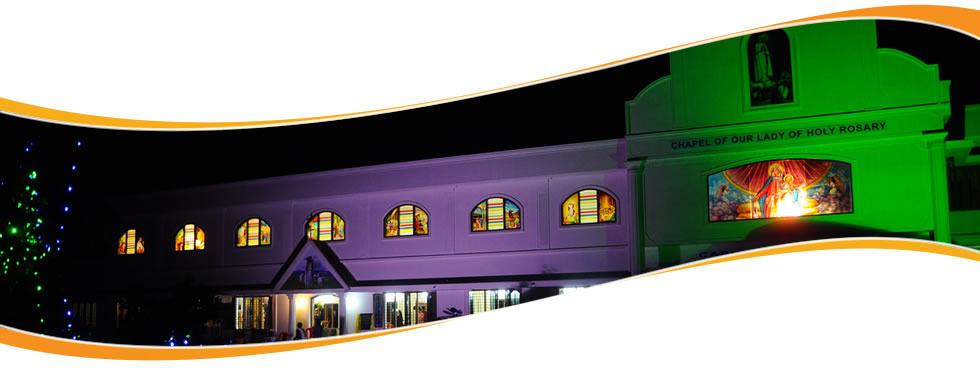
In May 2011, Fr. Gerald Flor Gutierrez Gutierrez, O.Carm. joined the community and was appointed Formator for Diocesan Seminarians and Pastoral Vicar in Kuni Parish based in Kubona. In July of the same year, Fr. Christian Buenafe, O.Carm., the Commissary General made his canonical visitation, together with Fr. Harry Bloem, O.Carm. During his visit, the Commissary General and the PNG Carmelite friars held a meeting with Archbishop John Ribat, MSC of Port of Moresby who had formally invited and requested the Order to establish a community in the archdiocese and had initially offered a parish and a convent where we can stay. In October, the Order accepted the administration of Our Lady of the Rosary Parish in 6mile district in Port of Moresby. The parish and the convent is in the city and around 5 km. away from the country’s main airport. This development is very positive as we have our presence in the capital as there are more available, feasible and possible ministries and programs for the Order’s presence and missionary service. The parish is also big for it has 3 other mission stations outside the downtown city.
From January 11 to 23, 2013, Fr. Albertus Herwanta, O.Carm. made his canonical visitation in PNG, then met the brothers and visited our mission stations and areas. It was also a time for discernment and celebration of our fraternity as we face the challenges ahead.
In November 18, 2012, Br. Pablo Ramirez, O.Carm. returned to PNG for his pastoral year and returned to the Philippines in February 2013 to prepare for his priestly ordination. In April 2013, he was ordained to the priesthood and eventually was assigned to our community in PNG and arrived in the mission in June 2014. In August 2014, Fr. Ramirez was appointed Diocesan Youth Coordinator and Diocesan BEC (Basic Ecclesial Community) Coordinator. He is in charge of organizing the youth in the diocesan level and helping the parishes and mission stations in building basic Christian communities.
Also, Fr. Caigoy relinquished his other tasks and now serves as the Diocesan Pastoral Coordinator and helps all the parishes in their pastoral direction setting and skilling of priests and lay leaders’ pastoral management. From time to time, he also gives lectures and facilitates trainings in pastoral management, lay formation, catechesis and organizational development.
In April 2015, Fr. Salvic Pajarillo, O.Carm. joined our PNG community and was assigned in our parish in 6mile district in Port of Moresby as Parochial Vicar.
All in all, we have six (6) friars in this beautiful country of Papua New Guinea. The friars live in two separate community houses -- one in Kubuna and the other in Port of Moresby. They hold and conduct regular meetings, recollections, retreats, lectio divina, community prayers and Eucharist in their respective realities. They come together very regularly especially when they are all in the capital of Port of Moresby.
Sometimes, our friars give classes and courses in some Catholic schools. Also they give conferences and facilitate retreats to other religious congregations and religious groups in PNG. The Order through our missionaries is very much appreciated by the Bishops, the clergy, the religious and lay communities in the two dioceses where we are present.
Very recently, another milestone is the canonical visitation was conducted by Fr. Fernando Millan Romeral, O.Carm., Prior General, Fr. Benny Phang Kong Wing, O.Carm., Councilor General for Asia, Australia and Oceania, Fr. Christian Buenafe, O.Carm., Prior Provincial and Fr. Marlon Lacal, O.Carm., Provincial Councilor in early August this year. The visit was fruitful and hopeful for everyone as we had good moments of sharing and listening as Carmelite brothers, praying and breaking bread with the Kuni people, meeting with our lay leaders in our mission stations, tribal chiefs and the Kuni people, meeting with the Bishops, and visiting our OCD nuns, among others. The visit was a concrete sign of our joyful consecrated life, our faithful following of Jesus as we pledge our allegiance to Him, and celebrating our Carmelite fraternity in hope and love.
God is really the God of surprises. To date, God still surprises our brothers in the missions for every day God’s surprises unfold. Our brothers continue to discover new insights and learn new lessons in their missionary life every day. They had embarked a paradigm of pastoral ministry in a new culture and new reality of the Church. In our 7th year of Carmelite presence in PNG, God has given us many blessings. Our brothers are committed to the building of Basic Ecclesial Communities as a pastoral strategy in building the Church of the Poor in PNG. They are also working for the formation of lay leaders, empowering communities and organizing the youth. They have also taken tasks in the diocesan level as they are into parish ministry, youth ministry, lay formation program, formation of diocesan seminarians and social communication, among others.
The Order in the Philippines was founded by the Dutch Carmelites in 1958 and since then has established six canonically erected houses/communities with its mission stations located in eight dioceses in the Philippines, and our St. Albert mission community in PNG.
Let us take and continue the mission of Christ as He has sent us to proclaim the good news to all nations. We request and ask our Carmelite brothers and sisters to pray for our PNG Carmel mission that it may grow and flourish and we invite everyone to come to Carmel PNG-- our gateway to Oceania, the home of the Melanesian race.
May Mary, our Inahan sa Carmen sa Escalante keep our PNG mission in her loving maternal care, and Blessed Titus Brandsma, the patron of the Philippine Province lead us to Jesus our Lord and Brother. God bless PNG Carmel!
Awakening PROJECT San Felice del Benaco
Sabrina Rubio Perez
Last August we, the Carmelite youth from different parts of Europe where the Order is present, met for five days to celebrate the second part of the “Awakening” project. They were very intense days in which the sharing of experiences and training workshops helped us to better understand our belonging to the Order and to discover how the charism of Carmel is present in our everyday lives.
The venue for the meeting was the sanctuary of Our Lady of Carmel in San Felice del Benaco, Italy. And how could it be otherwise? We only have good words for the community living there. They opened the doors of their house and made us feel part of the family. They always attended to the needs of those present and did not miss any details during our stay.
As in the previous meeting in Fatima, the words of God to Elijah once again called us to “Get up...”, words that invited us to leave behind our self-interests and hit the trail, to live a few days of reflection and deepening of faith and experience the grandeur of the “Carmelite Family.” It is exciting to share with others who I am, our realities, so different and yet so similar and impregnated by the spirit of Carmel. Discovering the charism is a gift from God. It is not my property; I have not chosen it. It was He, a God-love who becomes human whenever I meet a brother or sister.
They were days in which we also shared many moments of prayer. There could be no real encounter if the Word were not present. The prayer with which we started the day gave meaning to all the tasks that were being proposed throughout the day. We prepare our “home” to be inhabited, inhabited by Him who makes all things new.
We began by sharing our realities after a wonderful introduction of the “Awakening” project by Fr. Dave and Victor, two members of the committee. From the gathering of different provincial groups, I enjoyed sharing the enthusiasm and affection of young people who feel close to the communities of friars and work together with them, the desire that our monasteries be open houses where we can meet and share the Life through the vocation of each one, through what God has in store for each one, through the process of faith that everyone is living, and through the unanimous feeling of being sons and daughters of God.
We become “seekers of God” through a story, ours. Father Dave helped us better understand our origins, to see Carmel as the “place of the heart where God dwells” and he invited us to share a lectio divina on the Rule and a time of silence in the chapel before celebrating Eucharist together.
However, before we went deeper into the history of the Order, it was necessary to make a stop along the way and answer three questions: who the world tells me that I am, how I see myself, and how I think God sees me. It was quite a proposal to recognize my essence, my more real me, who I am, what makes me unique, what God has placed in me, because the best gift I have to offer to God, and to others is who I am. Yet first I must find my place, and be willing to travel to my heart, because that is where life really happens. And there, when I discover who I am, my mission begins, because then I am ready to ask the Lord: “What do you want from me?”
We were very fortunate to have the presence of Fr. Míceál O’Neill with us in these days. He is a great communicator, and as a listener I can say it was a privilege to hear him speak about the women in Carmel. I must thank him for his support and his ability to be young in the midst of all of us. His presentation brought us to enjoy the dark night of the soul through the poetry of John of the Cross, and it was one of those moments that were magical, and not because supernatural things occurred, but because they left in one’s heart, extraordinary experiences. We finished the prayer walk silently together in the intimacy of the chapel.
As it could not be otherwise, Saturday was dedicated to the figure of Mary. Fr. Luca and myself were invited to recount our experiences in Carmel. I emphasize that, despite my fear of public speaking and my shyness, I felt very comfortable sharing my vocation as a mother and my love for Carmel. Motherhood was a key moment in my life: the birth of my son brought me to experience the unconditional “Yes” in which there are no doubts, in which one leaves it in the hands of God and is able to give life.
This small sharing gave way to Father General Fernando Millán with his paper “Three Witnesses of Love” in which, as always, with a very fresh language aimed at young people, he updated the story, he thrilled us by teaching us that we, too, are called to witness to the love of God in our everyday lives, and did not miss an afternoon of strolls, talks, photos, and great shared moments that all of us who were there will not forget.
Finally, we ended by opening a “window of hope” in which all provincial groups could express their wishes for the future and how they would carry out afterward what they lived in San Felice.
It only remains for me to thank in a very special way Fr. John Keating and all members of the European Committee of the Carmelite Youth who counted on me on this trip. The Awakening project has been a dream for many of us. It has come to an end, and now it is time to share feelings and to continue walking together. We young Carmelites want to continue writing our history and carry the message of Jesus Christ in the midst of the world through our charism and spirituality.
Report from Europe 2015
Fr. John Keating O.Carm.
In September of this year (2015), the Provincials, Commissaries and Delegates General of the European Geographical Area of the Order met at Saint Albert’s International Centre in Rome (CISA). This group meets every eighteen months to review the situation of Carmel across the continent and seek to address common endeavours for the future. At this meeting, conscious of the present situation of the peoples of the European continent and reflecting on the current crisis of those fleeing the dreadful situation in the Middle East, they sent a message to all European Carmelites concluding with these words: “Mindful that in the beginning we too were pilgrims, and urged by our contemplative and prophetic charism, we invite each community, to the extent that each one can, to be open to the kind of solidarity that this humanitarian situation demands and that the Church asks of us too.”
Regarding Carmelite life in Europe today, the provincials faced with the reality as they see it today looked for a common vision or strategy to be employed by the provinces in the future. There have been a number of provincial chapters over the past year, that have seen difficult but courageous decisions taken. The question of initial formation was high on their agenda. We now have an international European novitiate in Salamanca, Spain. Of the fifteen novices there this year nine of them are from Europe plus six from the Caribbean. A major building restoration of the residence in Salamanca is presently under way by the province of Aragon, Castile and Valencia (ACV), so as to provide for a new spiritual centre. Salamanca is not just a beautiful place, but symbolically important for the Order, as it was there at the convent of San Andres that Saint John of the Cross did his formation. Also, it was decided at the meeting to proceed with a common European formation community in Rome for those in simple profession. A group to study the practical implications of this decision is being established. Formation and vocations must be a major priority for all Carmelites in the European area so as to ensure that the mission of the Order can continue into the next generation. There are always challenges, and the ‘old continent’ faces a constantly changing reality both spiritually and socially. One cannot look upon this in a negative way, as it must be seen positively with a new hope that comes from a Christian vision of life. Despite the fact that the numbers of friars are decreasing, there is the pressure of how to maintain a presence everywhere. Some places, sadly, will close. The presence and mission of the Order is still strong and a significant part of the mission of the Church in Europe today. The Prior General has sometimes used a football metaphor for our European future - “it is not possible to continue to field a full team of eleven players, if we have only seven fit and available to play.” The approach has to be one of profound discernment, including dialogue among those involved in decision-making and those affected by it. The mission of Carmel is much more than property and structures.
Right across Europe there have been wonderful celebrations, congresses and activities marking the 500th anniversary of the birth of Saint Teresa of Jesus. Most of these events have been published in CITOC-on-line. In 2016, we will mark the 450th anniversary of the birth of one of our great Carmelite woman mystics, Saint Mary Magdalene de Pazzi (of Florence). The presence of our nuns across Europe is significant and vitally important for the whole Order. We were reminded of this when in July 2015 the Prior General, Fernando Millán Romeral, O.Carm. led the solemn celebration of the Eucharist of thanksgiving for the 400th anniversary of the foundation of the Monastery of the Encarnación in Zaragoza (Spain). All these events recall the mission and charism of the Order, recalling for us the many wonderful things happening in our European area and once again the challenge for all European Carmelites is to strengthen the Order’s presence through the contribution of our friars, nuns, sisters and numerous lay groups. Many groups of Carmelite laity are meeting in different parts of the continent for prayer, spiritual reflection, social services and through the work of the seven Carmelite run schools. The first stage of the Carmelite European youth project “Awakening” has been completed, as you will see in this edition of our magazine.
The Prior General had the opportunity recently to visit our community in Luncani, Romania, which is part of the Italian province. The Carmelite community there lives in a beautiful location, a spiritual centre, that welcomes many people including Catholic and Orthodox. The Polish province is opening a community in Lithuania this autumn, following many years of involvement especially by the Dutch province, a ministry that has laid the foundation for this new European mission.
As CITOC-on-line recalls regularly for us the passing of many of our brothers and sisters in Europe, it is important to recall the passing of those who have made a significant contribution both in this part of the world and as missionaries. We note just one of the many recently deceased, Fr. Pablo M. Garrido Herrero (ACV) who has served the Order so well as one of our very significant historians. May he find peace in his heavenly home.
Report from Asia-Australia-Oceania 2015
Fr. Benny Phang, O.Carm.
Asia is the birthplace of many great religions, and among them is Christianity. The apostolic exhortation Ecclesia in Asia praises God in explaining this continent, “It was in fact in Asia that God revealed and fulfilled his saving purpose from the beginning. He guided the patriarchs (cf. Gen 12) and called Moses to lead his people to freedom (cf. Ex 3:10). He spoke to his chosen people through many prophets, judges, kings and valiant women of faith. In “the fullness of time” (Gal 4:4), he sent his only-begotten Son, Jesus Christ the Saviour, who took flesh as an Asian! Exulting in the goodness of the continent’s peoples, cultures, and religious vitality, and conscious at the same time of the unique gift of faith which she has received for the good of all, the Church in Asia cannot cease to proclaim: “Give thanks to the Lord for he is good, for his love endures forever” (Ps 118:1)” (EA, 1). To spread the joy of the Gospel (EG, 1) to this vast land, the Asian apostles testified, “We proclaim the one we have seen, heard and touched” (cf. 1 John 1:1-3). This personal encounter and discipleship is indispensable. Without it none will be able to touch the soul of Asia (FABC Plen. Ass. X, 2012).
Australia is a country of striking landscapes and a rich ancient culture. It is the sixth-largest country in land area and is the only nation to govern an entire continent. Australia is home to one of the world’s oldest living cultures, with Aboriginal communities established nearly 60,000 years before European settlement. Today, Australia is one of the world’s most multicultural countries, rich in indigenous and immigrant cultures. Australia is a successful and prosperous nation, and one of the world’s strongest economies.
In the past, Portuguese and Spanish Roman Catholics along with Dutch and English Protestants were sailing into Australia waters from the seventeenth century. Therefore, this continent-country also bears abundant promises and hopes for Christianity planted there centuries ago.
As Asian Pacific inhabitants, we are invited to take part in the evangelization by being immersed in the Asian and Australian ways of living, which concur harmoniously with our Carmelite way of living. This way is expressed in living a contemplative way of life, engaging inculturation, inter-religious dialogue, and option for the poor. This is the best summarized as a contemplative dialogue with culture, religions and the poor. To realize these ideals, we are challenged to live authentically the identity we constantly profess throughout our Carmelite history by way of building praying and prophetic communities at the service of the Church and the world (cf. Final Message, Gen. Chap. 2013, 4b).
This geographic area known in the Order as Asia, Australia and Oceania (AAO) consists of two huge continents and thousands of islands. Around 30% of the members of the Order live in this vast area. Although the Carmelites in AAO inherit various ancient cultures and speak in very different languages, English is well accepted as a uniting language of the area; therefore, in the regional meetings or gatherings, English is employed.
Some activities done in the first half of this sessenium are: on the routine basis, formators and students gather every other year. The last formators gathering was in November 2014, and the students gathered in April 2015; both gatherings were held in the Philippines. The superiors gathering happened in November 2014 in Vietnam. In March 2015, there was the Third Order Carmelites gathering in Tagaytay, Philippines. Finally, in November 2015, we held an on-going formation course for the 1st to 5th year friars in active ministry in Malang, Indonesia with the theme: Nurturing the Carmelite Vocation in the Year of Religious Life. As the councillor for this area, I have visited almost every community in the area through fraternal visits in 2015: India in January to February, Indonesia-Papua New Guinea-Australia and the Philippines in July to September.
As councillor for formation, in collaboration with the General Formation Commission I have organized the on-going formation course on St. Teresa Avila and St. John of the Cross: “Silent Music, Sounding Solitude: Following in His Footsteps” in Avila & Salamanca, Spain from 7th to 17th September 2014. It has also been decided at the Commission meeting in Rome 2015 that in November 2016, Indonesia will be hosting the International Course for Formators and Vocation Promoters in Batu - Malang, on October 30 to November 13, 2016 with the theme: Walk With Us: “Growing in the Contemplative Dimensions of One’s Life” (RIVC, 10).
In the next four years, I have arranged some plans. The most important is the canonical visits. Those other plans are bursars gathering and the Carmelite Institutes and retreat masters gathering, the dates and venues for these gatherings are to be decided together with the superiors of the area. May God bless the Carmelites in this geographical area and lead us with His wisdom in planning the best for this area and for the whole Order.
Report from Americas 2015
Fr. Raúl Maraví, O.Carm.
The geographical region of the Americas covers a vast territory that is rich in its variety of cultures and centuries of history. The Carmelite friars are present and exercising ministry in thirteen different countries, from Canada in the north down to Argentina in the south.
We began 2015 in South America, where along with the Prior General we took part in threeimportant assemblies: the Titus Brandsma General Delegation in Colombia, the Provincial Commissariat in Peru and the Provincial Commissariat in Bolivia. In each of these assemblies we met our Carmelite brothers and with them discussed a number of projects, and talked about the challenges in each different place. In addition, we were able to meet members of the wider Carmelite Family, the cloistered nuns in Peru, Carmelite sisters in Bolivia and Peru, and various groups of lay Carmelites who work very closely with the friars in different evangelisation programmes, especially among the most needy in each of these three countries.
Between the 9th and the 13th of February, 2015, a meeting of the superiors, delegates and bursars of the Americas took place in Sao Paolo, Brazil. The Bursar General, Fr. Carl Markelz joined us for that meeting, which was attended by fifteen friars representing almost all the Carmelite entities of the continent. We were sorry not to have our brothers from Venezuela with us. They were not able to attend because of the difficult economic and social situation in their country, but they sent a report and a series of suggestions to the meeting via email. In the course of the gathering, people spoke about the need for more creative planning with a view to generating local resources, given the aging process and the decrease in economic power of the provinces of origin. The superiors and delegates also had a wide discussion on the problems that are affecting the area of initial formation in the different countries at the moment. They decided for the next three or four years to have an intensive course of integral formation for students in formation and young formation directors in the Americas.
In addition to the fraternal visits, another of our responsibilities is to conduct canonical visitations of the different entities in each geographical area. From the 20th to the 30th of May, 2015, along with Fr. Michael Farrugia, the Procurator General, we visited the Commissariat of the Antilles that includes Puerto Rico and the Dominican Republic. As part of the visit we spoke individually with each of the solemnly professed members and met with the aspirants, postulants and simply professed students in groups. The visit was quite positive, highlighting the number of new vocations that join the formation programme in this commissariat. There are plans for further canonical visitations in 2016 following the calendar of international commitments in the General Curia.
The only Provincial Chapter to be celebrated in 2015 in the Americas was the chapter of the North American Province of St. Elias which took place from the 8th to the 12th of June. As is the custom, this chapter was organised very well. The days were busy, with a lot of discussions on various projects and a lot of fraternity. The province of St. Elias has responsibility for two important missions, Vietnam and Trinidad.
As a result of a decision by the superiors and delegates of the Americas, the first intensive formation course for students and young formation directors, took place from the 23rd of July to the 9th of August in our retreat house in Lima, Peru. Twenty-three friars from ten countries took part. The participants spent time studying Carmelite saints and spirituality, visiting some poor areas of the city, sharing times of meditation and prayer and enjoying the experience of the fraternity and internationality of the Order.
In a different setting, during the meeting of the Provincials, Commissaries and Delegates of Europe, held in Rome, Italy, in the month of September, we were able to meet with the Prior Provincials of the provinces of Aragon-Castile-Valencia (ACV), Betica (Baet), Catalonia (Cat) (all three in Spain), Italy and Malta, to talk about the future of their missions in Spanish speaking Latin America: the Antilles (ACV), Venezuela (Baet) and Venezuela (Cat), Colombia (Italy) and Bolivia (Malta). The five provincials underlined the importance and urgency of strengthening the joint formation programmes in the Americas. In addition, they expressed their concerns about the structure of the Order that does not help to unite the different small entities in the region. These leaders asked us to develop a project to study the viability of creating one or more General Commissariats in Spanish speaking Latin America.
In conjunction with our Discalced Carmelites brothers, every three years we organise a congress on Carmelite Spirituality, for the O.Carm. and OCD families in Latin America. This time the event was held in San Salvador, and went from the 26th to the 31st of October, 2015. The chosen theme was “Teresa: woman, mystic and prophet: A window of hope for Latin America”. The participants included both Generals, along with 130 others, made up of friars, cloistered nuns, sisters, hermits and lay Carmelites from the seventeen countries in the hemisphere.
In addition to being the Councillor General for the Americas, we are also responsible for the General Commission for Laity and Carmelite Youth, which met in Rome, Italy from the 23rd to the 28th of April. This commission continues its work of communication through an E-Bulletin, and through formation, with a revision of the programme of formation for the Carmelite Third Order, which in turn will be adapted to suit other groups of lay Carmelites. By the same token, we led a meeting of the Committee for Carmelite Schools which was held from the 12th to the 15th of July in Barcelona, Spain, and in which attention was given to the final details for the next Carmelite Schools Congress to be held at the end of April 2017 in Chicago, U.S.A.
We would like to end by saying that in the American continent we find great hope for the future. As we end this short report, we have 181 students in initial formation: 17 in the U.S.A., 63 in Brazil, and 101 in Spanish speaking Latin America. During the year since January we have tried to visit all the formation houses and to encourage the young people who wish to live out their calling to Carmel. May the Lord continue to bless us with more and good vocations.
Report from Africa 2015
Fr. Conrad Mutizamhepo, O.Carm.
‘Those who sow in tears shall reap with shouts of joy’ (Ps 126:5)
The year 2015 began on a very positive note. The All Africa Carmelite Leaders and Formators Assembly took place at Boko Spiritual Centre, Dar es Salam, Tanzania. A total of 17 persons attended including the organisers and translation staff. All seven countries were represented: Burkina Faso, Cameroun, Democratic Republic of Congo, Kenya, Mozambique, Tanzania and Zimbabwe. Thanks to the Carmelite Sisters of St Therese of the Child Jesus who proved to be great hosts.
Three discussion papers were delivered by Noel Rosas, the Administrative Secretary for Formation and, Conrad Mutizamhepo, General Councilor, with expert translation skills of Miceal O’Neill. Conrad gave the other two papers on the themes: An Appropriate Model of Carmelite Leadership in Africa? Exploring Servant Leadership: Fears and Hopes for the Future; and Forming the Next Generation of Carmelites in Africa: Experiences, Challenges and Hopes.
After the Conference, during January 27 to February 15, 2015, I embarked on my first leg of fraternal visits to Tanzania, Mozambique, and due to unrest in the DRC, had to take a break in Zimbabwe. The second leg of the fraternal visits continued from March 23 to April 23, 2015, which saw me going to Burkina Faso, Cameroun, eastern part of the Democratic Republic of Congo and Kenya. In all these visits, I felt very privileged as well as humbled to be welcomed in all our houses as a brother.
A general overview of my observations fall into three categories: positive aspects, concerns and recommendations. First of all, it is important to point out that there are many positive things happening in Africa. Some of the more significant positive experiences are:
a. Youthfulness: the majority of the African friars are still young, healthy and enthusiastic about living and witnessing their life of consecration;
b. Community life: the overwhelming majority of the brothers are living in community and follow the community horarium;
c. Vocations: all communities in Africa that are putting an effort in vocation promotion work are getting young men to join the Order;
d. Formation: in each of the Carmelite ‘presences’, there are candidates and/or friars undergoing initial formation at various stages. The combined total of solemnly professed friars is about 84; about 105 students; about 20 novices and about 30 pre-novices. There are 23 Carmelite houses which are in a good state of repair, while some brothers live in diocesan parochial houses;
e. Financial Support: the various jurisdictions with oversight of African entities are doing a good job in maintaining them;
f. Programmes of collaboration: these exist in two regional novitiates, in Kriste Mambo for the English speaking Africa and Mbalmayo for the French speaking African Carmel.
While there are many positive aspects to African Carmelite experience, there are also concerns that need to be addressed if we are to build on and consolidate the positive aspects. More thought, in my view, needs to be given to the following issues: a. Leadership:, b. Community life dynamics, c. the Process of Formation, d. Financial self sustainability on African resources, e. Service in the midst of the people, f. Coordinated Carmelite Family Programmes and g. Role of Founding or Supporting Jurisdictions
The concerns and challenges are many. Yet, I believe that they can be addressed. These challenges can be opportunities for growth. But this can only happen through genuine spiritual renewal of each friar and member of the Carmelite Family in his/her personal as well as communal encounter with Jesus the Lord. As has been said by Pope Francis: ‘A person who is not convinced, enthusiastic, certain and in love, will convince nobody’ (EG. 266). So my recommendations are:
1. that the Provincial, Delegate and local leaders continue to facilitate and encourage the spiritual renewal of each member’s encounter with Jesus Christ which will be the springboard of engagement with the particular visions and plans of Carmel in each entity;
2. that entities cultivate participative servant leadership culture and structures;
3. that each entity prioritize initial formation and ongoing formation and try to produce a formation guide for formators integrated within the vision and plan of each entity;
4. that measures be put in place to think on and set up strategies for financial self-sustainability in consultation and dialogue with the supporting Province;
5. that African entities communicate and engage in cooperation and collaborative ventures among both friars and the Carmelite Family in general;
6. that service in the midst of the people of God be diversified to help the Carmelite Family to prepare for other forms of service other than parish-based ministries. Each entity would need to reflect on their engagement and training in ‘sign of the times’ ministries in keeping with world-human issues;
7. that Carmelites engage in activities to popularize Lay Carmel and popular piety incorporating devotion to the Scapular of the Blessed Virgin Mary of Mount Carmel;
8. that entities implement the General Chapter Resolution on the creation of Safe Environment for Children and Adults as a matter of urgency in keeping with the Pope’s ‘zero-tolerance’ policy to ensure that abuse does not take place in places where Carmelites inhabit.
During September 15-18, I was invited to participate in some sessions of the meeting of European Provincials and I raised some of these issues with them. I am convinced that Carmel is capable of adapting to the African terrain and can take root. There is need for the spirit of Carmel’s appropriation of and witness to the Gospel to be inculturated in Africa. It is our enduring challenge for African Carmelites to evangelize our cultures in order to inculturate the Gospel through joyful Carmelite witnessing. The labours of sowing the seed of Carmel in Africa may prove to be slow. But as the Psalmist says: Those who sow in tears shall reap with shouts of joy! (Ps 126:5). I am convinced that the efforts of so many since the last half of the 20th century and into the 21st century have not been in vain. Carmel will grow in the African soil, in the hearts of the consecrated and the people of God.
Ongoing Formation Course for Young Carmelites in Indonesia
Fr. Joseph Tri, O.Carm.
Aware of the wide range of expectations which newly ordained Carmelites face and of the unique adjustment demanded by the transition from initial formation to daily ministry, the General Commission of Formation, together with the Province of Indonesia, organized an ongoing formation course for newly ordained Carmelites from November 16-21, 2015. This included the men who are from 1-5 years in ministry and in the region of Asia - Australia - Oceania. The ongoing course served as an effort to help the younger Carmelites to know each other in the region, to share their experiences, difficulties, and challenges from the threshold of initial formation to ministry life, and to dream for the Order as they continue their journey as future leaders of the region. The gathering was guided by the theme: Nurturing the Carmelite Vocation in the Year of Consecrated Life.
Thirty eight newly ordained Carmelites, from Indonesia, the Philippines, India, East-Timor and Vietnam gathered in the Magdalena Postel Retreat Center run by Misericordia Sisters, Malang, Java province, Indonesia.
This one-week course began with the Eucharistic celebration presided by Fr. Ignasius Budiono, O.Carm., Prior Provincial of the Indonesian Province. In his homily, Fr. Ignasius underlined the importance of ongoing formation after ordination not only to have up-to-date knowledge with the modern world, but also to be renewed in spirit.
In the opening address, Fr. Ignasius welcomed all the participants and wished them to take these days not only to study but also to refresh themselves from ministry. Fr. Benny Phang, General Councilor of Asia-Australia-Oceania and Councilor for Formation took the opportunity to thank the Indonesian Province and the preparatory and organizing committee for making this course possible.
The keynote speaker Fr. Christian Buenafe, O.Carm, Prior Provincial, of the Philippines, gave the first talk on Finding the Balance in the Tension of Community and Ministry. He shared that this is the reality that every friar must face in his initial ministry. Both of these dimensions can be challenging for the newly ordained because they experience an instant change of lifestyle from study to work, from formation community to pastoral community. However, Fr. Christian shared that if the friar learns how to harmonize and manage these dimensions well, it will be very beneficial for the friar himself, for the community, and for those he is serving.
 On the second section of the first day, Father Wayne Stanhope, O.Carm, Formation Director from the Australia-East Timor Province, invited all the participants to share concerns and struggles between community life and ministry and their experience of how to harmonize these two dimensions. He also shared that only contemplation can help us to harmonize these dimensions. He stated that “we should never forget that people expect us to teach them how to pray and walk with them as companions. Therefore, it is so sad when Carmelites engage in their mission with a very little contemplative heart.”
On the second day, after the Eucharist celebration, Fr. Noel Deslate, Ph.D., a diocesan priest from the Philippines and a director of Galilee Institute, which is dedicated to helping priests and religious with problems, came to speak about Boundaries and Intimacy in Ministry. Fr. Noel gave some guidelines to help participants how to be aware of their sexuality and the need for healthy intimacy in the environment of ministry. Following the talk, the participants were divided into small groups for discussions.
In the afternoon of the second day, Fr. Robert Puthussery, O.Carm., Prior Provincial of St. Thomas Province of India, gave the presentation, Consecrated Religious in the Midst of the People. He used a message from the teachings of Pope Francis for the year of consecrated life to remind the participants that their religious life is to “wake up the world,” and “we can’t accomplish this mission if we forget our identity as religious. Being religious means our hearts totally belong to God.”
On Friday, after the Morning Prayer, Fr. Stephanus Buyung, O.Carm., Director of Marian Center based in Jakarta, Indonesia, helped the participants to deepen their understanding of the gift of contemplation. He invited young Carmelites to reclaim and nurture the contemplative gift in today’s world. Contemplation is a gift from God. He stated, “The first hermits of Carmel passed it down to us, our duty is to live, develop, and share it.” “Contemplation is the heart of Carmelite life. This heart keeps us functioning. We can’t live our fraternity, prayer, and mission without being contemplative people.”
In the afternoon, Fr. Benny Phang, O.Carm., challenged young friars to accept their role as future leaders of the Order as well as the Church. His talk, Building Theotokoi Community: Carmelite Lifestyle in the Changing World, highlighted the issue of how young Carmelites live with the challenges of our time. The name of Carmel is highly associated with deep spiritual life. “Carmelite saints show us that Carmel is the school of prayer. Our community must be a school for us to learn how to experience God so we may share this gift with those we serve. The lifestyle of Carmelites must be contemplative.”
At the whole duration of the course, all participants enjoyed the fraternal hospitality of the Carmelites of the Indonesian Province. The ongoing formation course was a mixture of study, prayer, group discussion, recreation, and fraternal sharing. Thanks to the preparation team who had created much space and time for prayer and reflection as well as for the participants who were able to get to know one another. The participants also had the opportunity to wash one another’s feet, as a symbol of service, as they were led in prayer by Fr. Wayne. Cultural nights and other activities followed as all representatives shared their cultural richness. They also enjoyed a day trip to visit Batu Secret Zoo and some museums in Malang.
The gathering was concluded with a Eucharist presided by Fr. Benny Phang, O.Carm., with the participation of the Carmelite Novices and Suara Musik Suci Choir. All participants were happy to have this gathering. They were grateful to the General Commission for Formation and the Indonesian Province that hosted it. They did not forget to thank for the hard work of the preparatory committee that made this gathering successful and fruitful. They also expressed their deep gratitude to all facilitators. They went home with renewed energy and new hope about their lives and about their ministries. They arrived strangers to each other and they left for home as friends and brothers and are looking forward to their next gathering!
Carmelite Support for the Paris Agreement
Having discussed the document with Fr. Eduardo Agosta Scarel, O.Carm., an expert in variations of climate and climate change, the Prior General, Fr. Fernando Millán Romeral, O.Carm., on behalf of the Carmelite Order, signed the Interfaith Climate Change Statement which will be given to the President of the General Assembly of the United Nations, Mogens Lykketoft, in New York, this coming 18th of April. The statement insists on the necessity to follow up on the statements and proposals of the Paris Agreement in relation to ecology and the integrity of creation. Several religious leaders signed this document which underlines the importance of the moment in which we live and the need for a serious commitment on the part of the political leaders, as well as the great religious families in this matter. The document may be read (in English, in French and in Spanish) at: http://www.interfaithstatement2016.org/).
We note that the Carmelite ONG at the United Nations took an active part in the Climate Summit in Paris (COP2) which took place in December, 2015. At that summit, the participants produced the “Universal Agreement on Climate Change”.
Twenty Years of Karit, the Carmelite NGO
On the recent 10th and 11th of April, an extraordinary assembly of the “Karit – Solidarios por la paz” NGO, to place in the parish hall in Ayala, Madrid, to mark the 20th anniversary of its foundation. The guests included the Prior General, Fernando Millán Romeral, the Councilor General for Europe, John Keating, the Superiors General of the Spanish Carmelite Congregations of women (Sr. Carmen Aparicio and Sr. Rosario Gonzalez) and the provincials of the three provinces in Spain, (Francisco Daza, O.Carm., Manuel Bonilla, O.Carm., and Luis Gallardo, O.Carm.). Both the President of Karit, Fr. David Oliver, O.Carm., and the Secretary, Sr. Arlyn Medina Vazquez HVMMC, expressed their thank for the presence of so many Carmelites (lay and religious) from many different places.
After the presentation of the history of Karit with the aid of a photo montage, the Prior General spoke about justice and peace and the Carmelite charism. Following that, there was the launch of a publication for this anniversary called “20 by 20”. As well as that the assembly made an evaluation of the work of Karit and of the projects that it is guiding and supporting in different parts of the world.
Karit is defined as a Carmelite NGO, in the service of development, sponsored by the Iberian Region, and in connection with other Christian oriented NGOs. Along with the work of awareness-raising and formation, Karit executes projects in needy places all around the world, mostly where there is a Carmelite presence. It also promotes the work of volunteers (which helps to keep expenses at a minimum) following its own motto, “Con poco, mucho” (A little goes a long way). CITOC would like to congratulate Karit for twenty years of fruitful service to those most in need.
Lectio Divina April 2016
The Pope`s Prayer Intentions for April 2016
Universal: Small Farmers - That small farmers may receive a just reward for their precious labor.
Evangelization: African Christians - That Christians in Africa may give witness to love and faith in Jesus Christ amid political-religious conflicts.
Lectio Divina April - abril - aprile 2016
| Ipad-Iphone | Kindle | ||
| English | download ebook | download ebook | download PDF |
| Español | descargar eBook | descargar ebook | download PDF |
| Italiano | download eBook | download eBook | download PDF |
- Friday, April 1, 2016
- Saturday, April 2, 2016
- Sunday, April 3, 2016
- Monday, April 4, 2016
- Tuesday, April 5, 2016
- Wednesday, April 6, 2016
- Thursday, April 7, 2016
- Friday, April 8, 2016
- Saturday, April 9, 2016
- Sunday, April 10, 2016
- Monday, April 11, 2016
- Tuesday, April 12, 2016
- Wednesday, April 13, 2016
- Thursday, April 14, 2016
- Friday, April 15, 2016
- Saturday, April 16, 2016
- Sunday, April 17, 2016
- Monday, April 18, 2016
- Tuesday, April 19, 2016
- Wednesday, April 20, 2016
- Thursday, April 21, 2016
- Friday, April 22, 2016
- Saturday, April 23, 2016
- Sunday, April 24, 2016
- Monday, April 25, 2016
- Tuesday, April 26, 2016
- Wednesday, April 27, 2016
- Thursday, April 28, 2016
- Friday, April 29, 2016
- Saturday, April 30, 2016


