








Electoral Chapter of the Monastery of Santo Domingo, Dominican Republic
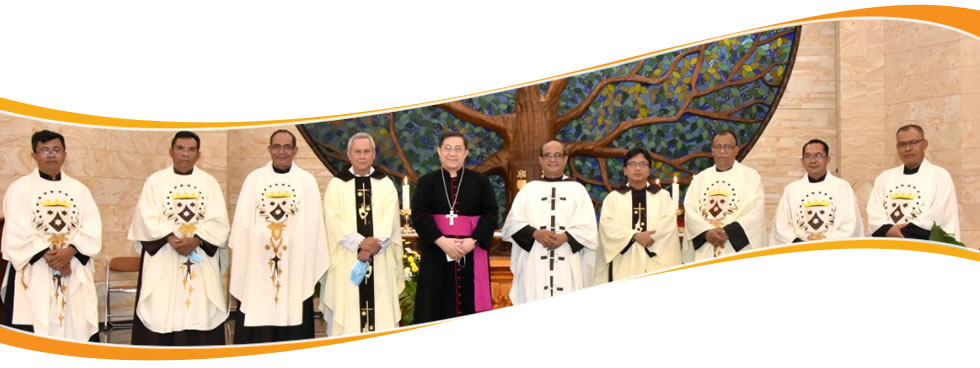
The Elective Chapter of the Carmelite Monastery of Santo Domingo, Dominican Republic, was held 4 November 2016. The following were elected:
- Prioress: Sr. Diomedis Maria Duran Ynoa, O.Carm.
- 1st Councilor: Sr. M. Arelis D’Oleo, O.Carm.
- 2nd Councilor: Sr. Margarita Altagracia Frias Abreu, O.Carm.
- 3rd Councilor: Sr. Altagracia Perpetua Cid Cid, O.Carm.
- 4th Couniclor: Sr. Maria Consuelo Hernandez Abreu, O.Carm.
- Director of Novices: Sr. M. Arelis D’Oleo, O.Carm.
- Treasurer: Sr. Margarita Altagracia Frias Abreu, O.Carm.
Electoral Chapter of the Monastery of Córdoba, Spain
The Elective Chapter of the Carmelite Monastery of Córdoba, Spain, was held 3 November 2016. The following were elected:
- Prioress: Sr. Maria Dolores Domínguez Pérez, O.Carm.
- 1st Councilor: Sr. Beatriz Prados Toledano, O.Carm.
- 2nd Councilor: Sr. Reinhild Maschke, O.Carm.
- Director of Novices: Sr. Reinhild Maschke, O.Carm.
- Treasurer: Sr. M. Angelina Kanini Richard, O.Carm.
- Sacristan: Sr. Beatriz Prados Toledano, O.Carm.
The Second International Congress for Carmelite Schools
During the present sexennium, our General Council set up a Committee for Carmelite Schools, for the purpose of organising a second international meeting. We now have the pleasure of announcing that the Second International Congress for Carmelite Schools will take place in the Domus Carmelitana in Rome, Italy, from the 5th of November (arrivals) to the 10th of November (departures) 2017. The theme of this congress will be, “Carmel, fullness of life and beauty”. Over the next number of weeks the committee will send out invitations for this important event in our Order.
Lectio Divina November 2016
Pope's Prayer Intentions for November
Universal: Countries Receiving Refugees - That the countries which take in a great number of displaced persons and refugees may find support for their efforts which show solidarity.
Evangelization: Collaboration of Priests and Laity - That within parishes, priests and lay people may collaborate in service to the community without giving in to the temptation of discouragement.
Lectio Divina November - Noviembre - Novembre 2016
 IPAD-IPHONE IPAD-IPHONE |  KINDLE KINDLE |  PDF PDF | |
| ENGLISH | Download iBook | Download Kindle | Download PDF |
| ESPAÑOL | Descargar iBook | Descargar Kindle | Descargar PDF |
| ITALIANO | Scarica iBook | Scarica Kindle | Scarica PDF |
- Tuesday, November 1, 2016
- Wednesday, November 2, 2016
- Thursday, November 3, 2016
- Friday, November 4, 2016
- Saturday, November 5, 2016
- Sunday, November 6, 2016
- Monday, November 7, 2016
- Tuesday, November 8, 2016
- Wednesday, November 9, 2016
- Thursday, November 10, 2016
- Friday, November 11, 2016
- Saturday, November 12, 2016
- Sunday, November 13, 2016
- Monday, November 14, 2016
- Tuesday, November 15, 2016
- Wednesday, November 16, 2016
- Thursday, November 17, 2016
- Friday, November 18, 2016
- Saturday, November 19, 2016
- Sunday, November 20, 2016
- Monday, November 21, 2016
- Tuesday, November 22, 2016
- Wednesday, November 23, 2016
- Thursday, November 24, 2016
- Friday, November 25, 2016
- Saturday, November 26, 2016
- Sunday, November 27, 2016
- Monday, November 28, 2016
- Tuesday, November 29, 2016
- Wednesday, November 30, 2016
The Carmelite Nuns in Camerino hit by the earthquake in Italy
The shocks of the earthquake that from the end of August have been hitting the centre of Italy, struck the monasteries of Iesi and in particular the monastery of Camerino. A large section of the ancient city of Camerino has been destroyed and for that reason the seven nuns, including one novice, have been forced to leave their monastery. The more senior members have been welcomed by the community in Sogliano al Rubicone, while the younger ones, thanks to the assistance of the nuns in Cerreto, have moved to the monastery in Montegnacco. While we heartily thank these monasteries for the solidarity they have shown, we are close to the sisters of Camerino in affection and prayer, and to all the families that have been affected by this awful disaster.
Carmelite Rome: Selected locations Brief descriptions Texts for reflection
Fr. John Keating, O.Carm.
'A Pilgrimage of Hope': Historical Background Information
Rome
Welcome to Rome! This is an ancient place, a place of beauty, of faith and of pilgrimage down through the centuries. It is also a living city, the capital of Italy and the birthplace of the European Union, where the treaty of Rome was signed in 1957.
. Many of Rome’s citizens live in the city area (2.7 million people). It has a history of two and a half thousand years. We invite you to walk through the historic streets. We are here as pilgrims, joining together in walking through the landmarks of our Christian past, so as to find our way together into the future with hope.

Rome was transformed by the Popes into one of the major locations of the Italian Renaissance. This place allows us to see with our own eyes the history of our civilization and culture. This is the Eternal City, ever ancient and ever new. It is a World Heritage Site, the third most visited city in the world.
We have travelled as pilgrims, open to what is before us and grateful to God for this time we have here together.
Here is some information about the major places we will visit:
Basilica of Saint Mary Major
The name of the first church built on this site was 'St. Mary of the Snows'. It commemorates a legend, dating from August 352, which recalled a vision of the Virgin Mary who asked that a church be built on the site - a place where Pope Liberius (352-366) would find snow on the Esquiline Hill. The Pope traced the outline of the church in the snow the following morning. The present building was built by Pope Sixtus III (432-440) and enlarged at a later period. It was built after the Council of Ephesus (431) to honour Mary, Mother of Jesus the Son of God. The two great figures of Carmel are Mary and Elijah, so our journey starts here with Mary our Mother and Sister and then moves on to the Basilica of Sts. Martin and Sylvester (which includes famous images of Elijah):

Worth noting', the Holy Door on the left used only during Holy Years; the classic paving (12th century); the ceiling said to be gilded by the first gold brought from the New World and presented by Ferdinand and Isabella of Spain; look at the wonderful biblical scenes high up on the walls; the main altar contains the relics of St. Matthew and underneath the altar the relic of the manger in a silver casket; in the Lady Chapel to the left is the 12th-century painting of the Madonna and Child; tombs of popes and also the Bernini family.
For your personal reflection'. Luke 1:26-56.
Basilica of Saint Martin and Saint Sylvester
In 1229 Pope Boniface VII entrusted the basilica to the Carmelites who had lived for a number of decades in the neighbouring convent of Saint Julian. The friars were to take care of the parish and to found a house of studies for young Carmelites. The basilica was the third building erected on the site for the purposes of public worship: underneath the current building are to be found the remains of the ancient Titulus Equitii of the 2nd/3rd century: i.e. part of the 'Equitus' estate which had been donated to the Christian community and adapted for the purposes of worship. Later, in the sixth century, Pope Symmachus constructed a basilica, later substituted by the building which survives today and which dates from the 9th century when Pope Sergius II built the neighbouring monastery, using material from the ancient Roman period. In time -various restoration projects were undertaken and embellishments added, such as the wooden ceiling of the Cardinal Titular, St Charles Borromeo in 1560. The basilica was completely restored in years 1635-1664, at the instigation of Fr Giovanni Antonio Filippini, prior of the community and later Prior General of the whole Carmelite order. It was he who commissioned from Gaspard Dughet, brother-in-law of Poussin, the eighteen frescoes of the Story of Elijah, which decorate the side walls of the nave with scenes of the Roman countryside (two frescoes on the right side are, however, the work of Giovanni Grimaldi).

Worth noting: the side altars dedicated to Carmelite saints (on the left of the door: St Angelus and St Albert, the Trinity; on the right of the door: St Mary Magdalene de' Pazzi; St Teresa, St Martin, St Stephen and St Charles Borromeo); the central nave was decorated withstuccowork and statues of martyred Popes; the architrave above the columns which is decorated with a frieze of biblical symbols taken from the Book of Genesis and the Book of Daniel on the right and the life of the Church on the left, together signifying the continuity of the story of salvation; on the counter-facade are to be found the statues of St John the Baptist and St Anthony, Abbot in the upper part and Saints Peter and Paul in the lower part; the apse and sanctuary remained incomplete until the middle of the eighteenth century when they were decorated at the instigation of Cardinal Titular Francesco Saverio de Zelada; also notice at the beginning and end of the left hand nave two frescoes, work of Filippo Gagliardi, depicting the basilicas of St John Lateran and St Peter in the Vatican before restoration; at the centre of the lefthand nave, under the huge frescoe depicting a Church council which never in fact took place, is to be found the tomb of Blessed Angelo Paoli (1642- 1720); at the end of the lefthand nave is found the chapel of Our Lady of Mount Carmel, with the tableau of Girolamo Massei (1595), restored at the end of the eighteenth century, with fourteen types of precious marble, plasterwork and gilded bronze.
For your personal reflection: 1 Kings 18: 30-32a.
Castelgandolfo
Castelgandolfo is on the outskirts of Rome, a small town on the hill overlooking Lake Albano. We are here for two reasons - the image of the mountain and the presence of a lake. So much of what Jesus taught his disciples was by the lakeside.
 The ascent of Mount Carmel is a symbol of the inner spiritual journey, especially through the classic works of St. John of the Cross, 16,h-century Carmelite mystic. We will, as disciples of the Lord, reflect by the lakeside together and we will climb the hill together — the two aspects of our pilgrimage of hope. Castelgandolfo is the summer residence of the Popes.
Personal reflection: in groups on the day.
Basilica of Saint John Lateran
This is the first of the Roman Basilicas, founded by Constantine I (about 314-318). It is dedicated to Christ the Redeemer. To these titles were later added the titles of St. John the Baptist and John the Apostle. It is the mother church of all the churches, commemorated during the liturgical year and it is the cathedral church of the Pope as Bishop of Rome. It is the place where five General Councils of the Church took place. Until 1870 and Popes were also crowned here. The previous structure was destroyed by the Vandals, by earthquake and by fire. The present structure is the work of Borromini (17th century).

Worth noting: 18th-century statues of the apostles; the chapel of the Corsini family with the painting of St. Andrew Corsini, Carmelite bishop (14th century) is the first chapel on your left entering by the main door; above the altar are the relics of St. Peter and St. Paul; around the church are fragments of the old mosaics from the previous building; exiting on the right side of church is the oldest Egyptian obelisk in the city (15th century BC); we pass the baptistery of Constantine (4th century) as we enter the University for supper.
Personal reflection'. Jeremiah 1:4-8.
Basilica of Saint Paul Outside the Walls
St. Paul was martyred around the year 67. It is believed that he is buried here and recent archeological work has revealed a tomb under the main altar. A small church existed here from early times until Pope Damasus (4th century) began the work on a large basilica to honour St. Paul. The earlier building was destroyed by fire in July 1823. During reconstruction excavations uncovered the remains of the Constantinian basilica dedicated to 'Paul, Apostle and Martyr'. The reconstruction is an exact copy of the original plan. We have come here in the steps of Saint Paul as the Carmelite Rule is full of Pauline texts.

Worth noting: the tomb under the main altar; the medallions of the all the Popes up until Benedict XVI and under each is the length of their reign; the magnificent mosaic in the apse of the church; the chair of the Pope from which Pope John XXIII announced the Second Vatican Council. Today we are the guests of the Abbot of this Benedictine monastery.
Reflection: lectio divina in groups.
Basilica of Saint Peter
An oratory was constructed over the tomb of St. Peter in the 2nd century. The Emperor Constantine build the first basilica over this and it was consecrated in 326. The basilica was damaged by the Saracens, floods and earthquakes over the centuries. In 1505 Pope Julius II entrusted Donato Bramante with the work of replacing the earlier basilica. Bramante was succeeded in 1514 by Raphael, Peruzzi, Sangallo and Michelangelo, who designed the dome. Bernini worked for fifty years on the interior and exterior decoration.

Worth noting: there are 284 columns in the square the work of Bernini with 140 statues of saints above; the obelisk from Heliopolis (37AD) put there in 1582; the flooring by Bernini and also the statue of Constantine on your left in the beautiful portico; over the entrance is the restored mosaic of Christ by Giotto; the Holy Door is on your right; inside by the main door is a round porphyry slab (wine-coloured), where Charlemange and his successors knelt to be crowed kings of the Holy Roman Empire; on your right is the Pieta of Michelangelo (he was 25 years of age at the time); further along the bronze statue of St. Peter believed to the work of Cambio (about 1296); Bernini’s tabernacle is in the Blessed Sacrament Chapel nearby; the 29 meter high canopy by Bernini above the altar was built with bronze taken from the Pantheon; under the main altar is the tomb of St. Peter. It is a pilgrimage tradition to make an act of faith at this altar; the tombs of the Popes can be visited at the entrance on the right of the entrance to the basilica.
Personal reflection-. Matthew 16:13-19.
Catacombs of Priscilla
The catacombs of Priscilla, on the outskirts of the city, are among Rome's oldest catacombs, dating back to the late second century AD. The catacombs are on the Via Salaria one of Rome's ancient roads leaving the city and heading east to the Adriatic Sea. We have come to this ancient place of worship and burial to witness to the early Roman martyrs. It has been noted that during his time in Rome, Blessed Titus Brandsma, the 20th-century Carmelite martyr, was very taken by the image of Mary at prayer (orante). Here too we find the oldest known image of the Mother of God, dating from the beginning of the 3rd century.

Church of Saint Mary in Transpontina
The Carmelites built this church from 1566 to 1668 on a site acquired after the old church was knocked down (1564). It was intended to improve the defences of Castel Sant'Angelo, considered to be insufficient in the wake of the Sack of Rome in 1527. Famous architects such as Peruzzi and Mascherino worked on the project.

Worth noting: the beautiful facade designed by Peruzzi which leads into the interior which is in the shape of a Latin cross with ten side chapels; the two chapels in the transcepts are dedicated to St Andrew Corsini on the left and to St Mary Magdalene de' Pazzi on the right; the last two chapels towards the altar are dedicated respectively to Saints Angelus and Albert; the main altar is the work of Carlo Fontana, notice also the altar-covering and the spherical tabernacle; the image of the Madonna (16th century) was brought to the present building together with other objects from the old church: the wooden crucifix in the second chapel on the right, the pieta in terracotta in the first chapel on the left of the entrance, the two columns which tradition suggests were those used for the flagellation of Saints Peter and Paul before their martyrdom (third chapel on the left). Much restoration work was done at the end of the 16th century: the ceiling was adorned with an image of Our Lady of Mount Carmel, the pillars were covered with yellow marble and the floor was renewed.
Colosseum
The Colosseum is probably the symbol of Rome we know best. Its ruins are a pale image of the magnificence of its past. It was faced with marble, could be covered over by an awning, protecting it from rain and sunshine; it is a stadium of grandeur and power. It was begun by Emperor Vespasian and finished by his son Titus in 80 AD. It could hold 50,000 spectators. The opening ceremony lasted three months. Outside stands the great arch of the Emperor Constantine. It was not the principal place of martyrdom of the early Christians, but it stands as a reminder of the witness of their faith and courage. The recently Beatified Carmelite, Angelo Paoli, was the first to place a cross in the Colosseum. Every Good Friday the Pope leads the Stations of the Cross here.
Personal Reflection: 1 Cor 3:9-11, 16-17.
(Taken from the booklet prepared for the Carmelite Youth Pilgrimage of Hope, 2010)
Carmelite Spirituality - Allegiance to Jesus Christ
Most Rev. Fr. John Malley, O.Carm.
Carmelites are the only religious and lay family in the Church whose beginnings took place in the Holy Land, the place where Jesus was born, lived, taught, suffered, died and rose from the dead. Benedictines might speak of Subiaco and Monte Cassino, Dominicans of southern France, Franciscans of Assisi, Jesuits of Paris and Rome as their birthplaces. The Carmelites alone can point with justifiable pride to Mount Carmel, the place of Elijah and Elisha, the land of Jesus and Mary.
When Albert, the Bishop of Jerusalem and the Patriarch of the Holy Land, wrote a formula of living for the first hermits on Mount Carmel, approximately 800 years ago, he had in mind the most important event in all of history - the birth of Jesus, God becoming incarnate among His people. Albert made this truth the central value of the Rule of Carmel: “Everyone ... should live a life in allegiance to Jesus Christ ... each one, pure in heart and stout in conscience, must be unswerving in the service of the Master ... each one of you is to stay in his own cell or nearby, pondering the Lord’s law day and night and keeping watch at his prayers, unless attending to some other duty.”
Jesus continues to be the center of the Carmelite way of life. In our tradition and for our saints, this allegiance to Christ became the essential element in putting Albert’s formula of living into practice. They took to heart as their inspiration the words of St. Paul to the Galatians: “I have been crucified with Christ and the life I live now is not my own; Christ is living in me. I still live my human life, but it is a life of faith in the Son of God, who loved me and gave Himself for me” (Galatians 2:20).
St. Teresa’s writings are filled with this allegiance and with the following of Jesus, and she emphatically tells her sisters that the person who would find God must go to Christ Jesus. She writes: “Imagine that the Lord Himself is at your side, and believe me, you should stay with so good a Friend for as long as you can before you leave Him. If you become accustomed to having Him at your side, as if He sees that you love Him to be there and are always trying to please Him, you will never be able, as we put it, to send Him away.” In contrast to many of the theologians of her day, both Dominicans and Jesuits, Teresa put great emphasis on the humanity of Jesus. She recounted His own words to her over and over again: “Be not disturbed, for I will give you a living book.” She emphasized: “The Lord Himself says that He is the Way; the Lord Himself also says that He is the Light and that no one can come to the Father save by Him, and he that sees me sees my Father also.”
St. John of the Cross strongly stressed the same value. To him, Jesus is the revelation of God, His presence among us. In the Ascent of Mount Carmel, he tells us that “in giving His Son, which is His Word - and He has no other - God spoke to us all together, once and for all, in this single Word.” For John, Jesus is the way, He is the door, the only door through which we reach the Father: “O would that I could get spiritual persons to understand that the road to God ... lies in denying ourselves in earnest within and without, and undergoing suffering with Christ”.
Carmelite Spirituality - The Presence of God
Fr. John Malley, O.Carm.
Since the beginning of religious life in the Church, there have been different schools of spirituality. Even though every spirituality has but one foundation, Jesus Christ, some holy men and women throughout the centuries have been attracted to specific values from His teaching and have emphasized certain truths of His life. As a result, particular Gospel values have become identified with different religious families in the Church. These are truly gifts of the Holy Spirit, enriching and benefiting the lives of God’s people.
Psalm 42 has expressed so well the longing of the human spirit: “Like the deer that yearns for running streams, so my soul is yearning for you, my God. My soul is thirsting for God, the God of my life; when can 1 enter and see the face of God?” St. Augustine expressed this same truth so beautifully: “You have made us for Yourself, O Lord, and our hearts are restless until they rest in You.”
Our Carmelite spirituality begins on Mount Carmel in the Holy Land. The first hermits, some probably lay pilgrims, and others former crusaders, came together toward the end of the 12th century to a place well known in Scripture for the presence and deeds of the Prophet Elijah. They were drawn by his words in the First Book of Kings: “God lives, in whose presence 1 stand.” They were seeking the presence, the face of the living God, the God of Love whose image Jesus constantly reflected during His time on earth, as He reminded His disciples of the Good News - that the God, who created us in His image, has first loved us and has called us to a personal union with Himself.
1 would suggest to you that the presence of God has been and should still remain the first and most fundamental value of our Carmelite spirituality and tradition. For centuries, this yearning, this striving, was expressed by the Latin words - Vacare Deo - a total availability to God as we become more aware of His presence in our life. Like so many of our Saints in Carmel, that phrase will take on a very personal meaning for each of us, as we strive to find time for Him, as we rest and relax in His presence, as we literally “take a vacation with God,” simply seeking God day after day in our many commitments and activities.
This inspiration to seek the presence of God is strongly rooted in our Carmelite spirituality because of the influence of Elijah the Prophet. The early hermits gathered on Mount Carmel by the fountain of Elijah. It was there that they hoped to find a spiritual environment, a place where God’s spirit and the human spirit would meet. Elijah and Elisha were inspiring models of this fundamental challenge for all Carmelites: to stand in the presence of the living God and to seek His face. The prophets of Mount Carmel reminded one and all that God lives among His people and that He loves each one of us with an everlasting love.
St. Teresa of Avila and St. Therese of the Child Jesus are two of our saints who witnessed so strongly to this first fundamental value. They remind us so well that the thirst for God is not the exclusive right of a privileged few, but that our God is eager to share Himself with every sincere soul. They are both so mindful of Jesus’ words to the Samaritan woman at the well: “Whoever drinks the water 1 give him will never be thirsty; no, the water 1 give shall become a fountain within him, leaping up to provide eternal life.”
We are all familiar with the story of Teresa, who at the age of seven ran away from home with her brother Rodrigo, and when asked by her anxious parents why she had done this, she replied: “I went because 1 want to see God, and to see him we must die.” The reply of a child, but it foreshadows her life-long quest - to live in the presence of the living God who loved her. She later wrote: “We need no wings to go in search of God but have only to find a place where we can be alone and look upon Him present within us.”
The spirituality of St. Teresa is simply this movement toward God present in the most inner mansion of her soul, where she seeks to be intimately united with Him. Teresa begins her quest for God by seeking only Jesus, but the whole Christ is revealed to her. She had looked to find God in relationship to herself, but she finds as “a daughter of the Church” that Christ Jesus is found in His members, in His mystical Body. Because of this profound understanding, she shared with us her beautiful prayer: “Christ has no body now but yours; no hands, no feet on earth but yours. Yours are the eyes through which He looks with compassion on the world ...” How well does Teresa reflect the two-fold battle cry of Elijah, the prophet of Carmel: “God lives, in whose presence I stand,” and “With zeal have I been zealous for the Lord God of hosts.”
St. Therese too, at a very young age, had a profound sense of the presence of God, one that was replete with love. Her image of God was taken from her own father whom she admired, respected, cherished and loved so much. Her mother tells us that Therese as a child “speaks only of God and wouldn’t miss her prayers for anything.” Later, in Carmel she had deepened this value to such an extent that as she was dying she tells us that the source of her joy came from a total acceptance of the will of “Papa, God” whom she was soon to see face to face. She told her sisters very simply: “Don’t be sad at seeing me sick like this. You can see how happy God is making me”.
Assembly of the Federation “Mater Unitatis”, Spain
The Assembly of the Federation “Mater Unitatis” (7 monasteries), was held 17-20 October 2016 at Madrid, Spain. The following were elected:
- President: Sr. María del Sagrario Lorite Beltrán, O. Carm.
- 1st Councilor: Sr. Elena M. Samper Samper, O. Carm.
- 2nd Councilor: Sr. María Mercedes Medina Zárraga, O. Carm.
- 3rd Councilor: Sr. Noemi Temprano Reguillón, O.Carm.
- 4th Councilor: Sr. Maria Ines Nthenya Nzyuko, O.Carm.


