








Electoral Chapter of the Monastery of Cerreto, Italy
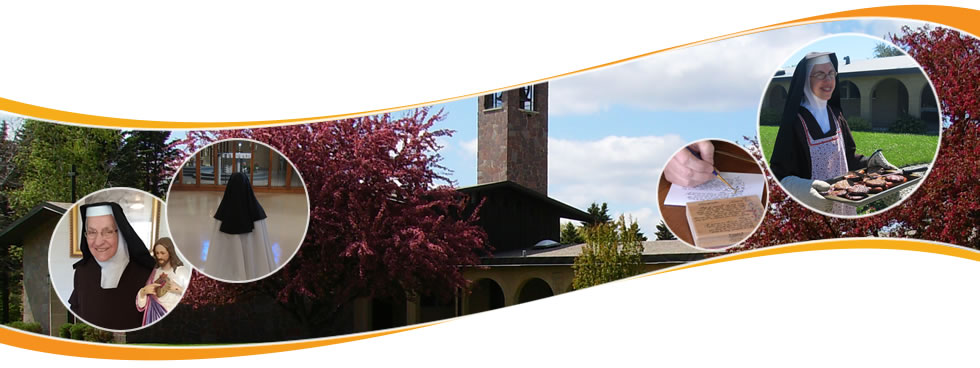
The Elective Chapter of the Carmelite Monastery of Cerreto, Italy, was held 2 February 2017. The following were elected:
- Prioress: Sr. M. Miriam Tamiano, O.Carm.
- 1st Councilor: Sr. M. Joseph Lumicisi, O.Carm.
- 2nd Councilor: Sr. M. Alberta Diana, O.Carm.
- Director of Novices: Sr. M. Joseph Lumicisi, O.Carm.
- Treasurer: Sr. M. Ludovica Benedetti, O.Carm.
- Sacristan: Sr. Alberta Diana, O.Carm.
Third Conference on Contemplation in the Carmelite Tradition
23 – 25 January 2017 scholars gathered at Centro Internazionale Sant’Alberto (CISA) in Rome for the third conference on ‘Contemplation in the Carmelite Tradition’, organised by the Institutum Carmelitanum.
Contemplation is today understood as being at the heart of the Carmelite charism, and since 2010 this series of conferences has explored how the Order’s understanding of contemplation has developed since its medieval origins.
The focus of this third conference was the Early Modern period of the sixteenth century, which included major developments in Church and Society, including the Reformation and Counter Reformation, the Discalced Reform of Carmel, and exploration of the ‘New World’. Some Carmelite writers from this period are very well known, and others hardly at all.
The conference speakers came from a variety of nations, academic disciplines, and branches of the Carmelite Family. They addressed the following topics: Michael Plattig, O.Carm. (Ger), “Spirituality in Modern Times”; Edeltraud Klueting, T.O.C. (Ger), “Eberhard Billick”; Johan Bergström-Allen, T.O.C. (Brit), “Jean Cartigny”; Elisabeth Hense, T.O.C. (Ger), “Adrian Hecquet”; Macario Ofilada (Instituto Cervantes de Manila), “Teresa of Avila”; Jakub Walczak, O.Carm. (Pol), “John of the Cross”; Bruno Secondin, O.Carm. (Ita), “Maria Maddalena de’ Pazzi”; Giovanni Grossi, O.Carm. (Ita), “Christophorus Silvestranus Brenzanus”; Mario Alfarano, O.Carm. (Neap), “Miguel de la Fuente”.
The participants received warm hospitality from the Prior and Community of CISA, joining them for prayer and meals.
In due course the papers from all the conferences will be published.
Provincial Chapter of the Province of Rio de Janeiro
During the Provincial Chapter of the Province of Rio de Janeiro held on 23-27 January 2017 were elected:
- Prior Provincial: Fr. Evaldo Xavier Gomes, O.Carm.
- First Councilor: Fr. Adailson Quintino dos Santos, O.Carm.
- Second Councilor: Fr. Fernando Bezerra, O.Carm.
- Third Councilor: Fr. Alberto Souza , O.Carm.
- Fourth Councilor: Fr. Eduardo Ferreira, O.Carm.
European Vocations Promoters Meet in Rome
A gathering of Vocations Directors of the European Geographical Area took place in Rome from January 20th-22nd 2017. This was in line with the Global Plan of the General Council (2013-2019) in its statement on Europe. The meeting was chaired by Fr. John Keating, O.Carm., Councilor General for Europe, and each day began with an input from a speaker. Fr. Míceál O’Neill, O.Carm., Prior of St. Albert’s (CISA) Rome, addressed the topic “Is God still calling?” an exploration of the theme of vocation today. Don Leonardo D’Ascenzo, spoke about “Pastoral approaches to vocational ministry today”. Don Leonardo is the Rector of the Pontifical College of Anagni and was for many years the vice-director of the Servizio Nazionale di Pastorale Vocazionale of the Italian Bishops Conference (CEI). The main part of the meeting afforded each of the thirteenth participants time to share their experiences and enter into an open and profound discussion on the European vocations scene. Towards the end of the meeting they unanimously agreed to send a reflection to their respective provincials. The gathering ended with Sunday Eucharist at the Carmelite Church of St. Maria in Traspontina, celebrated by Fr. Giovanni Grosso, O.Carm., Prior Provincial of the Italian Province.
News from the Office of the Postulator
On the 2nd of February at 05.00 p.m. in the Church of Santa Maria Annunziata in Mdina (Malta), in the presence of the Archbishop of Malta, Charles J. Scicluna, a ceremony will take place that will mark the solemn opening of the diocesan inquiry into the signs, virtue, and reputation for holiness of the Servant of God, Fr. Avertan Fenech, O.Carm. who died in the odour of sanctity on the 1st of November, 1943.
Fr. Avertan dedicated his whole life to the sacrament of penance, the spiritual direction of souls, and the formation of novices, witnessing by his example to all that he taught in words. His indomitable faith in Divine Providence reached its zenith when he suffered a severe stroke, that left him disabled. Confined to a wheelchair and to bed for eleven years, he was a source of edification for all who took turns at his bedside, to who he gave strength and encouragement in the difficulties of daily life. Throughout his long and painful illness the Servant of God, a genuine master of the virtues, made himself evermore credible, by the way he witnessed to the love of Christ: crucified with him, he pointed to the way of the cross with great serenity as the way to reach the enjoyment of his marvellous light.
The Courage to Love
By Bernadette St. James, TOC, North Hollywood, California
Jesus’ life mission and purpose is to reveal the Kingdom of God which pertains to matters of the heart as found in his teaching on love and advanced in the Beatitudes. Ironically, since childhood the Baptized are instructed in the ethical teachings of Moses found in the Ten Commandments, but are unfamiliar with the more transcendent teachings of the Sermon on the Mount. Holding at arms-length with an attitude of incredulity, the Beatitudes are romanticized by some as a utopian impossibility while never allowing their message to significantly touch one’s community, politics or spirituality. The legalist tendencies and certitudes of the Old Covenant laws exact one’s relationship with God without necessarily needing to enter into the Covenant of love.
However, throughout the Scriptures, God’s message of love is echoed time and again. Christ the Bridegroom has arrived and the wise virgins who are prepared to receive the Beloved in the fire of contemplative abiding—rejoice! (Mt 25.1-13). Similarly, in the Song of Songs, discovery of God is found in love’s deep stirring in the soul. Intimacy with the Divine is encountered after God’s unrelenting search for the bride. Both the Lover and the Beloved long for the other and celebrate upon the discovery of the hearts’ desire. Great philosophical speculations, theological inquiry, and the wisdom of God’s laws may be of some value, but all that must lay bare at the doorway of the Holy of Holies as love is the entry to the sacred sphere.
Love requires courage. It requires that one not adhere to the standards of conditional love that may have been imposed by family, institution, and society. It requires that one trusts the radical nature of Jesus’ message and begin to experience in oneself the giving and receiving of unmerited love. Jesus’ message to all proclaims the God of Israel as a loving Abba daddy who provides far more than anyone else ever can or ever will provide.
The First Letter of John says, “Whoever claims to love God yet hates a brother or sister is a liar” (1 John 4:20). In contemplation we gradually learn to turn our whole being toward God. By experiencing love, one learns by its nature, that love disallows manipulation but rather lures one to enter into communion with God. In prayer we rediscover ourselves made in the image of God which in turn empowers discovery of the Divine Presence in others. In contemplation and detachment, one allows God to just BE. In surrendering ourselves, God’s truth rises to the surface of our consciousness to transform our thoughts and hearts.
The vocation of love demands we trade our idols for the ideals of love as Jesus’ message teaches. Christians can have every virtue but not have love and be a contradiction to Christ. The quickest road to God is through love as found in the uncompromising words of Saint Therese. When discerning her vocation she first sought many roles; soldier, priest, apostle, doctor, and martyr. However, God does not create persons ultimately to be identified with a role which at best can only be a shadowy reflection of himself; but rather, God has created human persons in his very Selfhood. God has created us in love, out of love, and for love, as Therese rejoices in discovering her true identity, “At last I have found my vocation. My vocation is love!".
Bernadette holds degrees in theology and phibsophy from Loyola Marymount H ■ University, a post graduate degree in Counseling Psychology, and is currently completing a doctoral dissertation in Clinical Psychology. She currently is a teacher of religious studies to Catholic high school students and enjoys the enthusiasm, inquiry and goodness she experiences with the youth. Due to the inspirational work of Saint John of the Cross and Saint Teresa of Avila, she became a Lay Carmelite in 1995. As a certified spiritual director Bernadette enjoys the ministry of teaching, organizing and leading contemplative retreats and prayer groups.
Some Questions and Answers about the Lay Carmelites
HOW IS LAY CARMELITE LIVING MEANINGFUL IN THE CHURCH TODAY?
The Lay Carmelite is called to the Family of Carmel to be deeply involved in the mission of the Church, to contribute to the transformation of the secular world. A Lay Carmelite does this by sharing in the charism of the Carmelite Order. We find in Mary, the Mother of Jesus, and in the Prophet Elijah the models for this way of Gospel living, Profession of promises as a member of the Lay Carmelites is an intensified commitment to the living of one’s baptismal promises. Being a Lay Carmelite is not just a devotion added to life; it is a way of life, a vocation. By entering the Order the Lay Carmelite takes upon him/herself the Carmelite charism of prayer, community, and service to others. The call to Carmel, a call to seek God’s will in the ordinary circumstances of everyday life, roots Lay Carmelites in a love of those with whom they live and work, in the recognition of God’s presence in all circumstances, and in solidarity with God’s People everywhere.
WHAT IS THIS RELATIONSHIP THAT CARMELITES HAVE WITH OUR LADY OF MT. CARMEL AND THE PROPHET ELIJAH?
Mary is Patroness, Sister and Mother to all Carmelites. Lay Carmelites have to live this relationship, imitating her virtues, listening to the Word of God in and through daily life. Lay Carmelites stand with Mary, cooperating with the mysterious will of God who desires salvation for all people. Elijah is an example of prophetic action, a life spent in service of God, a service that finds its source in a profound experience of God in prayer. Lay Carmelites see in the prophet of Carmel a model for a life spent testifying in deeds of love to God’s presence in the world.
WHAT ARE THE REQUIREMENTS FOR ADMISSION TO FORMATION?
A candidate must be a Catholic fully participating in the sacramental life of the Church, who feels called by God to live more deeply one’s baptismal vocation as a member of the Carmelite Family. A candidate should be between 18 and 69 years of age when seeking entry to the formation program. A person is admitted to formation through an existing Lay Carmelite community.
WHAT DOES THE LAY CARMELITE FORMATION PROCESS ENTAIL?
Formation is divided into three specific periods:
1. Phase 1 --Preparation for Reception; lasts one year but may extend up to two years; instructions include history of Carmel, its charism and traditions.
2. Phase 2 --Preparation for temporary Profession; lasts two years but may extend up to three years; instructions on prayer, community, and the call to ministry
3. Preparation for final Profession; last 3 years; ongoing formation takes places at monthly community meetings with the other professed; is a time of deepening one’s living of the Carmelite Way as a means of discerning one’s call to Final Profession.
4. Once a person has been accepted by the community council for Final Profession, he/she continues ongoing formation, which is life- long for all the members of the local Lay Carmelite Community.
WHAT IS EXPECTED OF A LAY CARMELITE?
- To participate in the daily celebration of the Eucharist when possible
- To spend about ½ hour in meditation each day, reflecting on the Scriptures, using Lectio Divina, or some other appropriate method of personal/reflective prayer
- To pray the Liturgy of the Hours – Morning and Evening Prayer – in union with the Church throughout the world
- To spend some time doing spiritual reading each week
- To attend the monthly community meetings and other (periodic) community activities
- To wear the Brown Scapular daily as a sign of dedication to Mary, trust in her motherly protection, and as an expression of one’s commitment to live in allegiance to Christ by serving others
Candidates studying to become a Lay Carmelite are also expected:
- To meet monthly with the formation director for a two-hour class in the Phase 1 formation program, which consists of 12 lessons in preparation to be received into the Lay Carmelites
- After Reception, to meet monthly with the formation director for a two-hour class in the Phase 2 formation program, which consists of 24 lessons in preparation to make temporary profession as a Lay Carmelite
How to continue growing as a spiritual director - Continuing formation in spiritual direction
Eddie Mercieca, SJ
The following words are remarks regarding some of the areas of continuing formation which we consider important for those who wish to continue growing in the ministry of spiritual direction. This is a holistic and integrated formation that takes into account three related and interconnected dimensions: the spiritual, the psychological and the historic.
Beginning this church ministry of spiritual direction implies commitment for continuing formation. Within all professions and ministries of the helping relationship (medical, social service, teaching, catechism, community animator, etc.) it is difficult to imagine a high quality of service without a continual or ongoing formation. The possibility of renewed formation is also, eventually, an opportunity of continual renewed growth! In fact, without an ongoing formation, we have no right to continue spiritually directing others in their journeys of following Christ more closely.
I. Embracing the experience of being directed
Having had and continuing to have quality spiritual direction is fundamental, for these experiences will always serve as important and valid points of reference. Whether helpful or not, as points of reference, our experiences (attitudes, judgments, advise, conduct, etc.) later form part of our accumulated inner wisdom. Those persons who have directed me well in my life and have helped me to grow, plus those who have intended to be good spiritual directors to me but were not –including some who have even harmed me– all remain engraved in my memory. They are there in my most basic of emotions, such as fright, pain, anger, shame, happiness, my attitudes and values, and truly influence the way and quality in which I relate to others. These experiences may also play a role in how I help other people.
The Spiritual Exercises of Saint Ignatius: Praying with the exercises for eight days or more in a personalized manner is very beneficial, and if possible the 30 day retreat or the 19th annotation retreat over several months is even better. These retreat experiences encompass process, the relation between director–directee, personalized treatment, help in making decisions, learning discernment, prayer and living one’s salvation history through the Word face to face with daily life. The month long retreat as spelled out by St. Ignatius, in content and in experience, ends up becoming a paradigm of life. The meditations and the prayer periods of the Spiritual Exercises bring to life the different internal experiences of each retreatant. I know little other pedagogy more effective in the formation of spiritual directors.
In a word, the best training of a spiritual director –the deepest and lasting– is his or her own experience of being directed by experienced people of God. Before all approaches and techniques, no matter how valid they are, lies the awareness of one’s own experience. Discovering it, learning to articulate it to self and to others, and to discern in the Lord. This is how one goes about discovering and forming a personalized style and charisma in the ministry of accompanying others.
II. Having the human stratum (subiectum) and charisma in Spiritual Accompaniment.
Spiritual direction is not simply a learned task; good will and pure intentions do not suffice. One must be mature both in the human and spiritual senses. It is maturity which allows and makes possible the other’s holistic growth in the ways of the Lord. If this is the case, a spiritual director is then able to listen –even with intuition, deeply empathizes, understands emotions and recognizes spiritual movements of the one sharing his or her story.
Discretion, common sense, balance, grounded in daily reality, optimistic and hopeful trust in the Spirit of God that is alive and acts in the world and in persons, are all part of the human stratum and approach of the person who accompanies others. These are just some of the skills that begin to unfold over time through contemplation and not without faith.
Charisma is a gift, a Christian quality that one shares with the other members of his or her community. It is a special grace from God manifested in someone as a service to be shared within a community. As such, the charisma to be able to accompany others in their spiritual journey is recognized, then, by those who ask for help and seek direction, orientation and support. In a way, it is through others that we discover our gifts as spiritual directors: fellow believers with a desire to grow in the Lord and to commit themselves in service to others are the ones who approach us and ask for help and guidance. This recognition by our brothers and sisters in faith then invites, encourages and confirms the gifts of spiritual direction in another. At the same time, the one who is graced with the charisma to accompany others in their journey experiences the desire, joy and psychological-spiritual integration as experienced in the same Christian commitment.
III. Knowing one’s self intimately
It is fundamental that the professional serving in the helping relationships knows him or herself well. Self knowledge is even crucial for giving good spiritual direction. The importance of good personal awareness and self knowledge can never be under estimated in regarding one’s own personality, deepest desires, strengths, and one’s own potential qualities. Good self knowledge is not only necessary at the personality level, but it is also essential in understanding one’s own salvation history and personal relationship with God. All of the mystics, from John of the Cross to Teresa of Avila and Ignatius of Loyola, insist upon this, and with reason. The dessert fathers, masters in spirituality from the first centuries, also emphasize this, to pay attention to the behavior and tendencies, including temptations, of each individual. We must all learn, as spiritual directors, how to develop and integrate this approach. In doing so, it is then possible to get at the roots of the obstacles for growth in the spirit.
In the spiritual life a more personalized self-knowledge helps us to avoid self deception and allows us to be transformed by God –and not by our own efforts– toward a more genuine image of ourselves and our relationship with God, to not project and to better discern that which is or is not from God.
This is even more necessary in spiritual direction when third parties play a part and when the interpersonal relationships must be clearer in order to center one’s self in another and in what the Lord may be asking –and not in one’s self and in the possible benefits in the relationship of director–directee. Any hint of co-dependency, competition, emotional transference, or the desire
to satisfy unmet needs, must be recognized and taken into account as best as possible. A shallow Self-awareness or even a vague knowledge of the true self simply does not suffice, no matter how healthy a person is. Rather, we need the help of others, and through adequate measures we are able to deepen our self-awareness, thus illuminating those dark corners, discovering the typical pit-falls, and empowering our own strong points. In fact, all the dynamics in a helping relationship are present in spiritual direction. If what we aim at is spiritual accompaniment – that which is done in the Spirit of the Lord and nothing else - awareness and self knowledge becomes a needy ascetical attitude, fruit of deep respect towards the helped person and the desire to accompany the best we can without interfering God’s active presence.
Growing in awareness of “how one is” and of “how one functions in relationship (with God, with others, and with self)”, is a constant process that always requires prayerful attention, on the lines of the daily Ignatian Examen (Ex 43). God’s working through us not only takes into account our personal history and way of being, it naturally involves them. The experience of age through the different stages in life and our own human and spiritual growth really determine the guidelines for a fuller self knowledge and personal integration.
IV. Managing basic psychological factors
The social sciences, psychology in particular, have a lot to contribute to spiritual direction. Even more, a spiritual director working on being more sensitive and taking seriously anyone who may ask for guidance should not take for granted some of the basic elements of psychology –which in our day is more accessible and easier to understand.
Without a doubt, a clearer knowledge of the psychological development of the human being is a necessary tool towards a better understanding of those whom we help. Grace works through nature and the religious–psychological development that occurs throughout the life of a human being becomes clearer and builds itself upon the biological, psychological and social stages we experience in life. It is very different to spiritually guide an 18 year old person than a 35 year old or a 50 year old, for whatever may seem as common sense should be informed by the psychological studies available to us today as useful and indispensable tools for our ministry.
In addition, another important area of study is of the psychology of personality. How do I perceive myself? How do I relate to others? To God? What are the predominant tendencies in my behavior? How do I make decisions? How do I handle frustration? How do I love and let myself be loved? To live in the Spirit is to live life –and all the facets of life– in God. No personality type is independent from the quality and the way in which we relate to others and to God. The psychology of personality, far from limiting or labeling our directees, allows for growth and openness no matter who the individual is; it helps getting down to earth what the Holy Spirit inspires throughout life and dismisses that which tends to threaten and squelch the ways God speaks to us.
Also, we can build upon and round out our on-going formation by incorporating communication psychology and the psychology of religion. Spiritual direction should not be reduced to counseling or, even more, a psychological therapy. Nevertheless, these areas of psychology can contribute immensely to our ministry of direction. And central to guiding
someone in the spiritual life is being able to distinguish between the different approaches and professions involved in serving others so as to do justice to each different ministry and to be able to fully assume the specific task of spiritual direction. Given this, however, we must not take for granted how much insight human psychology offers us today. Being able to integrate the different theoretical elements, attitudes and psychological tools without merely psychologizing, and at the same time doing spiritual direction without merely spiritualizing, is and in of itself an art, a gift from God.
V. Being able up-to-date and in touch with social reality and cultural trends
Neither those who seek guidance nor those who are spiritual directors live in an isolated, ahistorical context. Wanting to well situate a directee in his or her own social context requires us to be in touch with the world around us and the social and cultural realities of our time. Spiritual direction that is disconnected from and not rooted in reality is dangerous because it does not seriously consider the context of someone’s life, including the Incarnation of the Lord.
Faith, spiritual growth and apostolic commitment occur within a specific historical context and in a determined culture. Thus, it is not only important but imperative that someone being trained in spiritual direction to individuals, couples and families, be very aware of new social trends that form the values and judgments of today –like doing a sort of social analysis.
Even more, growing in the ability to identify with Christ as a goal in spiritual direction opens the believer to a richer and more committed faith life: embracing the preferential option of Jesus Christ for the little ones, the poor and sinners. More closely following Christ naturally leads to a fuller commitment to justice and a compassion for the poor and the marginalized of the world. It is the gospel criteria for determining the fruits of a Christian lifestyle. Walking in the footsteps of Christ and his options require the spiritual director to be in touch with the social and cultural reality of our world. The historic dimension together with the Christian commitment it implies is an essential element to good spiritual direction.
VI. Developing themes of spiritual theology
Spiritual theology is a vast reserve of wisdom for those who give spiritual direction. This is an area rich in theological reflection: biblical theology, sacramental theology, moral theology, Christology, ecclesiology, etc...
The spiritual life and following Christ become enriched by these areas of reflection upon: the true experience of God in our world today, the ways in which God is or is not manifested in our emerging culture and the different experiences we have in a society ever more pluralistic and diversified.
The one who guides others should seek to articulate as clearly as possible today’s Christian and Catholic spirituality, such as the specific elements of Christian lifestyle, grace and how grace is manifested, and how following Christ is the central focus of all spiritual growth and commitment.
One important realm of spiritual theology includes everything under the umbrella of Christian prayer: what it is or is not, its parameters, the different ways of praying, the Word of God, etc.
The Sacraments, channels of communication with God and experiences of grace, in particular the Eucharist, as a source of Christian life, is another chapter of spiritual theology that requires familiarity on behalf of the spiritual companion. Knowing how to distinguish between spiritual direction and the sacrament of Reconciliation and relating the two together can be a tremendous help for those being directed.
Good formation in spiritual direction also emphasizes how important it is to be familiar with the “spiritual maps” of believers. All people have their unique calling and path in life, but similar spiritual movements can be seen in different people –creating a sort of pedagogical paradigm. Knowing the annotations and rules for discerning the Spirit from the Spiritual Exercises (1-20, 314-346) of St. Ignatius helps immensely in being able to perceive the different movements of the Spirit –and thus, discern them. Subtlety is a gift of the Spirit that both enriches and empowers clear and more genuine discernment. Spiritual theology, then, broadens our spiritual direction by giving us more tools to work with –in addition to security and confidence.
Similarly, being able to understand and articulate the different spiritualities that have contributed to the Church as incarnate in the lives of men and women saints widens our perspective and allows for better discernment of how God speaks to specific individuals.
We must also remember, finally, the mystical experience in a well developed spirituality, both mature and healthy, with its own criteria.
If it’s true that in spiritual direction nothing can replace the personal experience, a relationship in service of helping another must be sufficiently informed by at least the basics of spiritual theology –so as to not do harm! Even the true great mystics such as Teresa of Avila sought out advice from men and women of God but who were also wise and learned people.
VII. Participating in workshops for continuing formation
One would think that after a personal experience of being directed, after reading about and studying theology and the social sciences –such as psychology, the only missing piece in becoming active in this ministry, then, would be requests from others for spiritual direction. This is true, but not the whole truth. Effectively, in practice this ministry requires that everything learned be processed and personalized at more depth by participating in classes and specialized workshops. Good theology is not enough to be a good spiritual director. This apostolic ministry is a unique service to others that requires apprenticeship and a lot of feed back from other good spiritual directors. This is an important point for both beginners at spiritual direction as well as for those already with some experience.
For those beginning, a program of apprenticeship and a directed process of growth is a good approach. A few suggestions for those preceding down a path of spiritual direction as an apostolic ministry:
- The profile of a spiritual director in the light of Jesus; human and spiritual maturity of the spiritual guide.
- Decision making ; complex psychological-spiritual situations; spiritual discernment
- Discover, create and polish a personal style; be present to pain, read the “spiritual map” and the spiritual history of the one seeking guidance
In addition, workshops on scripture and psychological-spiritual integration tend to nicely compliment the first few years of ministry.
On the other hand, experienced directors would do well by looking for an ongoing formation along the lines of “supervision” by sharing with others. These meetings can range from reading and discussing new material for good exchanges in ideas to letting one be challenged by others’ experiences. In these types of “supervised meetings” the focus is the spiritual director himself/herself. Case studies, sharing experiences, recognition or different styles and approaches of directors, support and new challenges, mutual feedback, etc., all serve as the purpose for these types of theoretical-practical workshops.
My formation as a spiritual director – personal log:
Focus / Achievements in this area / Goals in this area
1). Experience having spiritual direction
2). Human stratum and charisma in directing
3). Good self knowledge and awareness
4). Able to articulate the basics of psychology
5). Know the culture / social analysis
6). Study areas and themes of spiritual theology
7). Spiritual direction workshops for beginners and veterans in the field
Major Events of the Order 2016
In 2016, the Extraordinary Jubilee of Mercy of the Church, The Carmelite Order was also busy with many major events.
1. The Assembly of the Federal Leaders and Representatives of Non-federated Monasteries

3rd-5th, FEB, 2016: Taking advantage of the congress of federal leaders of all the religious orders, organised by the Congregation for Consecrated Life, at the end of the year dedicated to the consecrated life, the five Carmelite federal leaders (3 from Spain, I from the Philippines and 1 from Italy), along with the coordinator of the monasteries in Brazil and representatives of monasteries in the Caribbean and the U.S.A. were invited by the Delegate General to a meeting that was held from the 3rd to the 5th of February at St. Albert’s International Centre (CISA) in Rome. This assembly was first of all an occasion for getting to know all about the federations and the monasteries outside the federations, and then to promote communication and communion between the nuns themselves and between the monasteries and the rest of the Carmelite Family.
2. The Opening of the 450th Anniversary of the Birth of St. Mary Magdalen de’Pazzi

2nd APRIL, 2016: On the 2nd of April, the date of Mary Magdalen’s birth in 1566, the solemn opening of the anniversary celebrations took place at the monastery of Careggi (Forence, Italy), where her body is venerated. The Cardinal Archbishop of Florence, Giuseppe Betori, led the celebration of the Eucharist that was concelebrated by several priests. The concelebrants included, the Prior General, Fr. Fernando Millán Romeral, along with other members of the General Curia.
On account of the 450th anniversary of the birth of St. Mary Magdalen de’Pazzi, the Apostolic Penitentiary has granted that all Carmelite monasteries be places where people may obtain a plenary indulgence throughout this year, beginning on the 2nd of April, 2016 and ending on the 25th of May, 2017. The same applies to churches and chapels dedicated to her.
3. Opening of the "Super miro" investigation for Blessed Titus Brandsma

11th JULY, 2016: On the 11th July 2016, at 14.00, at the Curia of the Diocese of Palm Beach, Florida, United States of America, the opening session of the diocesan inquiry into the presumed miracle attributed to the intercession of Blessed Titus Brandsma O. Carm, will take place. This opening session will be presided over by Msgr. Gerald Barbarito, Bishop of Palm Beach, who had agreed to introduce the Cause and appoint the Tribunal so that the gathering of the evidence regarding the alleged extraordinary healing may be effectively done and that the witnesses may be heard.
Bleessed Titus Brandsma is choosen to be a model for the Year of Mercy proclaimed by the Pontifical Council for the promotion of new evangelisation, under the title, “A Strong and Merciful Father”, representing a man who could combine a strenuous opposition to Naziism with compassion and mercy towards all, including the nurse who gave him the injection that took his life away.
4. Two Councils - O.Carm and OCD - Pilgrimage to the Holy Door

On the morning of 11 June, 2016 the members of the two Councils, O. Carm. and OCD, assembled at the start of Via della Conciliazione to begin their Pilgrimage towards the Holy Door of St. Peter's Basilica. They were accompanied by the former Secretary General and Bishop-elect Francisco de Sales Alencar Batista, O. Carm., who led them in five moments of prayer along the way, concluding with a prayer as the group reached St. Peter's Basilica. At the end of the pilgrimage, the members of the two councils came together at Santa Maria in Traspontina and sang the "Flos Carmeli" in front of the statue of Our Lady of Mount Carmel.
The Prior General of the Carmelites, Fr. Fernando Millán Romeral O. Carm together with the Superior General of the Discalced Carmelites, Fr. Saverio Cannistrà, OCD., have sent a message to all the members of the whole Carmelite family throughout the world on the occasion of the Jubilee of Mercy, entitle: May God be Blessed forever, He who waited for me so long!, the text is available in many languages and is available online.
http://ocarm.org/en/content/citoc/letter-two-generals-ocarm-and-ocd-1
5. The Feast of Our Lady of Mount Carmel and Letter of the Prior General

16th JULY, 2016: Every Year, the Feast of Our Lady of Mount Carmel is most important event celebrated in the whole Order arround the world, in many Parishes and many countries which take her as Patronage. The Celebration ussualy begins with the Novena to Our Lady, 9 days before.
In this Solemnity, the Prior General of the Order, Fr. Fernando Millán Romero, every year sent out a letter to the whole Carmelite family to express his best wishes and invite all members to celebrate the Feast, beginning with the Novena to Our Lady of Mount Carmel from 7 to 15 of July 2016. This custom of the Novena of Our Lady of Mount Carmel before the feast is a long tradition and is observed by many Catholics throughout the world. The Letter is avaialbe online at http://ocarm.org/en/content/citoc/letter-prior-general-solemnity-our-lady-mount-carmel-2016
6. Carmelite Youth Day in Krakow, Poland, 2016

27th JULY, 2016: In preparation for the official opening of the World Youth Day with Pope Francis in Krakow, Poland, young people from our Carmelite communities around the world gathered in the beautiful garden of our Carmelite community in the centre of the city on the 27th July. In all, around 350 took part in this special Carmelite gathering of young people, hosted by the Prior Provincial, Fr. Bogdan Meger, the Prior of Krakow, Fr. Zbigniew Czerwien, the main organizer Fr. Marcin Siemek, members of the Krakow community and a wonderful team of young people. Among those present were Carmelite young people from Malta, Poland, Ukraine, Lithuania, The Netherlands, Romania, Spain, Portugal, USA, El Salvador, Puerto Rico, Mexico, Venezuela and the largest group present were from the Italian Province with fifty-five young people. Most of the groups were led by Carmelite friars who were accompanying them to the World Youth Day.
As part of the day’s programme, the Prior General, Fr. Fernando Millán Romeral presented his letter entitled “Young Carmelites: sowers of mercy” for reflection and discussion. He also presided at the Eucharist in our Basilica with a liturgical celebration of two Carmelite martyrs, Blessed Titus Brandma and Blessed Hilary Januszewski. Short presentations were also given by Fr. John Keating, Councillor General for Europe and by the Polish Provincial. The day afforded the young people an opportunity to meet and to get to know each other and to build up Carmelite contacts.
7. The Episcopal Ordination of Frei Francisco de Sales, O.Carm.

4th AUGUST, 2016: The episcopal ordination of Frei Francisco de Sales Alencar Batista, O.Carm. bishop of Cajazeiras (Paraiba, Brazil) was celebrated in Araripinha (Pernambuco, Brazil). The celebration was led by Dom Frei Antônio Muniz Fernándes, O.Carm., Archbishop of Maceió as the principal ordaining prelate, along with many Bishops and Carmelite Bishops. The Prior General, Fernando Millán Romeral, O.Carm., the Councillor General for the Americas, Raul Maravi, O.Carm. were there also along with Provincials and several Carmelites from Brazil and from elsewhere in Latin America, along with a large number of priests from the different diocese.
The new bishop, at the end of the celebration, spoke about his gratitude to God, to his family, and to the Carmelite Order and he underlined his intention to serve with great hope and generosity the diocese that has been entrusted to him. The Prior General spoke of the three recent appointments of Carmelites bishops as a recognition of the generous service that the Order has given to the local and universal church and he thanked Frei Francisco de Sales for the service he gave to the Order as its Secretary General.
8. The 5th Centenary of the Death of Blessed Baptist Spagnoli

24th AUGUST, 2016: The Celebration of the 5th Centenary of the Death of Blessed Baptist Spagnoli begins with the canonical recognition of the Incocurpted body of Blessed Baptist Spagnoli, in the Cathedral of Mantua (Italy). Presence at the celebration was the General Posulator and several Carmelite Friars of the Italian Province. On the following 1st of September, the body will be transferred in solemn procession from the Mantua Cathedral to the Shrine of Our Lady of Mount Carmel, in San Felice del Benaco, where it will remain exposed for the veneration of the faithful until the 15th of October.
On the 10th and 11th of September, the Prior General, Fernando Millán Romeral, O.Carm., led the celebration of the Eucharist in the Carmelite house of San Felice del Benaco (Brescia, Italy) where body of the blessed is venerated. The Prior General spoke about the importance of seeing in these centenary celebrations an occasion for renewal, building on these important figures, towards a revitalisation of our witness in the world of today. The following Sundays, those who led the Eucharist included Fr. Tiberio Scorrano, O.Carm., Vice-provincial of the Italian province, Fr. Christian Körner, O.Carm., Vice General of the Order, Fr. Giovanni Grosso, O.Carm., Provincial of the Italian province and Bishop Giuseppe Zenti, of the diocese of Verona. During this period, a number of cultural events are taking place, aimed at exposing the literary and humanistic contribution of Blessed Baptist, known in his own time as the “Christian Virgil”.
9. The Episcopal Ordination of Paul Horan, O.Carm.

On Saturday, the 17th of August, in Marymount Teachers College in Mutare, (Zimbabwe) the episcopal ordination of Fr. Paul Horan, O.Carm., named as bishop of the diocese of Mutare, took place. It happens that in the same place in 1957, Donal Lamont, O.Carm., was ordained as the first bishop of that diocese.
The celebration was led by the Archbishop of Harare, Robert Christopher Ndlovu, the principal ordaining prelate. The concelebrants included the Apostolic Nuntio, Marek Zalewski, all the active bishops of Zimbabwe, the Prior General, Fr. Fernando Millán Romeral, O.Carm., the Councillor General for Africa, Fr. Conrad Mutizamhepo, O.Carm., the Provincial of the Irish province, Fr. Richard Byrne, O.Carm., and several Carmelites from Zimbabwe and from elsewhere in Africa, along with a large number of priests from the different diocese.
The very joyful celebration included typical African dancing and singing, with an enormous attendance of which different groups of lay Carmelites, the Handmaids of Our Lady of Mount Carmel, (a congregation of sisters founded by Bishop Donal Lamont) and the cloistered nuns from the new monastery of the Holy Family were part.
10.The Episcopal Ordination of Henricus Pidyarto Gunawan, O.Carm.

On Saturday, the 3rd of September, in Gajayana Stadium in Malang – Indonesia, the episcopal ordination of Fr. Henricus Pidyarto Gunawan, O.Carm. took place. This solemn mass was attended by 38 bishops from all over Indonesia, one Indonesian Cardinal and the Apostolic Nuncio, Antonio Guido Filipazzi; also around 15.000 faithful from all over the diocese of Malang and from outside. The main celebrant was Mgr. Ignasius Suharyo, the Archbishop of Jakarta. The concelebrants included a large number of priests from within the diocese and from other dioceses, among them were Fr. Benny Phang Khong Wing, O.Carm., the General Councillor of Asia-Australia-Oceania, the Provincial of Indonesian Province, Fr. Ignasius Budiono, O.Carm., the Provincial Commissary of Eastern Indonesia, Fr. Yohanes Bosco Djawa, O.Carm. and many Carmelites from Indonesia and Hong Kong.
The solemn and joyful celebration included the attendance of Carmelite students, different groups of lay Carmelites, the Hermanas Carmelitas, Putri Karmel, Carmelites of St. Elijah, and the cloistered nuns from the monastery of Flos Carmeli – Batu. The dignitaries from the local, provincial and national government were also present after the mass to congratulate the new bishop and to show their support.
11.The General Congregation 2016 in Fatima

The General Congregation, bringing together the members of the General Council, Prior Provincials, Commissaries General and Provincial, General Delegates and Presidents of the Regions, takes place in the Hotel Casa São Nuno, Fatima, Portugal, from 18th September to 1st of October 2016. The theme of the meeting will be:
“… more by our life than by our words” (Const. 24) - Missionaries of God’s tenderness and love”.
The principal speakers are Louis Antonio Cardinal Tagle from the Philippines, who spoke on “Missionaries of God’s tenderness and love”, Fr. Claudemir Rozin, O.Carm. (Par) who addressed “The peripheries of Carmel today” and Fr. Míceál O’Neill, O. Carm., (Hib-CISA) who spoke on “If you knew the gift of God (Jn 4:10) - The Carmelite wisdom of St. Mary Magdalene de' Pazzi”.
12.All Africa Carmelite Family Conference

Representative members of the Carmelite Family in Africa (O.Carm), met at St Teresa of Avila Spiritual Centre, Boko, Dar es Salaam, Tanzania from 21-28 July 2016. The 38 participants were drawn from the following countries: Burkina Faso, Cameroun, the Democratic Republic of Congo, Kenya, Mozambique, Tanzania and Zimbabwe. All branches of Carmel were represented: laity, consecrated religious sisters and the friars. The theme of the Conference was: “United, Heart and Soul (Acts 4:32): Being Carmelite in Africa – One Rule, Multiple Expressions”. The Conference consisted of expert input, personal and group reflection. Sanny Bruijns from the Dutch Province led three of the reflections: 1. The Historical Origins of the Carmelite Rule and Its Spirituality; 2. The Rule in relation to Mary in Carmelite Spirituality; 3. The Rise of Women (Nuns and Laity) in the Carmelite Tradition and Its impact on Carmelite Spirituality Today.
13.A Convention of the Superiors General of the Carmelite Institutes of Consecrated Life

From the 14th to the 16th of October, at the “Maria Madre del Carmelo” Centre in Focene (Rome), the 7th Convention of the Superiors General of Carmelite Institutes of Consecrated Life took place. The Superiors General, or their representatives, of 12 of the 16 Institutes that are part of the Carmelite Family met with the Prior General and other members of his Council. At this time there are 13 institutes of sisters, one institute of male religious, one secular institute and one Third Order Institute. The gathering, which was coordinated by the Delegate General for Carmelite Nuns and Institutes, had as its theme the mission of consecrated people and of Carmel in the Church and in the world of today, in the light of the “Year of Consecrated Life”. The principal speakers were, Sr. Nicoletta Spezzati, APC, the undersecretary of the Congregation for Institutes of Consecrated Life and Societies of Apostolic Life, and Fr. Bruno Secondin, O.Carm. The convention was also enriched by a number of accounts of collaboration between institutes and of the work of Carmelite women in the international organisations of the Church and of the world. The event closed with the participants attending the canonisation of Elizabeth of the Trinity in St. Peter’s Square.
14.International Course for Formators and Vocation Promoters

From October 31 to November 12, 2016, the International Course for Formators and Vocation Promoters of the Order organized by General Formation Commission took place in Batu-Malang, Indonesia. Fifty formators and vocation promoters, from eighteen countries took part.
The two-week course was centered on the theme: “Walk with us: Growing in the contemplative dimension of life,” (RIVC #10). A number of experts in the Order were invited to speak on the theme of contemplation. Fr. Berthold Anton Pareira (Indo) spoke on the Sacred Scriptures as the Source of Contemplation; Fr. Michael Plattig (Ger) spoke of Contemplation in the Carmelite Tradition; Fr. Quinn Conners (PCM) gave two conferences on the themes, Ability to Give Love and Give of Oneself, and The Capacity for Responsible Care and Stewardship Expressed in “Service in the Midst of the People.” Fr. Desiderio Garcia Martinez (ACV) gave two conferences on the themes, Accompanying Formandi in a Multi-Cultural Community in Growing into Contemplation, and Accompanying Simple Professed Formandi in Growing into Contemplation in the Midst of Technology Influx. During the meeting, two vocation promoters were also asked to share their experience of formation promotio: Br. Daryl Moresco (PCM) spoke about the Theological dimension of Vocation Promotion while Fr. Irvin Mangmang (Phil) spoke on the Practice and Experience of Vocation Promotion. All the conferences were in the morning while the afternoons were spent in the practice of contemplative prayers.
15.The 88th Assembly of the Union of Superiors General

From the 23rd to the 25th of November, 2016, the 88th Assembly of the USG (Union of Superiors General) took place at the Salesianum in Rome. The main theme of the gathering was “The Fruitfulness of the Prophetic in Religious Life”. Talks were given by Fr. Bruno Cadoré OP., Master General of the Dominican Order (who coordinated the topics), Fr.Michael Perry, OFM., Minister General of the Franciscans, and our Prior General, Fernando Millán Romeral, O.Carm., who spoke about the challenges in the leadership of Religious life today in view of ministry both “ad intra” and “ad extra”.
16.A Meeting of the O.Carm. and O.C.D. General Councils on Mount Carmel

From the 27th of November to the 2nd of December, a meeting of the O.Carm. and O.C.D. General Councils took place at the Casa "Stella Maris" on Mount Carmel in Haifa, Israel. With the help of Fr. Agostino Montan, CSI, a professor at the Pontifical Lateran University, the time was dedicated to a reflection on the church practice of the relationship between hierarchical gifts and charismatic gifts. Much time was also provided for a sharing between the two Councils on a variety of topics that affect the Orders.
Carmelite NGO Karit 20th Anniversary
Fr. David Oliver Felipo, O.Carm.
This year the Carmelite NGO Solidarity for Peace Karit has fulfilled its first twenty years of existence. From CITOC-magazine, we asked its president, Father David Oliver, O. Carm., That would tell us what it means Karit and something that this Carmelite NGO has been doing for the needy. This is his testimony.
Twenty years ago a group of Carmelites of the religious Iberian Region (Spain and Portugal), laity, they wanted to make real and concrete commitment to those most in need, with the last, with God’s preferred reality. The starting point was the reflection from the Justice and Peace that the region was performing. The service among the people with the poor led them to give birth to Karit Solidarity for Peace, the NGO of the Carmelite Family. It is, therefore, an important part of Carmel, always committed to a more just and fraternal world peace. Celebrate twenty years of projects, activities, educational projects and awareness that have approached the Carmelites to the needy, to live and be with them, we helped to think and design future with them, to share goods to reality who have to live not lead them to conformism but to project a different world where the fact born here or there does not undermine the dignity with which we have been created.
Karit Solidarity for Peace is born inspired by the torrent where Elijah receives ‘water and bread’ for a path where you will meet with the widow in Sarepta and their presence will enable the food is not finished. We desire to carry the spirit of Elijah in the defense of many people, our brothers, who as Naboth deprived of his vineyard, what is necessary to live with dignity, that which belongs to them as children of God who are food, school , health... the fundamental rights that help them develop what they have and are. Our presence we want a little breeze that testimony of God, His justice and his bliss. Our ‘few’ become ‘many’ where projects where you do get water, where a service to the most needy in our world is dignifies are made. A ‘bit’ of all it has a ‘lot’ in a pharmacy in the countryside of the Dominican Republic or in a school in Rwanda or Mozambique. We want to be instruments that bring the gentle breeze that changes the hearts of people, which awakens the best of them to be, to be.
A third pillar of our birth twenty years ago is the real presence of Carmelite missions in underprivileged countries. People who receive the announcement of the Good News announcing the Carmelites in those places is where we fixed his eyes as the handmaid of the psalm, to know what to do, what to propose, how to help. The presence of religious missions was the impetus needed to organize and be born. They needed and continue to need the support of development aid projects. It was a way to support a lot of work they performed. We want to be, since then, support and security for the continuity of those Carmelite presences come and show Jesus to transform the hearts of men and reality where they live. Karit Solidarity for Peace is at the service of this process of transformation from the Gospel the sisters and brothers living next to the last, they want to make.
These three points are at the origin of Karit Solidarity for Peace have been forced reference of our doing during these twenty years. After twenty years particularly value that this project is of all, whether the state of life that are or structure where they belong, in Karit Solidarity for Peace is not asked, nor unlike anyone by origin, state of life or condition. They are the last that bring us together, is the spirit of Carmel that unites us is the desire to transform reality who moves us. A second nuance that has helped us and is always present is the closeness with which, in the distance of kilometers and actually collaborate. That meeting in the commitment has always been and the proximity of the family, the sense of belonging and shared identity and project remains grounded. There are no middlemen, we are part of the projects mission and they feel part of this reality in which we find ourselves, of our thinking and our doing.
Our Presence
Karit presences Solidarity for Peace doubles. In Spain in the delegations in which the group of partners (religious and laity) gather to learn and get closer to the reality of the projects that will encourage, meet and finance. Each encourages one or more projects during the year will be made elsewhere in the world. We gather, analyze reality, read from a proposal of hope, we know better through the relationship with the partner and look for ways to involve more people to do it. We started wanting to change reality and that reality, which we are approaching in the distance, which changes us, which transforms us when we put name, situation and context. We currently have open thirteen delegations: Madrid, Valladolid, Seville, Malaga, Barcelona, Zaragoza, Murcia, Elda, Onda, Quart de Poblet, Caudete, Lladó and Vila-real.
The presence really important now during these twenty years has been to the places where we carried out development projects. They are those places where a Carmelite community has done this. Places where men and women have relied on Solidarity for Peace Karit his desire, hope and plan to change things, move coordinates that had or have limited resources to be what they are. They have been much wider communities that religious or religious, where after an analysis of reality have opened it for sharing, between them and us, that reality starts to change, to have another color, discover many times rays light and hope. So our presence in these twenty years has been and is in: Venezuela, Dominican Republic, Peru, Argentina, Colombia, Rwanda, Congo, Cuba, Bolivia, Paraguay, Burkina Faso, Kenya, Mozambique, Timor Leste, Indonesia and also in Spain.
Our Projects
The various initiatives and projects we do can be divided into four main areas:
1. Development Promotion Projects. It is the part that consumes most of our resources. These are projects that are born in the Carmelite missionary presence and to reach our offices looking for ways to accompany and finance. These are projects related to education, to health, to social animation, integration, acceptance of the excluded... related to the basic needs of the projects and how to mitigate these needs by creating personal and community future. In these twenty years there have been projects that have contributed to the achievement of the Millennium Development Goals that attempted to perform and that marked the agenda of cooperation until 2015. Today we are looking for ways to develop proposed as Sustainable Development Goals .
2. Awareness and communication. It is a permanent task and often unimpressive. It is the presentation here, where we live and we are, of a reality that needs understanding and solidarity. Sensitizing is to put the past in front of us so that no one forget, to know them that we are all able to love them. A second important task of this dimension is the complaint. We can not remain indifferent to the injustice around us, lack of resources or how are distributed. We must, and we feel called to do so, point out how some of our privileges are the result of an unfair distribution of wealth or the way of abusing trade laws ... We would also be a cry for peace in our world, a shout conflict reporting and / or proposals for solving them and build a different and possible world.
3. Volunteer. During these twenty years it has been changing and growing this part of our doing. Many people have participated as volunteers in different projects. It is a truly transformative experience of life and involves traveling. It is not the same after collaborating with the Carmelite sisters in energizing their community school in the Dominican Republic or monitoring a water pipeline Jose Galvez or Antona, to name some some example. On your return, you value and resitúas your center, you make your life has a different meaning. You, the same that was, but we live different, look different, you value different. Many young people have been able to share this experience and all of them have been discovered as men and new women. Travel south to engage in projects requires a preparation Karit accompanies Solidarity for Peace.
4. Education for development. We develop materials that propose other values, another way of looking at reality and serve to generate commitments. They are educational materials for schools, for youth groups, for reflection of adults. Education is true and real change of engine structures. We believe that the task should be constant and permanent, which should not be left to chance change all that oppresses man who does not make you live with dignity. Our materials want to open windows that present us with another world, do we choose the values that dignify the man. Approaching, know, love and commit to a different world where people come first.
Future
We would like to continue to grow. We share some of our concerns for the future:
1. We want the whole Carmelite Family to know us and feel us as part of it.
2. Grow to other presences that are not directly related to the Carmelite Family of the Iberian Region. We are at the disposal of Carmel.
3. Provide more space and material for awareness and education in the most disadvantaged countries. Let’s change our hearts here and change the reality of others, both there and here.
4. Perform projects or programs greater capacity to transform reality: most organizations involved, networking, greater continuity in the time of our presence in projects or programs. Generate a broader transformation of reality in the Carmelite presence planning.
5. Growing number of partners and branches in Spain or Europe?
You can visit our website or follow us on Facebook www.karitsolidarios.org. You can also contact us at Questo indirizzo email è protetto dagli spambots. È necessario abilitare JavaScript per vederlo. and on the phone:
+33-630 763248.


