






O.Carm
Carmelite Institute of Malta Hosts John of the Cross Events
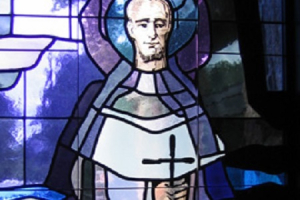
Carmelite Institute of Malta Providing St John of the Cross Inspired Seminars, Retreat and Pilgrimage
The Carmelite Institute Malta has announced a series of events to commemorate the 300th anniversary of the canonization of St John of the Cross. The anniversary is being celebrated from November 2025 through April 2026.
The first is a seminar, “In the Silent Flame: The Carmelite Mysticism of St John of the Cross,” to be held over six sessions. The seminar will cover the saint’s mystical theology, his Carmelite roots, and his lasting influence on Christian spirituality.
The program will feature respected scholars and Carmelite friars, each guiding participants through different dimensions of the saint’s life and writings. Scheduled sessions include Carmelite foundations by Alexander Vella, O. Carm., on November 22; the life and times of the saint with Pia Attard Yeon on December 20; ), The Ascent of Mount Carmel with Kurt Mizzi, O. Carm., on January 31; and The Dark Night led by Dr Christopher Bezzina on February 28. The final two sessions will be led by Rev. Prof. Charló Camilleri, O. Carm., exploring mystical love, the Spiritual Canticle, and mature mysticism in the Living Flame of Love.
All sessions will be held at the Ċentru Spiritwalità Tereżjana in Birkirkara.
A second initiative planned is a May retreat titled “On the Spiritual Summit: Journey to the Heart of God,” inspired by the teachings of St John of the Cross. The retreat will take place from May 15–17 at the Dar tat-Talb Lunzjata in Rabat. The retreat will be led by Rita Grima.
Drawing on the saint’s doctrine of inner transformation and detachment, the retreat invites individuals to engage deeply with Carmelite spirituality in a reflective and contemplative environment.
The Carmelite Institute will also host a special pilgrimage to Spain planned for June and July. The participants are invited to walk in the footsteps of St John of the Cross. The journey will include visits to sacred sites where the saint lived, prayed and wrote, offering insights into the landscapes and communities that shaped his spiritual legacy.
Pilgrims will explore monasteries, churches and locations central to his life of contemplation, while also experiencing Spain’s rich cultural and religious heritage. The Institute describes the pilgrimage as an opportunity not only to deepen one’s understanding of the saint, but also to strengthen personal faith through direct engagement with Carmelite history.
For more information or to register online, go to: https://forms.gle/b5cwkZtcrM4jMVCPA
All Carmelite Saints

November 14 | Feast
The Heavenly Bliss of Paradise
From De Patientia of Bl. Battista Mantovano, Carmelite
The blessed will hear resounding from all sides the highest praises of God, according to the word of the Prophet: blessed is he who dwells in your house: always sing your praises. They will see the heavens and taste all their harmony, they will see Christ and His Mother and all the glorious bodies of the blessed. These, now incorruptible and clothed in incomparable beauty, will be such a sweet spectacle to the beholders that they will not know what better to desire.
Read the complete article
Read more about the Feast of All Carmelite Saints
Blessed Maria Teresa Scrilli, Virgin

Some Observations on the Spirituality of Mother Scrilli
From childhood she showed signs of extraordinary piety and, thanks to the positive influence of her teachers, cultivated her spiritual life through assiduous attendance at the sacraments and readings from the lives of the saints, especially St. Mary Magdalena de'Pazzi. Her mother’s lack of love for having a second daughter and her own long serious illness at the age of 15 drew her ever closer to the suffering of Christ and his Cross. Suffering experienced as an act of love made her delve more and more into the mystery of the Cross. “Patire per amore” (To Suffer for Love) was her motto.
In addition to devotion to Christ’s passion and the Eucharist, she had a tender love for Mary whom she considered her “dear mother.”
When she attempted to live as a cloistered nun at the monastery of St Mary Magdalen de’Pazzi, who she had a devotion to as well, she found that God had other plans for her. She and some friends started teaching. But that too did not work out because of the anti-Church attitudes in Florence at the time. Years later, in 1875, they restarted the Istituto di Nostra Signora del Carmelo knowing that this was God’s will.
To her intense activity, Mother Scrilli united a profound and continuous life of prayer. She knew how to harmonize prayer and work, contemplation and action, self-giving to God and service to her brothers and sisters. This became the goal of the Institute.
While she endured many constant physical sufferings, she also endured moral one with a spirit of faith and conformity to Divine Will. Her whole desire, in fact, was to fulfill God’s will. The “fiat” was the constant that accompanied her throughout her life.
To learn more about the life of Mother Maria Teresa and her work and legacy, we suggest reading The Autobiography of Maria Teresa Scrilli, Foundress of the Institute of Our Lady of Mount Carmel published by Edizioni Carmelitane
Extraordinary Chapter in Indonesia

Extraordinary Chapter of the Province of Indonesia
With the election of the Prior Provincial of the Province of Indonesia, FX. Hariawan Adji, O. Carm., as Vice Prior General, based on Constitution no. 337 § 2, the Province of Indonesia held an Extraordinary Provincial Chapter to elect a new prior provincial. This Chapter was held at the Carmelite Novitiate in Batu, on Friday, November 7, 2025. The Vice Prior General, Hariawan Adji, was present to preside over this Extraordinary Chapter.
In the Extraordinary Chapter, which was conducted smoothly and in a spirit of brotherhood, Fr. Edison R. L. Tinambunan was elected as Prior Provincial of the Carmelite Order of the Indonesian Province for 2025-2028.
Edison serves as rector and professor at the Widya Sasana School of Philosophy and Theology in Malang.
Celebrating At Home - 33rd Sunday in Ordinary Time

Not So Soon
(Luke 21:5-19)
Passages of Scripture, like today’s Gospel, can leave us feeling disturbed.
Talk of destruction, wars, revolutions, persecution and betrayal by close family members can be quite unsettling.
We have to read the Gospel as Luke’s community would have received it, knowing that the Temple and Jerusalem had already been destroyed (ca 70AD) at the end of the Jewish-Roman war, some 10-20 years before Luke’s Gospel was written. In the light of that destruction, and the ongoing persecution by both Romans and Jews, perhaps many in Luke’s community thought the end was near.
Looking at the world today many of us, too, are dismayed by the wars, persecutions and destruction in our own day.
Like Luke’s community, perhaps we, too, long for a saviour to come to our rescue, to make it all right. Maybe that is why so many are prepared to put their trust in harsh dictators who promise to make things right and restore a sense of control and national identity, even at the expense of basic human rights.
The words which Luke places on the lips of Jesus are designed to comfort and give hope. Jesus warns them not to listen to those who think they know God’s plan for the end of time – rather, they should know that God is with them always and no matter what happens.
The Church must continue its journey (persevere) in spite of all sorts of difficulties and persecutions. Like Jesus, the disciples will be vindicated by God with the gift of eternal life.
- pdf Celebrating At Home - 33rd Sunday in Ordinary Time [PDF](2.85 MB)
- default Celebrating At Home - 33rd Sunday in Ordinary Time [ePub](2.90 MB)
- pdf Celebrando en Familia - XXXIII Domingo del Tiempo Ordinario(488 KB)
- pdf Celebrando in Casa - XXXIII Domenica del Tempo Ordinario(479 KB)
- pdf Celebrando em família - XXXIII Domingo do Tempo Comum(475 KB)
COP 30 in Belém, Brazil: Just Another Summit?

The Carmelite NGO | Advocacy for a Just World
The Climate Summit in Belém, Brazil: Just Another Summit?
From November 6 to 21 this year, COP 30 will be held in Belém, in the heart of the Brazilian Amazon. Ten years after the Paris Agreement, this climate summit transcends the usual diplomatic calendar to become an event of profound symbolism. As stated by Brazilian President Luiz Inácio Lula da Silva, the summit will be an opportunity for the world to discuss the importance of the Amazon within the Amazon itself, listening directly to its peoples.
The conference agenda is anchored in crucial mandates that will define the trajectory of global climate action for the next decade. It inherits from COP 28 the task of responding to the first Global Stocktake, which concluded that current efforts are insufficient to limit warming to 1.5°C and called for the submission of a new and more ambitious round of Nationally Determined Contributions (NDCs), or national climate action plans by February 2025. It will also need to build on the financial commitments established at the last COP 29, particularly with regard to the New Collective Quantified Goal (NCQG), which will replace the target of $100 billion per year in aid to countries affected by climate change.
Heading up the Carmelite NGO delegation to the meetings in Brazil will be Renato Rallo, a long time member of the Carmelite NGO. He holds a Ph.D. in Mechanical Engineering in Energy Resources and Environment. Mari Carmen Molina, Chair of Biodiversity and Environmental Conservation, Universidad Rey Juan Carlos, Madrid, will participating as a delegate of the Carmelite NGO and will present a side event in the green zone. Five others will be participating virtually as part of the Carmelite NGO.
Eduardo Agosta Scarel, O. Carm., Director of the Department of Integral Ecology, Spanish Episcopal Conference and Vice President of the Carmelite NGO, published an article in VIDA NUEVA digital on Monday, November 3, 2025 before leaving for the conference. The article was originally published in Spanish. We provide here a translation in English.
To read the complete article ... The Climate Summit in Belém, Brazil: Just Another Summit? by Eduardo Agosta Scarel, O. Carm.
Carmelites Celebrate 80 Years in Zimbabwe

The Carmelites Celebrate 80th Anniversary of Presence in Zimbabwe
The Zimbabwe Commissariat celebrated the launch of their Oak Jubilee and diaconate ordination of Br Lloyd Champiruka on Saturday, October 25, 2025, in St. Simon Stock Parish, Rusape. The occasion was graced by his Carmelite Bishop Paul Horan, O. Carm., and the Irish provincial, Simon Nolan, O. Carm.
The Zimbabwe Commissariat was established by the Irish Carmelites in November 1946. Three Carmelites—Donal Lamon, Anselm Corbett, and Luke Flynn—arrived in what was then called Rhodesia. Five additional Carmelites came to assist in 1947. In early 1953, the Prefecture of Umtali was entrusted to the care of the Irish Carmelites with Donal Lamont as Apostolic Prefect. Four years later, the Prefecture was raised to become the Diocese of Umtali, now Mutare, with Lamont as the first bishop. Along the 80-year journey, friars from the USA, Australia, and Britain contributed to the Commissariat.
The Commissariat currently has nine communities with a variety of ministries being served. The novitiate serves not only Zimbabwe but Kenya and Mozambique.
Interview with Fr. Desiderio García O. Carm, Prior General

Interview with Desiderio García Martínez, O. Carm., Elected Prior General in September
During a recent stay in Rome, the recently elected prior general, Fr. Desiderio García Martinéz, was kind enough to sit with members of the Carmelite Communications office and answer a few questions.
The interview is in Spanish with English subtitles.
We hope you enjoy!
Pope Speaks of Isidore Bakanja as Model for Hope

In his Saturday, November 8, 2025 catechesis for Jubilee year pilgrims, Pope Leo XIV spoke about Blessed Isidore Bakanja, the Congolese martyr who refused to remove his Carmelite scapular when ordered to by his Belgian boss. The pope’s reflection was entitled To Hope Is to Bear Witness. Isidore Bakanja
Here is what the pope said:
Dear Brothers and Sisters, as we continue our Jubilee catechesis, let us reflect today on the life of Blessed Isidore Bakanja, a Congolese martyr who lived out his faith with joy and authenticity, even in hostile environments such as his workplace. The supervisor of the European-owned plantation where Isidore worked despised the Catholic missionaries who defended the rights of the indigenous, and unleashed his anger upon Isidore.
This courageous young man continued to manifest his faith, expressing his devotion to the Blessed Virgin Mary by wearing his brown scapular. While close to death due to the abuse he suffered, Isidore declared that he would pray for his aggressors from heaven. His testimony reminds us that we have much to learn from our persecuted brothers and sisters in Africa. Let us strive to follow his example of perseverance in the faith despite any persecution or rejection we may face. Blessed Isidore, pray for us, so that we too can give witness to our faith with courage and enthusiasm!
A video from TikTok is available with the pope’s words.
Carmelite Nuns in Allentown Hold Elective Chapter

Carmelite Monastery of the St. Thérèse of Lisieux in Allentown, USA Celebrates Elective Chapter
The Carmelite nuns of the monastery of St. Thérèse of Lisieux in Allentown, Pennsylvania (USA) held their triennial chapter on September 25, 2025.
The monastery of St. Thérèse in Allentown was the first monastery of the Order established in the United States of America. In 1931 the prior general at the time, Elias Magennis, sent two sisters, Rev. Mother Therese of Jesus and Sr. Clement Mary of the Guardian Angel, from the monastery of Santa Croce di Lucca in Naples to establish a monastery in the Archdiocese of Philadelphia dedicated to St. Thérèse of the Child Jesus.
A number of candidates presented themselves and before long the community numbered eleven. Four additional nuns from Naples were sent to help out for two years. This monastery flourished and was able to found new monasteries in Hudson (Wisconsin) and Wahpeton (North Dakota) as well as two other monasteries that have closed.
The monastery's website is www.carmelite-nuns.com
Those elected to leadership are:
Prioress | Priora | Priora:
Mother M. Veronica Korb
1st Councilor | 1ª Consejera | 1ª Consigliera:
Sister M. Grace Erl
2nd Councilor | 2ª Consejera | 2ª Consigliera:
Sister M. Michael Nerlonger
Treasurer | Ecónoma | Economa
Sister M. Elijah Guingon
Formator | Formadora | Formatrice
Sister M. Michael Nerlinger
Sacristan | Sacristana | Sacrestana:
Sister M. Elijah Guingon