






O.Carm
Titus Brandsma: Lessons for Living with Illness?
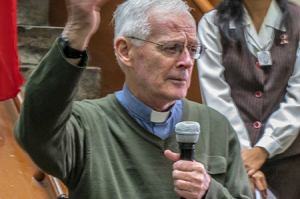
A reflection by
Gregory James Geaney, O. Carm.
Pucusana, Perú
Not for a minute would I dare to compare myself to Titus Brandsma, Carmelite, about to be canonized a Saint. The only thing we have in common is our “Carmeliteness,” nothing more. But I can't help seeing some parallels in our lives' journeys, parallels that are comforting to me as I grow older and finally must face death in real time as Titus did. The parallels are unforeseen gut punches (or passive dark nights of the spirit) occasioned by 1) forced time spent all alone in one's cell, and 2) the prospect of untimely death hanging over one's head. Both experiences lead to an overpowering sense of uselessness and an overwhelming sense of powerlessness.
Maybe Titus saw coming his incarceration in Holland of the 1940's, but I didn't see coming the Covid Pandemic in Peru of the 2020's. In March of 2020 I found myself going from busy pastor in Pucusana, a fishing town just south of Lima, to life in prison in the Pucusana parish house. It was a strict lockdown, the mother of all lockdowns in South America at the time. Suddenly my cell became more than just a day-time refuge from pastoral obligations or a night-time place to lay my head. It became an honest-to-God 13th century style hermitage, the type you would find on Mount Carmel in 1207 or so.
On January 19th, 1942, Titus's normal life, full of vehement activity, changed drastically. He ended up all alone in a real cell with bars and locks, and his first reaction was: "I am now getting what I always wanted in life. I am going to a cell where I will finally become a true Carmelite. "It was almost with a sense of joy that he embraced the solitude of his cell and focused in on the real presence of God accompanying him at every moment, day and night. In the silence of his cell, he would have to deal with a deeper sense of self and give a new meaning to the way he spent his days, no longer feeling useful as was his wont when fighting for peace and justice and equality in his job as University Rector.
My pandemic lockdown in the Pucusana parish was not so joyful, although I did experience a deeper sense of the presence of God in my life. I also had some good spiritual reading to keep my spirits up, like the book on Titus titled Encountering God in the Abyss by Constant Dölle. At the same time, I was experiencing a lot of real guilt (shut up in my room like a coward while the people in town went to work - nurses and doctors with Covid patients, people tending to stores in the market place, bus drivers and fishermen, essential workers). However, unlike Titus, I was not powerless. I asked my Superior for a change of venue, ending up in our Novitiate teaching some classes to the Novices...somewhat of a relief.
The relief lasted a couple of months. Then the Spirit struck again with a second gut punch (second passive dark night of the Spirit). One night, after preparing classes, I began to urinate blood. Several exams and operations later the doctor diagnosed malignant cancer in the bladder. After removal of the tumor i had to move to our main house in Miraflores, once again confined to my cell during therapy, experiencing not only uselessness, but powerlessness and, like Titus, having to be realistic about the possibility of dying in the not too distant future. I soon would be 88 years old.
As luck would have it, my therapy began to work, and I went back to the Pucusana Parish in a limited capacity. The challenge now was how to keep working without becoming bitter. Titus again showed the way. On his way to Dachau via Kleve he was thrown into smaller and more crowded cells. It was a time of terrible physical and spiritual suffering. for Titus, an awful passive dark night, but a night of enormous consolation for those who had the luck of sharing their lives with his. Titus could foresee the suffering to come in Dachau, no longer in a private cell, but thrown into the common barracks with thousands of other prisoners. In one of his poems, he wrote: ¨But pain for me is a blessing for my heart, for pain makes me become like You." The dark night would transform him, as did the time spent in his cell, into the God of compassion and mercy of Dachau. His focus would no longer be on God and himself, but on God and his brother prisoners by incarnating in himself the arcane but accurate definition of love: "when the needs of others are greater than my needs." No matter how much he suffered on work details or getting physically punished by sadistic soldiers, he would always be there for his brothers whose needs were greater than his. He visited each one each day in their common quarters, a consoling word to keep their spirits up, a friendly hug to renew their faith in love, a timely prayer to give them strength to get through the day, while he himself walked blindly in a pitch black night of the soul.
The transformation of Titus was subtle but total. His mentor, John of the Cross, would have it in his Spiritual Canticle: "No flocks are now my care, no other toil I share, and only now in loving is my duty." He no longer had a flock to care for in Holland. He was no longer looked up to as a distinguished scholar who could solve educational problems or give profound theological talks or write profound newspaper articles. Only love was left attending to the needs of his brother prisoners whose needs were greater than his. And so, Titus prepared for death by injection by humbly accepting his present state of dejection and subsequent rejection: "pati and contemni" --to suffer at the hands of the guards and be despised, becoming nothing, no-thing, just a number 30492. But at the same time, he was fusing with the God of Love and Compassion and Mercy, becoming love, which was everything.
As I said at the beginning, I would never dare to compare my life to Titus's life. But how he inspires me to end my Carmelite journey here on earth as nobody, no-thing, not looked for, not consulted, not needed, leaving only love, as Thomas Keating would say. Love is the only thing that matters in the long run. Titus shared God's love with his fellow prisoners right up to the end, and finally, with his nurse, Tizia, who reluctantly had to administer his final lethal injection. He felt so sorry for her and tried to ease her sense of guilt- her need being greater than his at the very last moment of his life. Wow!
God knows how many months or years I have yet to live. The only thing I know now is how to die. Saint Titus, we pray, please show us the way.
Testimony of the Carmelite Nuns on Titus Brandsma
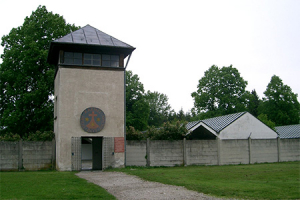
Is for me a sign that monastic life and work can reach far beyond its walls and that mysticism and knowledge (science) do not contradict each other but can cross-fertilize each other. Both are for me the basis for acting sincerely according to my conscience, following the example of Titus Brandsma.
Titus Brandsma had been active far and wide as a Carmelite, scientist, writer and journalist in the Netherlands. I see in his work a lived mysticism until his death in Dachau. We Carmelites strive to live the rich tradition and spirituality of our religious saints. The union with God and the proclamation of peace and love was realized by Fr. Titus in his life. We too can proclaim the Kingdom of God, especially through our presence here at the concentration camp memorial. We want to be open to the needs in the world and the concerns of the people. Titus Brandsma encourages us to do so.
Titus Brandsma ended his last report on the responsibility of his resistance against National Socialism with the wish for peace: "God bless the Netherlands, God bless Germany. God grant that both peoples may soon again stand side by side in full peace and freedom, in the recognition of God and for His glory, for the salvation and welfare of both so closely related peoples." That's all it takes to see how relevant Titus Brandsma is to my praying and working in this place, as brother nations are once again at war with each other.
For me, in this time of crisis, Titus Brandsma has become a patron of independent and honest journalists in Russia. Despite persecution and death threats, he stood up for the freedom of expression of the press and gave his life for it. He is a sign of hope and a role model. We will call on him for guidance for all journalists who act according to their conscience despite repression.
His courage is a question to me whether I also follow my conscience.
I see Titus Brandsma as a role model. He encourages me to speak out my requests before God and to include in my prayers precisely those people whom I most desire God's closeness and help. To accept everything unpleasant in everyday life, to deal sincerely with myself and others, to live consciously in this place of Dachau, to remember the innocently maltreated. That is important to me.
What had a lasting influence on my encounter with Titus Brandsma was his beatification in Rome on November 3, 1985. On Nov. 5, we experienced a large group of pilgrims from Holland who, on their way back, prayed and celebrated the Eucharist in Dachau at the place of his suffering and death. Among the pilgrims was also his niece, with whom I was able to speak for a longer time. Suddenly Blessed Titus was one of us, it was felt very clearly. Friendships were formed between our brothers and sisters OCarm. Since then I have read to know him more.
The friendship with and through Fr. Titus, which unites us with our sisters and brothers worldwide, makes me happy and grateful.
For all of us, the annual meetings with the Dutch Carmel Family remain in vivid memory. Besides the meetings, it was standing together in front of Block 26 that became a place of remembrance of Titus, where he was so close to us. We heard the prayers and songs in his language, we were one in thanksgiving and in remembering him as sisters and brothers in his spirit. Whenever there is an occasion for us to gather in front of Block 26, Titus is there.
When I re-meditate the life of Fr.Titus Brandsma, it always gathers me in my daily prayer and work.
He has united the spirituality of the Carmelite parent order with the Teresian, the confessions of the different Christian churches in ecumenism and God with the world.He has pointed out that mysticism is a viable path for all people in all places in everyday life because "the presence of God is always present within. "He has been able to respond to the hatred of his tormentors with love because he said, "They, too, are children of the kind God, and who knows if something won't stick to them?" (Sources: Titus Brandsma, O. Carm, Martyrs at Dachau, Georg Geisbauer. Fiery Arrow, Encountering God in the Abyss).
The Discalced Carmelite Nuns of the Monastery of Helig Blut
Dachau, Germany
Celebrating At Home - Fourth Sunday of Easter

Shepherd and sheep,
bonds of life and love
(John 10:27-30)
This fourth Sunday of Easter is traditionally known as Good Shepherd Sunday because the Gospel for this Sunday always portrays Jesus as the Good Shepherd.
Being a shepherd in the time of Jesus was not anything like the large-scale, commercial farming enterprises of today. Then, a shepherd usually had responsibility for about fifteen or twenty sheep whom he accompanied day and night. Both shepherd and sheep got to know each other. The shepherd was responsible for keeping the flock together and safe, for leading it to good pasture, for binding up wounds. The sheep depended on the shepherd for life.
No wonder the image of the Good shepherd became so popular as a description of the relationship between Jesus and his followers.
Today’s Gospel is full of warmth and intimacy in the way it speaks about Jesus’ relationship with us.
The sheep who listen to Jesus belong to (are in relationship with) him. There is a sense of intimacy in the idea that Jesus knows each of the sheep who follow him. He knows them and they follow him because they are bound together by the bond of love.
The sheep have life through their relationship with Jesus, a relationship which brings eternal life, not just after death; the sheep already live the eternal life of God here and now.
This relationship with Jesus and the eternal life it brings can never be lost or snatched away.
We are the gift that the Father gives to Jesus.
And because the Father and Jesus live in deep communion with each other, we, too, are caught up in this enduring communion of love.
This love God has for us makes us part of God’s family: God’s beloved daughters and sons.
Any reflection about Jesus as the Good Shepherd also keeps us mindful that shepherding each other according to the heart of Jesus is part of our vocation as disciples.
- Celebrating At Home - pdf Fourth Sunday of Easter [PDF](7.85 MB)
- Celebrating At Home - default Fourth Sunday of Easter [ePub(6.68 MB) ]
- Celebrando En Familia - pdf Cuarto Domingo de Pascua(444 KB)
- Celebrando In Casa - pdf Quarta Domenica di Pasqua(459 KB)
- Celebrando em família - pdf Quarto Domingo da Páscoa(448 KB)
Vitam Coelo Reddiderunt

|
Election in Monastery of Sutri (SUT)

On February 11, 2022, the Fr. Giampiero Molinari, delegate of the Italian province for the nuns, presided at the Triennial Elections of SS. Concezione Monastery in Sutri, Italy.
The results of the elective chapter were as follows:
Prioress | Priora | Priora:
Suor M. Martina del Sacro Cuore, O. Carm.
1st Councilor | 1ª Consejera | 1° Consigliera:
Suor Teresa Lupo di Gesù Bambino, O. Carm.
2nd Councilor | 2ª Consejera | 2° Consigliera:
Suor Francesca R. Gargano della Redenzione, O. Carm.
Formator | Formadora | Formatrice:
Suor M. Martina del Sacro Cuore, O. Carm.
Treasurer | Ecónoma | Economa:
Suor Teresa di Gesú Bambino, O. Carm.
Sacristan | Sacristán | Sacrestana:
Suor M. Alessandra del Cuore Gesú, O. Carm.
Election in Monastery of Tàrrega (TAR)

On February 9, 2022, Bishop Romá Casanova, apostolic administrator of Solsona, presided at the Triennial Elections of the Monastary of Amor Diví in Tàrrega, Spain.
The results of the elective chapter were as follows:
Prioress | Priora | Priora:
Hna. Ma. Caterina Loko Mwovi, O. Carm.
1st Councilor | 1ª Consejera | 1° Consigliera:
Hna. Ma Estrella Lavado Chavero, O. Carm.
2nd Councilor | 2ª Consejera | 2° Consigliera:
Hna. Ma Elva Pupuche Odar, O. Carm.
Treasurer | Ecónoma | Economa:
Hna. Ma Estrella Lavado Chavero, O. Carm.
Causa Nostrae Laetitia Ianuarius/Februarius

Initium Novitiatus
22-01-22 Fábio Victor Vilela Dantas (Flum)
22-01-22 José Afonso Barbosa Filho (Flum)
22-01-22 José Marques de Oliveira (Flum)
22-01-22 Marcos de Sousa Abreu (Flum)
22-01-22 Paulo Victor Queiroz Soares (Flum)
23-01-22 João Gabriel de Souza Vianna (Par) Graciosa, Brasil
23-01-22 João Victor de Campos Tomé (Par) Graciosa, Brasil
24-01-22 Caio Daniel dos Santos Nogueira (PERN) São Cristovão, Brasil
24-01-22 Jadelson da Silva Junior (PERN) São Cristovão, Brasil
24-01-22 João Victor de Paiva Carvalho da Silva (PERN) São Cristovão, Brasil
24-01-22 Mateus Bero da Silva (PERN) São Cristovão, Brasil
24-01-22 Cristian Ariel Julio Prada (It-Col) São Cristovão, Brasil
24-01-22 Jeiner Duvan Santiago Bayoa (IT-Col) São Cristovão, Brasil
24-01-22 Julio Grabriel Delgado Manzano (Cat-Ven) São Cristovão, Brasil
01-02-22 Gabriel Wilson Dupad (STSA) Bhavan, Kannur, Kerala, India
01-02-22 Paul Niral Nayak (STSA) Bhavan, Kannur, Kerala, India
01-02-22 Carlos Sushant Majhi (STSA) Bhavan, Kannur, Kerala, India
01-02-22 James Juburaj Baliar Singh (STSA) Bhavan, Kannur, Kerala, India
01-02-22 Francis Bavanasi Ajay Kumar (STSA) Bhavan, Kannur, Kerala, India
01-02-22 Joseph Adlin Pinherio (STSA) Bhavan, Kannur, Kerala, India
01-02-22 Alphonse Akash (STSA) Bhavan, Kannur, Kerala, India
Professio Temporanea
09-01-22 Juracy Pereira dos Santos Junior (Flum) Belo Horizonte, Brasil
23-01-22 Anderson dos Santos (PERN) São Cristovão, Brasil
23-01-22 Bruno Augusto Viana (PERN) São Cristovão, Brasil
23-01-22 David dos Santos (PERN) São Cristovão, Brasil
23-01-22 Erick Henrique Alves da Silva (PERN) São Cristovão, Brasil
23-01-22 Harrison Antas dos S. Cordeiro (PERN) São Cristovão, Brasil
23-01-22 Johnny Cley B.A. de Queiroz (PERN) São Cristovão, Brasil
23-01-22 Márcio Felipe da Silva (PERN) São Cristovão, Brasil
02-02-22 Martin Thomas (STSA) Bhavan, Kannur, Kerala, India
02-02-22 Bonifus Binoj (STSA) Bhavan, Kannur, Kerala, India
02-02-22 Nuno Nixon (STSA) Bhavan, Kannur, Kerala, India
02-02-22 Ansbert Akhil (STSA) Bhavan, Kannur, Kerala, India
02-02-22 Raphael Likhen Nayak (STSA) Bhavan, Kannur, Kerala, India
Professio Solemnis
28-01-22 Santos Antolino Méndez Ramírez (PCM-ES) San Salvador, El Salvador
28-01-22 Henrry Mauricio Cienfuegos Ostorga (PCM-ES) San Salvador, El Salvador
28-01-22 Daniel Ulises González Cabrera (PCM-ES) San Salvador, El Salvador
Ordinatio Diaconalis
08-01-22 Sergio Roberto Mejia (PCM-Mex) Washington, DC, USA
29-01-22 Santos Antolino Méndez Ramírez (PCM-ES) Santa Tecla, El Salvador
29-01-22 Henrry Mauricio Cienfuegos Ostorga (PCM-ES) Santa Tecla, El Salvador
29-01-22 Daniel Ulises González Cabrera (PCM-ES) Santa Tecla, El Salvador
10-02-22 Sonobius Rua (Indo-Est) Manokwari
Ordinatio Sacerdotalis
29-01-22 Edgar Lucio Lezama (PCM-Mex) Santa Tecla, El Salvador
29-01-22 Roger Stanley Melara Mondragón (PCM-ES) Santa Tecla, El Salvador
29-01-22 José Arístides Menjívar Larios (PCM-ES) Santa Tecla, El Salvador
7. Contemplation
During his life Titus Brandsma stressed the importance of active contemplation.
7. Contemplation
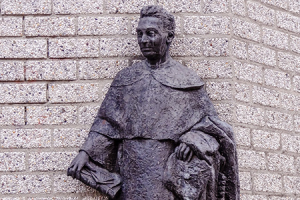
 Anno Brandsma was born in the Dutch province of Friesland in 1881. He joined the Carmelite Order in 1898 taking his father’s name, Titus, as his religious name. He made his First Profession in October 1899 and was ordained priest on June 17th 1905. As an academic Titus specialised in philosophy and mysticism.
He helped to found the Catholic University of Nijmegen in 1923 and later served as Rector Magnificus.
In the years before the Second World War Titus was openly critical of the Nazi ideology. During the occupation of Holland, he defended the freedom of the Press and of the Catholic Press in particular. Titus was arrested in January 1942 and sent to Dachau Concentration Camp where he was killed by lethal injection on July 26th 1942. He was beatified in 1985.
Contemplation
During his life Titus Brandsma stressed the importance of active contemplation.
Contemplation. Some people think that it is a bizarre word, applied to strange people called the mystics.
Some think, “It’s not for me who’s dealing with the real deal of life. It’s only for those praying and living in solitude.”
Yet, Carmelites understand contemplation as an attiude of openness to God, whose presence we discover in all things. As an attiude, it can permeate any dimension of our lives, no matter what our work is.
Contemplation is for everybody!
Inspired by Elijah, “As the Lord lives in whose sight I stand”, Titus stressed the importance of living continually in the presence of God. Needing practice, it involves an awareness of staying before the face of God throughout our day. Even in a life of intense activity, each us can live in God’s presence.
It starts when we entrust ourselves to God, in whatever way God chooses to approach us. It is up to God, not up to us. It is his work in us. God is willing to touch and transform us to be like him. God wants to lead us to be united in love with him, so that we may live in his loving presence. This flow of divine love slowly and gradually changes us. It empties us of our limited and imperfect human ways of thinking, loving, and behaving, transforming them into divine ways.
Beautiful, isn’t it?!
Contemplation, then, is a dynamic element which unites prayer, living in relationship with others and the real deal of life and work.
With contemplation our prayer is no longer a lip service, it becomes contemplative, as St Teresa of Avila says, “A close sharing between friends; it means taking time frequently to be alone with him who we know loves us.” Our relationships with our neighbours becomes contemplative as we are enabled to see God in our sisters and brothers with all their strengths and weaknesses and to appreciate the mystery of those with whom we share our lives. This experience of contemplation in prayer and in community compels us to seek the face of God also in the heart of the world.
This belief moves us then to lend our hands to the ones who suffer and need help. This contemplation is what Titus Brandsma firmly believes in. He summarises Carmelite life as “complete dedication to contemplation; it should be interrupted only because of necessity – when there is need to go to people and speak to them of God. Only charity toward one’s neighbour or obedience can be reasons for leaving God for the sake of God.” God can be found in the places of worship. However, if we have to go and lend our hand to our brothers and sisters in need, we still can find God there. Leaving God for the sake of God is a kind of mantra which helps us to be contemplative anywhere and anytime.
But how far did Titus go with this belief?
The answer is at the very end of his life. Fearlessly Titus fought the injustice the Nazis showed in the Netherlands. He defended the weak who were marginalized and suffered under Nazi oppression, stating bravely, “The Catholic Church does not make any differences regarding sex, race, and people!”
The consequence of this attiude was his detention. When he was in Scheveningen prison, among loneliness and brutal cold, his contemplative eyes saw God. He then wrote a prayer:
For Thou, O Jesus, art with me
I have never been so close to You.
Stay with me, with me, Jesus sweet,
Your presence makes all things good for me.
In Dachau concentration camp, when he was beaten so severely, he sang Adoro Te Devote, a hymn contemplating the presence of Jesus in the Eucharist. What a contrast, as if he wanted to unite his sufferings with Christ’s!
Finally, to the agnostic nurse who would inject him with a lethal solution, cheerfully he gave his simple rosary, encouraging her to pray the last phrase of Hail Mary, “Pray for us sinners.” Titus saw in this agnostic nurse, his executioner, the presence of God. He is truly a contemplative person.
Prayer
God of peace and justice,
you open our hearts to love
and to the joy of the Gospel
even in the midst of countless forms of violence
that take away the dignity of our brothers and sisters,
fill us with your grace,
so that like Saint Titus Brandsma,
we may in tenderness see beyond the horrors of inhumanity
and contemplate your glory
that shines forth through the martyrs of every age,
and so become your authentic witnesses in the world of today.
Amen.
Download the Leaflet 7 Contemplation pdf here(3.48 MB)
Dachau Liberation Day – April 29, 1945
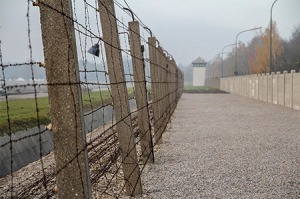
On this day in 1945, members of the U.S. Army’s 42nd and 45th Infantry Divisions liberated approximately 30,000 prisoners at the Dachau concentration camp. Unfortunately, St. Titus Brandsma and Blessed Hilary Januszewski, prisoners in the Dachau concentration camp, died before this day of liberation.
Other Carmelites from Poland and the Netherlands were also interned in Dachau. Several also died before liberation. Others survived to continue serving our God through their service to others, deeply affected by the horrors of Dachau.
The concentration camp near Munich was opened in 1933, the first of thousands of Nazi camps. Dachau was originally used to detain political prisoners, but as the Nazi regime grew more powerful, other persecuted groups were sent there, including LGBTQ+ people, Jehovah’s Witnesses, Roma, and hundreds of thousands of Jews.
Prisoners at Dachau and dozens of nearby satellite camps were used as forced labor. Those too ill or unable to work were sent to nearby extermination camps. Fr. Hilary volunteered to take care of the prisoners in the camp dying of typhus. He himself died from the disease just a month before the Americans arrived to liberate the prison camp.
Carmelite Titus Brandsma will be canonized on May 15 as a martyr for the Catholic faith. Today, on this anniversary of liberation 77 years ago, we humbly pray asking for another day of liberation for all those who are today victims of war and hatred around the world: