





Warning: Creating default object from empty value in /home/jtthoc/public_html/ocarm.org/components/com_k2/views/itemlist/view.html.php on line 743
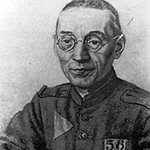


 Prof. Dr. F.J.Th. Rutten
From his commemorative speech (1942)
“In love lay his decisive power.”
“From this deceased rays emanate.”
From a written testimony (1955)
“My judgement in 1942, 'from this deceased rays emanate,' is based on a peculiarity in the memory of Father Brandsma, which I noticed in my surroundings. When people talked about Father Brandsma, they almost always only remembered his striking goodness. There was no mention of particular incidents in his life, not even by those who had known him very well.”
 Dr. (Jacobus) van Ginneken, (SJ)
From his commemorative address (1942):
“We know from his Carmel retreat that he had prepared himself diligently for death. His intention from the first recital of the ninth day was: to learn to die. In his last will we read: 'I unite myself in my death with the death of my Redeemer and with Mary I place myself under the feet of the Cross of my Lord. Misericordias Domini in aeternum cantabo.’ I will sing of the Lord's mercy for ever and ever (Ps. 88:2).”
Reverend (Johannes) Kapteijn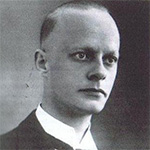
Camp Amersfoort and the prison of Kleve
Fr. Titus and Kapteijn were shackled together when they started their trip to Dachau
"Our dear brother in Christ, Titus Brandsma, is truly a mystery of grace".
 Van Mierlo
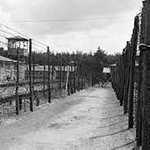
Camp Amersfoort
“Professor Brandsma was physically very weak, but mentally one of the strongest. He was totally above his physical suffering. Without exception we all loved him very much, especially for his natural and amiable manner. He knew no hatred or aversion, nor impatience or hardness.”
Colonel Fogtelo
Scheveningen prison and Camp Amersfoort
“It was as if this man was in the free world.”

Dr. Jacobus Gerard G. Borst
Camp Amersfoort
“I knew Professor Brandsma from earlier and had great friendship and admiration for him. Whenever I could find the time, I would go and talk to him. Professor Brandsma was always cheerful, and he also knew how to suffuse his environment with this cheerfulness. He was interested in all possible kinds of problems, and he was not in the least impressed by the methods of terror with which they tried to crush us mentally and physically.”
 Pastor Heinrich Rupieper
Dachau Concentration Camp
“He made a gentle, quiet impression on me. He had surrendered his life into God's hand. He did not know hatred. I was always surprised that Father Titus patiently endured everything without any expression of disgust or inner sadness. He prayed the rosary a lot, on his fingers, and said: 'We must pray for them.”
Chaplain Meertens
Camp Amersfoort
“He lived from hour to hour in an intimate union with God and yet was not unworldly. On the contrary: he was man with men, sincerely loved the good things in nature, and for higher motives endured the troubles that befell him.”
Chaplain (Nikolaus) Jansen
Dachau Concentration Camp
“When Father Titus arrived in Dachau, he looked like an abomination. Of course, that only got worse there. In the short time he was with us he was often beaten, sometimes his face was covered in blood. But he kept up the courage and was spiritually unshakeable.”
Father Van Genuchten
Dachau Concentration Camp
“I thank God that I was allowed to know this joy-filled and sunny person. When Professor Brandsma came to us, Dachau was a hell like never seen before or since. His short stay in Dachau was a true martyrdom. And yet he always remained cheerful and happy, an example and even a support to us all. I will never forget Professor Brandsma and I hope he will not forget me either!
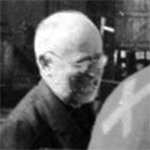 Fr. Joseph Kentenich
Priest of the Pallotine Congregation
“His person and words always bespoke such a calm, such an abandon and so much good hope that one can never forget this venerable person.”
R. Höppener
Dachau prisoner
“His spirit could simply not be broken. Any thought of revenge was far from him: thus he could say his Our Father in silence while in the presence of his attackers.”
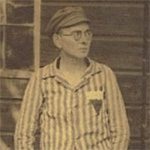 Fr. Othmarus Lips, OFM Cap
Capuchin religious
“Simple and unobstrusive among the 1200 priests of Dachau... a perpetual smile, filled with patience and inner calm, a smile of mystical serenity in the midst of all the suffering he had to undergo.”
P. Verhulst
Dachau prisoner
“Fr. Titus knew of no feelings of hate, he was all love. There was no favoritism with him. When I returned home I said immediately to my mother: That man will be canonized one day.”
 Early Studies
Fr Titus Brandsma did his doctorate in philosophy in Rome in 1909. In addition, he used his “Roman years” to study sociology and make contact with the new currents of Christian social thought and with the social doctrine of the Church. Following this, throughout his academic life, many of his studies and courses were centered on topics of spirituality and mysticism.
Since becoming part of the cluster of professors at the recently created Catholic University of Nijmegen in 1923, our Carmelite was a professor of “History of Mysticism” and, in addition, taught various courses on stages or concrete authors of that history.
Areas of Research
There are three specific areas in which Fr Titus developed his research work. The first was the translation and dissemination of the work of Saint Teresa of Jesus. For him, the fact that there was no full translation of the works of the saint that was done according to scientific criteria presented a grave lacuna for the religious culture of the Netherlands.
Together with a group of Carmelite enthusiasts, they were able to translate several volumes, but were unable to finish the project. While in prison in Scheveningen, Fr Titus continued working on a spiritual biography of the Saint, and although he did not complete it, it would have been completed and published in 1946, at the end of the war.
In the second place, Professor Brandsma studied much of the thought and doctrine of the authors typical of the so-called devotio moderna, the rhenish-flemish mysticism, and includes that of the beguines, that is, of the spiritual literature of central and northern Europe (fundamentally the Netherlands) toward the end of the Middle Ages. Among the authors whom our Carmelite studied, we can highlight Jan Van Ruusbroec, Gerard (Geert) Groote, and Hadewijch of Antwerp.
Finally, one should note his interest in the figures of Saint Willibrord and Saint Boniface, the evangelizers of Friesland, his region of origin. He highlighted, in many articles and sermons, their apostolic life and missionary generosity, something that Fr Titus called attention to because he himself wanted to go to the missions in Java in the 1920s, but was not given permission by his superiors.
Via Crucis
From these three influences Father Titus developed a profound piety for the passion of the Lord and for the cross. In addition, throughout his life, he wrote two commentaries on the stations of Via Crucis. The first of them, written in 1921, emerged in very peculiar circumstances. The Belgian expressionist painter Albert Servaes had painted a Via Crucis somewhat unusual to the tastes of that period, which provoked a great deal of debate. Finally, the Holy Office of Rome ordered that it not be displayed in places of worship.
Fr Titus told Servaes to obey the order, but, at the same time, wrote a beautiful commentary on each of the stations that was published in Opgang magazine.
The second commentary was written in more dramatic circumstances (in the Scheveningen prison), and was intended to accompany the images of each of the stations in the St Boniface Chapel (Bonifatiuskapel) in Dokkum, in whose construction Fr Titus had played an important role. In this Via Crucis, there is no reflection on the fourteenth station. Perhaps he had not time to write it; or perhaps he would write with his own testimony, a few months later in hell in Dachau.
There is no doubt that this deep piety encouraged and consoled the prisoner Brandsma in his personal Via Crucis, whose stations were various prisons and concentration camps. Fr Titus felt deeply united to the passion of Christ and felt that the crucified God was very close to his sufferings. This is how it would be presented, as much in the beautiful poem “Before a Picture of Jesus In My Cell”, as in the conference he gave to the other prisoners on Good Friday, 1942, in the camp at Amersfoort.
Prayer
We ask you, Lord,
that, in the imitation of Saint Titus Brandsma,
we may know how to be close to you, near to the cross,
and that we may always feel you near to us in our crosses, both large and small,
as our Friend, our Companion on the journey, and our Redeemer.
May the cross always be for us a sign of love,
of generous and total surrender to the cause of life,
of solidarity and compassion for all.
May we always say, in all the circumstances of life, with joy and full confidence in you…
Ave Crux Spes Unica…
Amen.
Mary, Mother of Carmel, pray for us.
Titus Brandsma, Carmelite martyr, intercede for us.
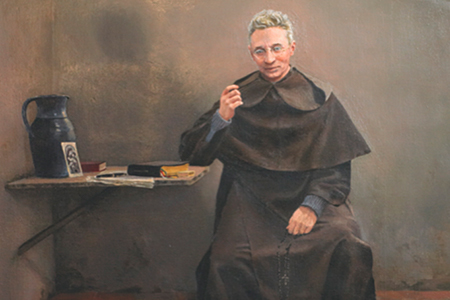
Download the Leaflet 5. A Poet of the Cross pdf here (4.03 MB)
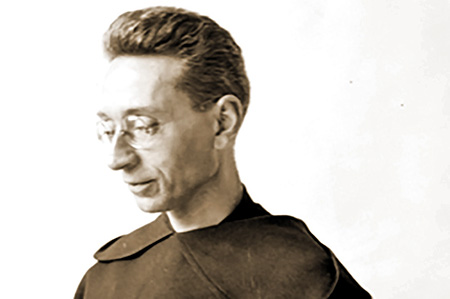 Seeking dialogue
Throughout his life, Fr Titus Brandsma was a man of forgiveness and reconciliation, including in the most complicated situations and contexts. When he was Assistant Press Officer of the Catholic Press, he had to face complex situations (political instability, tension, labor struggles, radicalization, etc.) and always demonstrated a willingness for dialogue, open to the ears of all. Through this, he earned the nickname “the reconciler.”
Similarly, during the year he held the position of Chancellor of the Catholic University of Nijmegen, Professor Brandsma tried to create an atmosphere of dialogue and always sought to find opportunities for encounter and understanding. It was not easy, since the Central European universities at the beginning of the 1930s found themselves in an atmosphere of extreme tension between radicalisms of various types (communists, fascists, nationalists, etc.).
Given this context, perhaps we can understand better his fondness for Esperanto, the artificial language created by Ludwig Zamenhof to avoid so much division (including violence) provoked by the not always easy coexistence of languages, and to fend off the linguistic colonialism that, in no few occasions, imposes itself.
Esperanto was for him – maybe in a somewhat romantic way – an instrument of understanding, a way of overcoming the linguistic barriers that, on occasion, turn into racial, supremacist, and discriminatory barriers.
Ecumenism
At the same time, from this point of view, the ecumenical attiude of Titus is understood in all its depth. Our Carmelite was a true pioneer of ecumenism in Carmel. He formed, with great enthusiasm, the so-called “Apostolate of Reunification”, oriented to the better knowledge and rapprochement of Catholics with the eastern churches. In addition, he always showed a very respectful attitude and was close to the Protestants (mostly in the Netherlands) and always pursued frank and fraternal dialogue with the separated brothers.
In the face of conflict
During the long months of imprisonment in various prisons and concentration camps, Fr Titus lived together with several Protestants, some of whom would later testify during the beatification process, emphasizing his generosity, kindness and deep trust in the Lord.
This does not mean to say that he was a “diplomat,” nor that he lacked strong ethical and religious principles; on the contrary. Indeed, after the Dutch invasion, on a few occasions, Professor Brandsma would show his firm opposition to some of the occupational government’s measures, including on the subject of education (when he refused to comply with the obligatory order expel to Jewish children) as on the theme of the press (when he told the directors of Catholic newspapers that they must refuse to publish Nazi slogans). However, despite his firm rejection of National Socialist ideology, he never showed any hatred toward the guards of the Lager for what they did to him. Moreover, our Carmelite invited the religious whom he met in Dachau to pray for them.
Deep down, he believed that yielding to hatred would be the true victory of evil.
Fr Titus never hated the Germans either as a people, as a nation. When the sergeant-at-law Hardegen asked him to write a small essay about the reasons why the Dutch, and especially Catholics, opposed National Socialism, the prisoner developed a brief composition in which he elaborated on the philosophical, ethical and religious motives (a theme about which he had spoken frequently in his university classes). Despite the head-on opposition, the text concluded with a beautiful blessing: God bless the Netherlands! God bless Germany! May God grant these two peoples to return to the path of peace and freedom, and to recognize His Glory for the good of these two nations that are so close.
Today
In a world like ours, full of divisions and conflicts, Fr Titus appears before our eyes as an example, as a witness that reconciliation and forgiveness are possible, despite the difficulties, and as a true martyr for those most authentic Christian values.
Prayer
We ask you, Lord,
that by the example and intervention of Saint Titus Brandsma,
who endured the torments of martyrdom with joy and full confidence in Your Divine Will,
we too, Carmelites of the 21st Century – friars, contemplative nuns, religious of the active life,
Third Order members, lay people of various groups – may always testify to the radicality of Christian love
and the values of the Gospel, and that our lives may be seeds of reconciliation and forgiveness.
Amen.
Mary, Mother of Carmel, pray for us.
Titus Brandsma, Carmelite martyr, intercede for us.
Download the Leaflet 4. Witness of Forgiveness pdf here (3.13 MB)
Early Life
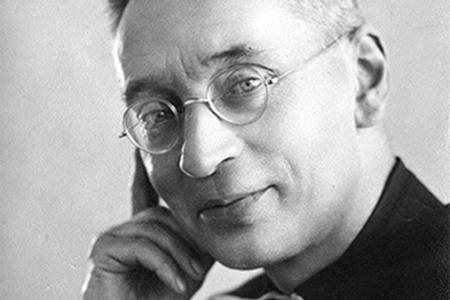
Anno Brandsma was born to Tjitsje and Titus Brandsma on February 23rd 1881 at Wonseradeel in Friesland, a province in the very north of Holland. The Brandsma family consisted of four girls and two boys, of which Titus was the second youngest. Five of the siblings would later enter religious life.
The family owned a dairy farm and herd, selling milk and cheese made on the farm itself. At the time, Catholics were a minority in Friesland and protective of their religion and culture. Anno’s father worked to preserve the Friesian culture within his family and the local community. He participated in politics, and at one time served as chairman of the local election board.
When Anno had completed his secondary education at a Franciscan school, he decided to join the Carmelite Order. He began his novitiate at Boxmeer in September 1898 taking his father’s name, Titus, as his religious name. He made his First Profession in October 1899 and was ordained priest on June 17th 1905.
After further studies at the Gregorian University in Rome, he was awarded a PhD in Philosophy in 1909.
Titus also had a keen interest in both Spirituality and Journalism, two areas which, together with his academic pursuits, would make up much of his life’s work.
Ministry and Mission
In 1923, Titus helped found the Catholic University of Nijmegen, and worked there as lecturer, professor and administrator. He served as Rector Magnificus (President) during the academic year 1932-33.
As a Carmelite friar, he also liked to share the Order’s spiritual tradition with people outside of the University.
He travelled widely lecturing on Carmelite Spirituality. In preparation for a lecture tour in the United States in 1935, he spent some time at the Carmelite Priories in Whitefriar Street, Dublin, and Kinsale, Co. Cork, Ireland.
Journalism
Titus also cultivated his interest in journalism and publishing. In late 1935 he became the National Spiritual Adviser to the Union of Catholic Journalists. In this role, he encouraged opposition to the publication of Nazi propaganda in Catholic newspapers and in the Press generally. He was especially critical of its anti-Semitism.
When the Nazis invaded Holland in May 1940, Titus was an adviser to the Archbishop of Utrecht. He encouraged the bishops to speak out against the persecution of the Jews and the infringement of human rights generally by the occupiers. In doing so, he became a marked man by the authorities.
Arrest and Martyrdom
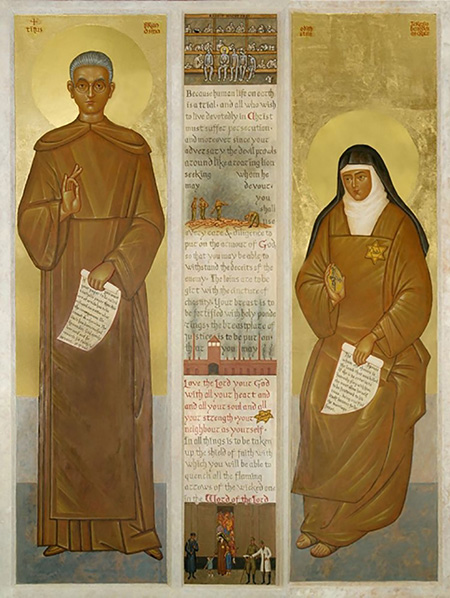
The refusal by Catholic newspapers to print Nazi propaganda sealed the fate of Titus. Titus had agreed to deliver personally to each editor a letter from the Catholic bishops. This letter instructed the editors not to comply with a new law requiring them to print official Nazi advertisements and articles. Titus had visited fourteen editors before being arrested by the Gestapo at Nijmegen on January 19th 1942.
Titus was interned at Scheveningen and Amersfoort in Holland before being transported to Dachau in June.
Under the harsh regime there, his health quickly deteriorated and he was in the camp hospital by the third week of July. He was subjected to biological experimentation before being killed by lethal injection on July 26th, 1942. On the day he died, the Dutch Bishops issued a pastoral letter protesting strongly against the deportation of Jews from Holland.
Before his execution, Titus had prayed that God might help the nurse who would administer the injection to repent of her actions in the camp. He also gave her his rosary beads, although she protested that she was a lapsed Catholic. Some years later, that same woman came to a Carmelite priory seeking forgiveness and was a witness in the process for his beatification, which took place in Rome on November 3rd 1985.
Prayer Before an Image of Christ
O Jesus, when I gaze on You
Once more alive, that I love You
And that your heart loves me too
Moreover as your special friend.
Although that calls me to suffer more
Oh, for me all suffering is good,
For in this way I resemble You
And this is the way to Your Kingdom.
I am blissful in my suffering
For I know it no more as sorrow
But the most ultimate elected lot
That unites me with You, o God.
O, just leave me here silently alone,
The chill and cold around me
And let no people be with me
Here alone I grow not weary.
For Thou, O Jesus, art with me
I have never been so close to You.
Stay with me, with
me, Jesus sweet,
Your presence makes all things good for
me.
Written by Titus Brandsma on February 12th-13th 1942, while a prisoner at Scheveningen.
Translation: Susan Verkerk-Wheatley / Anne-Marie Bos
© Titus Brandsma Instituut 2018
Download the Leaflet 1. A Brief Biography pdf here (4.05 MB)