
Promulgated the Decree of the Congregation for Causes of Saints concerning the nine Martyrs of the Castilian Province
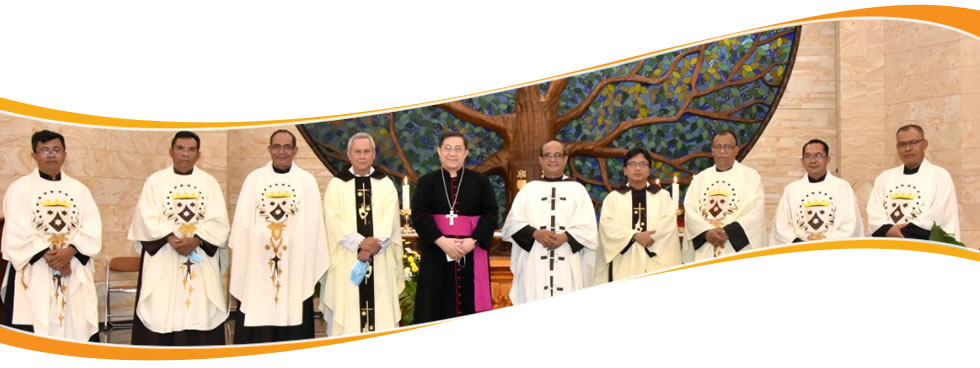
Written byOn 19th December 2011, the Holy Father, Benedict XVI, received in a private audience Cardinal Angelo Amato, Prefect of the Congregation for the Causes of Saints. During the course of the audience the Holy Father authorized the Congregation to promulgate the Decree concerning the Servants of God Alberto Maria Marco Aleman O.Carm. and eight friars of our Order; all killed by those who violently opposed their faith in the territory of the archdioceses of Madrid (Spain) between 1936 and 1937.
This group is to be added to those of the Province of Betica, Servants of God Carmelo M. Moyano and companions. Soon the date of the beatification of these two groups of martyrs will be decided with the authorities concerned. The Postulator General is still working on the process of the group of presumed martyrs of the Arago-Valentina Province.
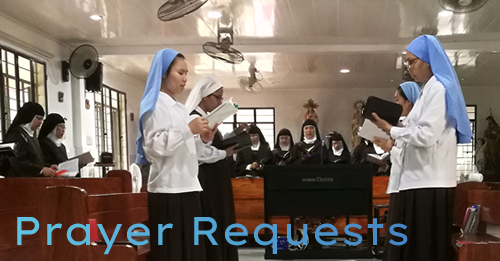
The Elective Chapter of the Carmelite Monastery of Moncorvo, Portugal, was held 16 November 2011. The following were elected:
- Prioress: Sr. M. Sagrada Família Costa, O.Carm.
- 1st Councilor: Sr. M. Imaculada Conceição Nevado, O.Carm.
- 2nd Councilor: Sr. M. Eucaristia Pires, O.Carm.
- 3rd Councilor: Sr. M. Imaculado Coração Martins, O.Carm.
- 4th Couniclor: Sr. M. Natividade Gomes, O.Carm.
- Director of Novices: Sr. M. Eucaristia Pires, O.Carm.
- Treasurer: Sr. M. Imaculada Conceição Nevado, O.Carm.
- Sacristan: Sr. M. Margaret do S.C.J. Njoroge, O.Carm.
A meeting of Secretariats for Carmelite Laity took place recently, from November 28 to December 2. The purpose of the meeting was to edit and finalize the Commentary to the Guidelines for Formation for Lay Carmelites. The new document is now ready for final comments and corrections. Many thanks are due to all who contributed to this work. This Commentary is seen as a starting point for the writing of the provincial Manual for Formation according to the specific situation in each country. It should also help to unify Formation for Lay Carmelites in both its themes and its form. The Commentary, finally, is meant to encourage Tertiaries to assume their responsibility in the area of their community life especially, where this may not yet be the norm.
On Saturday 19th November, the Titus Brandsma Institute at the Radboud University of Nijmegen, honoured Fr. Falco Thuis, O.Carm., former Prior General of the Order, with a conference on spirituality on the occasion of his departure from the board of the Institute.
There were a number of presentations by various speakers during the day and these were interspersed with musical interludes. Welcoming the numerous academics, members of various religious congregations, representatives of the the Carmel Foundation of schools in the Netherlands, Carmelites and members of Fr. Falco’s family, chair of the Titus Brandsma Institute Board, Dr. Jan Peters, S.J., began by acknowledging the great contribution of Fr. Falco to the Institute, to education, to the Order and to the Church. The newly appointed Director of the Institute, Dr. Inigo Bocken, concluded the conference with a presentation on the Social Spirituality. Fr. Falco in thanking the Institute pointed out the challenges and the opportunities that lay ahead. Fr. John Keating, O.Carm., Councillor General for Europe, represented the General Council of the Order.
Photo:
The General Congregation of the Carmelite Order, being held at the Mount Carmel Spiritual Centre in Niagara Falls, Ontario, Canada. from 5 to 16 of September 2011. Below is the Website of the the GeneralCongregation 2011
The purification of the temple
Jesus, the New Temple
John 2:13-25
1. Opening prayer
Spirit of truth, sent by Jesus to guide us to the whole truth, enlighten our minds so that we may understand the Scriptures. You who overshadowed Mary and made her fruitful ground where the Word of God could germinate, purify our hearts from all obstacles to the Word. Help us to learn like her to listen with good and pure hearts to the Word that God speaks to us in life and in Scripture, so that we may observe the Word and produce good fruit through our perseverance.
2. Reading
i) Context and structure:
Our passage follows immediately on the first sign that Jesus gave in Cana of Galilee (2:1-12). Some expressions and phrases are repeated in both scenes and lead us to think that the author wanted to contrast the two scenes. In Cana, a village in Galilee, during a wedding feast, a Jewish woman, the mother of Jesus, expresses her unconditional faith in Jesus and invites others to accept His word (2:3-5). On the other hand, "the Jews", during the Paschal celebration in Jerusalem, refuse to believe in Jesus and do not accept His word. In Cana, Jesus worked His first sign (2:11) and here the Jews ask for a sign (2:18) but then do not accept the sign Jesus gives them (2:20).
The development of our little story is quite simple. Verse 13 places in a framework a context of space and time that is very precise and significant: Jesus goes to Jerusalem for the Paschal feast. Verse 14 introduces the scene that provokes a strong reaction on the part of Jesus. Jesus’ action is described in verse 15 and is caused by Jesus himself in verse 16. Jesus’ action and words in turn provoke two reactions: first, that of the disciples, one of admiration (2:17); and second, that of the "Jews," one of dissent and indignation (2:18). They want an explanation from Jesus (2:19) but they are not open to receive it (2:20). At this point the narrator intervenes to interpret Jesus’ words authentically (2:21). "The Jews" cannot understand the real meaning of Jesus’ word. However, neither can the disciples, who admire Him as a prophet full of zeal for God, grasp the meaning at this point. It is only after the fulfillment that they will believe in Jesus’ word (2:22). Finally, the narrator offers us a brief account of Jesus’ reception by the crowds in Jerusalem (2:23-25). Yet, this faith, founded only on His signs, does not impress Jesus.
ii) The text:
Since the Passover of the Jews was near, Jesus went up to Jerusalem. He found in the temple area those who sold oxen, sheep, and doves, as well as the money changers seated there. He made a whip out of cords and drove them all out of the temple area, with the sheep and oxen, and spilled the coins of the money changers and overturned their tables, and to those who sold doves he said, "Take these out of here, and stop making my Father's house a marketplace. "His disciples recalled the words of Scripture, Zeal for your house will consume me. At this the Jews answered and said to him,"What sign can you show us for doing this?" Jesus answered and said to them, "Destroy this temple and in three days I will raise it up." The Jews said, "This temple has been under construction for forty-six years, and you will raise it up in three days?" But he was speaking about the temple of his body. Therefore, when he was raised from the dead, his disciples remembered that he had said this, and they came to believe the Scripture and the word Jesus had spoken. While he was in Jerusalem for the feast of Passover, many began to believe in his name when they saw the signs he was doing. But Jesus would not trust himself to them because he knew them all, and did not need anyone to testify about human nature. He himself understood it well.
3. A moment of prayerful silence
that the Word of God may penetrate and enlighten our life.
4. Some questions
i) Am I able to entrust myself completely to God’s hands in an act of faith, or do I ask for signs?
ii) God gives me many signs of His presence in my life. Am I capable of seeing and accepting them?
iii) Am I satisfied with exterior worship, or do I try to offer God the worship of my obedience in my daily life?
iv)Who is Jesus for me? Am I aware that only in Him and through Him is it possible to meet God?
5. A key to the reading
for those who wish to go deeper into the theme.
"The Jews"
John’s Gospel is characterized by a long argument concerning the identity of Jesus. In this Christological argument, on the one hand we have Jesus and on the other "the Jews". But this argument, rather than reflecting the historical situation at the time of Jesus, reflects the situation which developed towards the 80s of the first century between the followers of Jesus and the Jews who had not accepted Him as the Son of God and Messiah. It is certain that the conflict had already begun at the time of Jesus, but the gap between the two groups, both of whom were Jews, became set when those who did not accept Jesus as Son of God and Messiah and held Him to be a blasphemer, expelled the disciples of Jesus from the synagogue, that is, from the community of Jewish believers (see Jn 9:22; 12:42; 16:2).
Hence, "the Jews" that we often come across in the fourth Gospel, do not represent the Jewish people. They are literary characters in the Christological argument that evolves in this Gospel. They do not represent a race, but those who have taken the clear position of an absolute rejection of Jesus. In any reading of the Gospel, "the Jews" are all those who refuse Jesus, no matter what the race or time to which they belong.
The signs
The healings and other thaumaturgical acts of Jesus that the synoptic Gospels (Mark, Matthew and Luke) call miracles, John calls signs. As signs, they point to something that goes beyond the visible action. They reveal the mystery of Jesus. Thus, for instance, the healing of the man born blind reveals Jesus as light of the world (Jn 8:12; 9:1-41), the raising of Lazarus from the dead reveals Jesus as the resurrection and the life (see Jn 11:1-45).
In our passage, "the Jews" ask for a sign in the sense of a proof that will authenticate Jesus’ words and actions. But in the fourth Gospel, Jesus does not work signs as proof guaranteeing faith. A faith founded on signs is shallow and not sufficient. It is only an initial faith that may lead to true faith (see Jn 20:30-31), but may also not do so (see Jn 6:26).
John’s Gospel asks us to go beyond signs, not to dwell on the spectacular, but to see the deepest meaning in the revelation that the signs point to.
Jesus, New Temple
The temple in Jerusalem was the place of God’s presence in the midst of the people. Yet the prophets constantly insisted that it was not sufficient to go to the temple and offer sacrifices there in order to be accepted by God (see Is 1:10-17; Jer 7:1-28; Am 4:4-5; 5:21-27). God wants obedience and a life morally straight and just. If the exterior cult does not express such a vital attitude, then it is empty (see 1 Sam 15:22). Jesus inserts Himself in that prophetic tradition of the purification of the cult (see Zec 14:23 and Mic 3:1 for the action of the coming "Messiah" in this context). The disciples admire Him for this and immediately think that for this attitude He will have to pay personally like Jeremiah (see Jer 26:1-15) and other prophets. But in John’s Gospel, Jesus’ action is more than a prophetic gesture of zeal for God. It is a sign that prefigures and proclaims the great sign of the death and resurrection of Jesus. More than just a purification, that which Jesus does is to abolish the temple and the cult there celebrated, because from now on the place of the presence of God is the glorified body of Jesus (see Jn 1:51; 4:23).
6. Psalm 50
The cult according to God’s will
The Mighty One, God the Lord,
speaks and summons the earth
from the rising of the sun to its setting.
Out of Zion, the perfection of beauty,
God shines forth.
Our God comes, He does not keep silence;
before Him is a devouring fire,
round about Him a mighty tempest.
He calls to the heavens above and to the earth,
that He may judge His people:
"Gather to Me My faithful ones,
who made a covenant with Me by sacrifice!"
The heavens declare His righteousness,
for God himself is judge!
"Hear, O My people, and I will speak.
O Israel, I will testify against you. I am God, your God.
I do not reprove you for your sacrifices;
your burnt offerings are continually before me.
I will accept no bull from your house,
nor he-goat from your folds.
For every beast of the forest is mine,
the cattle on a thousand hills.
I know all the birds of the air,
and all that moves in the field is mine.
"If I were hungry, I would not tell you;
for the world and all that is in it is mine.
Do I eat the flesh of bulls,
or drink the blood of goats?
Offer to God a sacrifice of thanksgiving,
and pay your vows to the Most High;
and call upon me in the day of trouble;
I will deliver you, and you shall glorify me."
But to the wicked God says,
"What right have you to recite My statutes,
or take My covenant on your lips?
For you hate discipline,
and you cast My words behind you.
If you see a thief, you are a friend of his;
and you keep company with adulterers.
You give your mouth free rein for evil,
and your tongue frames deceit.
You sit and speak against your brother;
you slander your own mother's son.
These things you have done and I have been silent;
you thought that I was one like yourself.
But now I rebuke you, and lay the charge before you.
Mark this, then, you who forget God, lest I tear you apart,
and there be none to deliver!
He who brings thanksgiving as his sacrifice honors me;
to those who go the right way
I will show the salvation of God!
7. Closing prayer
Father, You have constituted Your Son, Jesus, new temple of the new and eternal covenant, built not by the hands of human beings but by the Holy Spirit. Grant that, as we welcome in faith His Word, we may dwell in him and thus adore You in spirit and in truth. Open our eyes to the needs of our brothers and sisters who are the members of the body of Christ, so that in serving them we may offer You the cult that you desire from us. We ask You this through Christ our Lord. Amen.
The transfiguration of Jesus: the cross on the horizon The passion that leads to glory
Mark 9:2-10
1. Opening prayer
Lord Jesus, send Your Spirit to help us to read the Scriptures with the same mind that You read them to the disciples on the way to Emmaus. In the light of the Word, written in the Bible, You helped them to discover the presence of God in the disturbing events of Your sentence and death. Thus, the cross that seemed to be the end of all hope became for them the source of life and of resurrection.
Create in us silence so that we may listen to Your voice in Creation and in the Scriptures, in events and in people, above all in the poor and suffering. May Your word guide us so that we too, like the two disciples from Emmaus, may experience the force of Your resurrection and witness to others that You are alive in our midst as source of fraternity, justice and peace. We ask this of You, Jesus, son of Mary, who revealed to us the Father and sent us Your Spirit. Amen.
2. Reading
a) A key to the reading:
On this second Sunday of Lent, the Church meditates on the Transfiguration of Jesus in the presence of the three disciples who joined Him on the mountain. The Transfiguration takes place after the first announcement of the death of Jesus (Lk 9:21-22). This announcement had confused the disciples and especially Peter. When we take a close look at the small details, we see that the text describes the transfiguration in a way that makes us aware of how this unusual experience of Jesus was able to help the disciples overcome the crisis in which they found themselves. As we read, let us try to pay attention to the following: "How did the transfiguration take place and what was the reaction of the disciples towards this experience?"
b) A division of the text to help our reading:
Mark 9:2-4: The Transfiguration of Jesus in the presence of his disciples
Mark 9:5-6: Peter’s reaction to the transfiguration
Mark 9:7-8: The voice from heaven that explains the meaning of the Transfiguration
Mark 9:9-10: Keeping secret what they had seen
c) Text:
Jesus took Peter, James, and John and led them up a high mountain apart by themselves. And he was transfigured before them, and his clothes became dazzling white, such as no fuller on earth could bleach them. Then Elijah appeared to them along with Moses, and they were conversing with Jesus. Then Peter said to Jesus in reply, "Rabbi, it is good that we are here! Let us make three tents: one for you, one for Moses, and one for Elijah." He hardly knew what to say, they were so terrified. Then a cloud came, casting a shadow over them; from the cloud came a voice, "This is my beloved Son. Listen to him." Suddenly, looking around, they no longer saw anyone but Jesus alone with them. As they were coming down from the mountain, he charged them not to relate what they had seen to anyone, except when the Son of Man had risen from the dead. So they kept the matter to themselves, questioning what rising from the dead meant.
3. A moment of prayerful silence
so that the Word of God may penetrate and enlighten our life.
4. Some questions
to help us in our personal reflection.
a) Which part of the text did you like most or touched you most? Why?
b) How does the transfiguration take place and what is the reaction of the disciples to this experience?
c) Why does the text present Jesus with brilliant clothes while He is speaking with Moses and Elijah? Who are Moses and Elijah for Jesus? Who are they for the disciples?
d) What is the message of the voice from heaven for Jesus? And what is the message for the disciples?
e) How can we transfigure, today, our personal and family life and the life of the community in our area?
5. For those who wish to go deeper into the theme
a) The context then and now
The foretelling of the passion sank the disciples into a deep crisis. They lived among the poor, but in their minds they were confused, lost as they were in the propaganda of the government and of the official religion of their time (Mk 8:15). The official religion taught that the Messiah would be glorious and victorious! That is why Peter reacts strongly against the cross (Mk 8:32). Someone condemned to die on the cross could not be the Messiah, rather, according to the Law of God, he had to be considered cursed by God (Dt 21:22-23). In these circumstances, the experience of the Transfiguration of Jesus was able to help the disciples overcome the trauma of the Cross. In fact, at the Transfiguration, Jesus appears in glory and speaks with Moses and Elijah of His passion and death (Lk 9:31). The journey towards glory, then, is through the cross.
In the 70’s, when Mark is writing his Gospel, the Cross was a great obstacle for the Jews to accept Jesus as the Messiah. How could it be that one crucified, one who died as one marginalized, was the great Messiah expected for centuries by the people? The cross was an obstacle to believing in Jesus. "The cross is a scandal," they said (1Cor 1:23). The community did not know how to respond to the critical questions put to them by the Jews. One of the great efforts of the early Christians was that of assisting people to see that the cross was neither scandal nor madness, but rather the expression of the power and wisdom of God (1Cor 1:22-31). Mark’s Gospel contributes to that effort. He uses texts from the Old Testament to describe the scene of the Transfiguration. He shed light on the events of the life of Jesus and shows that Jesus fulfills the prophecies and that the Cross is the way that leads to Glory. It was not just the cross of Jesus that was a problem! In the 70’s, the cross of persecution was part of every-day life for Christians. In fact, just a little time before, Nero had launched his persecution and many died. Today, many people suffer because they are Christians and because they live the Gospel. How do we approach the cross? What does it mean? With these questions in mind we meditate and comment on the text of the transfiguration.
b) A commentary on the text:
Mark 9:2-4: Jesus looks different.
Jesus goes up a high mountain. Luke adds that He goes there to pray (Lk 9:28). There, on the summit of the mountain, Jesus appears in glory in the presence of Peter, James and John. Together with Him appear Moses and Elijah. The high mountain recalls Mount Sinai, where in times past, God had made known His will to the people by presenting the law to Moses. The white clothes of Jesus recall Moses shrouded in light as he speaks to God on the mountain and receives the law from God (cf. Ex 34:29-35). Elijah and Moses, the two great authorities of the Old Testament, speak with Jesus. Moses represents the Law and Elijah the prophets. Luke says that they talked about the death of Jesus in Jerusalem (Lk 9:31). Thus it was clear that the Old Testament, both the Law and the Prophets, taught that the way to glory is through the cross (Cf Is 53).
Mark 9:5-6: Peter likes what is happening but does not understand.
Peter likes what is going on and wants this pleasing moment on the Mountain to last. He suggests building three tents. Mark says that Peter was afraid and did not know what he was saying, and Luke adds that the disciples were sleepy (Lk 9:32). For them, as it is for us, it is difficult to understand the Cross!
The description of the transfiguration begins with an affirmation. Six days later. What six days are these? Some scholars explain this phrase thus: Peter wants to build three tents, because it was the sixth day of the feast of tents. This was a very popular feast of six days that celebrated the gift of the Law of God and the forty years spent in the desert. To recall these forty years, the people had to spend six days in temporary tents. That is why it was called the Feast of the Tents. If they could not celebrate the whole six days, they had to celebrate at least the sixth day. The affirmation "six days later" would then be an allusion to the feast of the tents. That is why Peter recalls the duty of building tents. And spontaneously, he offers to build the tents. Thus Jesus, Moses and Elijah would have been able to go on talking.
Mark 9:7: The voice from heaven shed light on the events.
As soon as Jesus is shrouded in glory, a voice from heaven says: "This is my Son, the Beloved. Listen to Him!" The expression "Beloved Son" recalls the figure of the Servant Messiah, proclaimed by the prophet Isaiah (cf. Is 42:1). The expression "Listen to Him" recalls the prophecy that promised the coming of the new Moses (cf. Dt 18:15). In Jesus, the prophecies of the Old Testament are being fulfilled. The disciples could not doubt this. The Christians of the 70’s could not doubt this. Jesus is truly the glorious Messiah, but the way to glory is through the cross, the second proclamation made in the prophecy of the servant (Is 53:3-9). The glory of the Transfiguration is proof of this. Moses and Elijah confirm this. The Father is the guarantor of this. Jesus accepts this.
Mark 9:8: Only Jesus and no one else!
Mark says that after the vision, the disciples see only Jesus and no one else. The emphasis on the affirmation that they see only Jesus suggests that from now on Jesus is the only revelation of God for us! For us Christians, Jesus, and only Jesus, is the key to understanding the complete meaning of the Old Testament.
Mark 9: 9-10: Knowing how to keep silent.
Jesus asks His disciples not to say anything to anyone until He has risen from the dead, but the disciples do not understand Him. Indeed, anyone who does not link suffering to the resurrection, does not understand the meaning of the Cross. Jesus is stronger than death.
Mark 9:11-13: The return of the prophet Elijah.
The prophet Malachi had proclaimed that Elijah was to return to prepare the way of the Messiah (Ml 3:23-24). This same proclamation is also found in the book of Ecclesiastes (Ec 48:10). How could Jesus be the Messiah if Elijah had not returned yet? That is why the disciples asked: Why do the say that Elijah must come first? (9:11). Jesus reply is clear: I tell you that Elijah has come and they have treated him as they pleased, just as the scriptures say about him (9: 13). Jesus was referring to John the Baptist who was murdered by Herod (Mt 17:13).
c) Further information:
i) The Transfiguration: the change that takes place in the practice of Jesus
In the middle of conflicts with the Pharisees and Herodians (Mk 8:11-21), Jesus leaves Galilee and goes to the region of Caesarea Philippi (Mk 8:27), where He begins to prepare His disciples. On the way, He puts a question to them: "Who do people say I am?" (Mk 8:27) After listening to their reply that they considered Him the Messiah, Jesus begins to speak of His passion and death (Mk 8:31). Peter reacts: "Heaven preserve You, Lord!" (Mt 16:22). Jesus replies: "Get behind me, Satan! You are an obstacle in my path, because you are thinking not as God thinks but as human beings do!" (Mk 8:33) This was a moment of crisis for the disciples, who still held on to the thought of a glorious Messiah (Mk 8:32-33; 9:32), not understanding Jesus’ reply and trying to divert it in another direction. It was close to the Feast of the Tents, (cf Lk 9:33), when the popular messianic expectation was much stronger than usual. Jesus goes up the mountain to pray (Lk 9:28). He overcomes temptation by prayer. The revelation of the Kingdom was different from that which the people imagined. The victory of the servant would take place through the death sentence (Is 50:4-9; 53:1-12). The cross appears on the horizon, not just as a possibility, but as a certainty. From this moment on a change takes place in Jesus practice. Here are some important signs of this change:
Few miracles. At first there are many miracles. Now, beginning with Mk 8:27; Mt 16:13 and Lk 9:18, miracles are almost an exception in Jesus activities.
Proclaiming the Passion. Earlier there was talk of the passion as a remote possibility (Mk 3:6). Now there is constant talk of it (Mk 8:31; 9:9.31; 10:33.38).
Taking up the Cross. Earlier, Jesus proclaimed the imminent coming of the Kingdom. Now He insists on watchfulness, the demands on those who follow Him, and the necessity to take up one’s cross (Mt 16:24-26; 19:27-30; 24:42-51; 25:1-13; Mk 8:34; 10:28-31; Lk 9:23-26.57-62; 12:8-9.35-48; 14:25-33; 17:33; 18:28-30).
He teaches the disciples. Earlier He taught the people. Now He is more concerned with the formation of His disciples. He asks them to choose again (Jn 6:67) and begins to prepare them for the future mission. He goes out of the city so as to stay with them and busy Himself with their formation (Mk 8:27; 9:28. 30-35; 10:10.23.28-32; 11:11).
Different parables. Earlier, the parables revealed the mystery of the Kingdom present in the activities of Jesus. Now the parables tend towards the future judgment, at the end of time: the murderous vine growers (Mt 21:33-46); the merciless servant (Mt 18:23-35), the workers of the eleventh hour (Mt 20:1-16), the two sons (Mt 21:28-32), the wedding banquet (Mt 22:1-14), the ten talents (Mt 25:14-30).
Jesus accepts the will of the Father that is revealed in the new situation and decides to go to Jerusalem (Lk 9:51). He takes this decision with such determination as to frighten His disciples, who cannot understand what is going on (Mk 10:32; Lk 18:31-34). In the society of that time, the proclamation of the Kingdom as Jesus proclaimed it could not be tolerated. So either He had to change or He had to die! Jesus did not change His proclamation. He continued to be faithful to the Father and to the poor. That is why He was sentenced to death!
ii) The transfiguration and the return of the prophet Elijah
In Mark s Gospel, the scene of the transfiguration is linked to the question of the return of the prophet Elijah (Mk 9:9-13). In those days, people expected the return of the prophet Elijah and were not aware that Elijah had already returned in the person of John the Baptist (Mk 9:13). The same thing happens today. Many people live in expectation of the return of Jesus and even write on the walls of cities: Jesus will return! They are not aware that Jesus is already present in our lives. Every now and then, like an unexpected flash of lightning, this presence of Jesus breaks out and shines, transforming our lives. A question that each one us should ask is: Has my faith in Jesus offered me a moment of transfiguration and intense joy? How have such moments of joy given me strength in moments of difficulties?
6. The prayer of a Psalm: Psalm 27 (26)
The Lord is my light
Yahweh is my light and my salvation,
whom should I fear?
Yahweh is the fortress of my life,
whom should I dread?
When the wicked advance against me to eat me up,
they, my opponents, my enemies,
are the ones who stumble and fall.
Though an army pitch camp against me,
my heart will not fear,
though war break out against me,
my trust will never be shaken.
One thing I ask of Yahweh,
one thing I seek:
to dwell in Yahweh's house all the days of my life,
to enjoy the sweetness of Yahweh,
to seek out His temple.
For He hides me away under His roof on the day of evil,
He folds me in the recesses of His tent,
sets me high on a rock.
Now my head is held high above the enemies who surround me;
in His tent I will offer sacrifices of acclaim. I will sing,
I will make music for Yahweh.
Yahweh, hear my voice as I cry,
pity me, answer me!
Of You my heart has said,
'Seek His face!'
Your face, Yahweh, I seek;
do not turn away from me.
Do not thrust aside Your servant in anger,
without You I am helpless.
Never leave me, never forsake me,
God, my Saviour.
Though my father and mother forsake me,
Yahweh will gather me up.
Yahweh, teach me Your way,
lead me on the path of integrity because of my enemies;
do not abandon me to the will of my foes
- false witnesses have risen against me,
and are breathing out violence.
This I believe: I shall see the goodness of Yahweh,
in the land of the living.
Put your hope in Yahweh,
be strong,
let your heart be bold,
put your hope in Yahweh.
7. Final Prayer
Lord Jesus, we thank for the word that has enabled us to understand better the will of the Father. May Your Spirit enlighten our actions and grant us the strength to practice that which Your Word has revealed to us. May we, like Mary, Your mother, not only listen to but also practice the Word. You who live and reign with the Father in the unity of the Holy Spirit forever and ever. Amen.
Temptation overcome with the strength of the Spirit Jesus begins the proclamation of the Good News of the Kingdom
Mark 1:12-15
1. Opening prayer
Lord Jesus, send Your Spirit to help us to read the Scriptures with the same mind that You read them to the disciples on the way to Emmaus. In the light of the Word, written in the Bible, You helped them to discover the presence of God in the disturbing events of Your sentence and death. Thus, the cross that seemed to be the end of all hope became for them the source of life and of resurrection.
Create in us silence so that we may listen to Your voice in Creation and in the Scriptures, in events and in people, above all in the poor and suffering. May Your word guide us so that we too, like the two disciples from Emmaus, may experience the force of Your resurrection and witness to others that You are alive in our midst as source of fraternity, justice and peace. We ask this of You, Jesus, son of Mary, who revealed to us the Father and sent us Your Spirit. Amen.
2. Reading
a) A key to the reading:
The text of this Sunday’s liturgy presents us with the beginning of Jesus’ public life: the forty days in the desert, the temptations of Satan, the arrest of John the Baptist, the beginning of the proclamation of the Good News of God and a brief summary of four points concerning the things that Jesus proclaimed to the people in His land. During the reading, let us pay attention to the following two points: What is Jesus proclaiming to the people and what is He asking of us?
b) A division of the text as an aid to the reading:
Mark 1:12-13: The Good News is tried and put to the test in the desert.
Mark 1:14: Jesus begins the proclamation of the Good News of God.
Mark 1:15: A summary of the Good News of God.
c) The text:
The Spirit drove Jesus out into the desert, and He remained in the desert for forty days, tempted by Satan. He was among wild beasts, and the angels ministered to him. After John had been arrested, Jesus came to Galilee proclaiming the gospel of God: "This is the time of fulfillment. The kingdom of God is at hand. Repent, and believe in the gospel."
3. A moment of prayerful silence
so that the Word of God may penetrate and enlighten our life.
4. Some questions
to help us in our personal reflection.
a) What part of the text did you like best and what made an impression on you? Why?
b) Forty days in the desert and, after that, the temptations. What is the significance of this bit of information for the community at the time of Mark s writing? What is its significance for us today?
c) It was the fact that John the Baptist was arrested that led Jesus to go back to Galilee and begin the proclamation of the Good News of God. What is the significance of this bit of information for the community at the time of Mark’s writing? What is its significance for us today?
d) The Good News that Jesus proclaimed has four points. What are they? What does each point signify?
e) What is the message given by all these points for us today?
5. A key to the reading
for those who wish to go deeper into the theme.
a) The context of the text in Mark s Gospel:
* The Good News of God, prepared throughout history (Mk 1: 1-8), was solemnly proclaimed by the Father at the time of Jesus baptism (Mk 1: 9-11). Now, in our text, this proclamation is put to the test in the desert (Mk 1: 12-13) and the result of the long preparation becomes apparent. Jesus proclaims the Good News in public to the people (Mk 1:14-15).
* In the 70s, when Mark is writing, as the Christians read this description of the beginning of the Good News, they also looked into the mirror of their own lives. The desert, temptations, prison, these were things with which they were familiar. Nevertheless, like Jesus, they tried to proclaim the Good News of God.
b) Comments:
* Mark 1:12-13: The Good News is tried and tested in the desert.
After the baptism, the Spirit takes possession of Jesus and leads Him into the desert, where for forty days He prepares Himself for His mission (Mk 1: 12s). Mark says that Jesus remained in the desert for forty days and was tempted there by Satan. In Matthew 4: 1-11, the temptations are made explicit, the temptation of the bread, the temptation of prestige and the temptation of power. These were the three temptations experienced by the people in the desert after they went out of Egypt (Dt 8:3; 6: 13.16). Temptation is whatever draws someone away from the way towards God. The letter to the Hebrews says, "Jesus was tempted in all things like us, except in sin" (Heb 4:15). Taking His direction from the Word of God, Jesus faced the temptations (Mt 4: 4.7.10). Placed in the midst of the poor and united to the Father in prayer, Jesus remains faithful to both, resists and continues on the way of the Messiah-Servant, the way of service of God and of the people (Mt 20:28).
* Mark 1:14: Jesus begins to proclaim the Good News.
While Jesus was preparing Himself in the desert, John the Baptist was arrested by Herod. The text says, After John was arrested, Jesus went to Galilee, preaching the Gospel of God. John the Baptist’s arrest did not surprise Jesus, rather the opposite. The experience of the baptism had opened His eyes. In John’s arrest He saw a sign of the coming of the Kingdom. John the Baptist’s arrest was connected with the politics of the country. Today, too, politics influences our proclamation of the Good News to the people. Mark says that Jesus proclaimed the Gospel of God. Jesus tells us that God is Good News for all human beings. Saint Augustine says, "You have made us for You, and our hearts will not rest until they rest in You". Jesus proclamation responds to the deepest searching of the human heart.
* Mark 1:15: A summary of the Good News of God.
The proclamation of the Good News of God contains four points: i) The waiting is over. ii) The Kingdom of God has come. iii) A change of life. iv) Belief in the Good News.
i) The waiting is over! For the other Jews, the time of waiting for the Kingdom was not yet over. For the Pharisees, for instance, the Kingdom would come only when the observance of the law was perfect. For the Essenes, when the country was purified. For the Herodians, when they would take over dominion over the world. Jesus’ way of thinking is different. He reads events differently. He says that the time of waiting is over.
ii) The Kingdom of God is at hand! For the Pharisees and the Essenes, the coming of the Kingdom was dependent on their efforts. The Kingdom would come only when they had played their part, that is the observance of the whole of the Law, the purification of the whole country. Jesus says the opposite: "The Kingdom is at hand". The Kingdom was already there, among them, independently of any effort. When Jesus says, "The Kingdom is at hand", He is not saying that it is on the way at a particular moment, but that it is already there. What all were hoping for was already present in the midst of the people, and they did not know it, nor did they see it (cfr Lk 17: 21). Jesus saw it because He could see reality with different eyes. It is this hidden presence of the Kingdom in the midst of the people that Jesus reveals and proclaims to the poor of His land. It is this seed of the Kingdom that will receive the rain of His Word and the warmth of His love.
iii) A change of life! Some translate this as, “to do penance”, others translate it as, "to convert" or "to repent". The exact meaning is to change the way of thinking and living. In order to be able to perceive this presence of the Kingdom, a person must begin to think, live and act differently. The person must change their way of life and find a new form of living. We must set aside the legalism taught by the Pharisees and allow the new experience of God to invade our life and allow new sight to read and understand what goes on.
iv) Belief in the Good News! It was not easy to accept the message. It is not easy to begin to think in a completely different way from that learned since childhood. This is only possible by an act of faith. When someone comes with an unexpected piece of news which is difficult to accept, one accepts it only if the person who brings the news is worthy of trust. We would then also say to others, "You can believe this because I know the person and he/she does not deceive. This person can be believed because he/she speaks the truth". Jesus is worthy of our trust!
c) Further information:
The beginning of Jesus preaching of the Good News of God in Galilee
The arrest of John made Jesus go back and begin His proclamation of the Good News. It was an explosive beginning! Jesus goes throughout Galilee, its villages, towns and cities (Mk 1: 39). He visits communities. He even changes His residence and goes to live in Capernaum (Mk 1:21; 2:1), a city at the crossroads, which made it easy for Him to spread the message. He almost never stays in the same place. He is always on the move. The disciples accompany Him everywhere, on the beach, on the road, on the mountain, in the desert, in the boat, in the synagogues, in the houses. They are full of enthusiasm.
Jesus helps people by serving them in several ways: He drives out evil spirits (Mk 1:39), He heals the sick and afflicted (Mk 1: 34), purifies those marginalized on account of the laws concerning purity (Mk 1: 40-45), welcomes the marginalized and treats them with familiarity (Mk 2: 15). He proclaims, calls, convokes, attracts, consoles, helps. He reveals His passion, passion for the Father and for the poor and abandoned people of His land. Wherever there are people who will listen to Him, He speaks and conveys the Good News of God. Everywhere!
Jesus reveals everything that animates Him from within. Not only does He proclaim the Good News of the Kingdom, but He Himself is a figure and a living witness of the Kingdom. In Him we see what happens when someone allows God to rule and take possession of his/her life. By His life and manner of acting, Jesus reveals what God had in mind when He called the people at the time of Abraham and of Moses. Jesus put to rest a nostalgia and transformed it into hope. Suddenly it became clear for the people: "This is what God was asking for when He called us to be His people!". The people savored listening to Jesus.
Such was the beginning of the proclamation of the Good News of the Kingdom, which spread rapidly through the villages of Galilee. It started small like a seed, but grew to become a large tree where people could find shelter (Mk 4: 31-32). Then the people themselves began to spread the news.
The people of Galilee were impressed by the way Jesus taught. "A new doctrine is taught with authority, not like that of the " (Mk 1: 22.27). Teaching was what Jesus did mostly (Mk 2: 13; 4:1-2; 6:34). It was His custom (Mk 10:1). Over fifteen times, the Gospel of Mark says that Jesus taught. But Mark almost never says what He taught. Perhaps he was not interested in the content? It depends on what we mean by content. Teaching is not just a matter of passing on new truths to people. The content that Jesus preached manifests itself not only through His words, but also through His actions and in the manner of His relating to people. The content is never divorced from the person who communicates it. Good content without personal goodness is like spilled milk.
Mark defines the content of Jesus’ teaching as "the Good News of God" (Mk 1: 14). The Good News that Jesus proclaimed comes from God and reveals something about God. All that Jesus says and does, manifests the traits of the face of God. They manifest the experience that Jesus has of God as Father. Revealing God as Father is the source, while the content is the object of the Good News of Jesus.
6. Psalm 25 (24)
The God of Jesus calls us to conversion
To thee, O Lord,
I lift up my soul.
O my God, in thee I trust, let me not be put to shame;
let not my enemies exult over me.
Yea, let none that wait for thee be put to shame;
let them be ashamed who are wantonly treacherous.
Make me to know thy ways, O Lord;
teach me thy paths.
Lead me in thy truth, and teach me,
for thou art the God of my salvation;
for thee I wait all the day long.
Be mindful of thy mercy, O Lord,
and of thy steadfast love,
for they have been from of old.
Remember not the sins of my youth,
or my transgressions;
according to thy steadfast love remember me,
for thy goodness' sake, O Lord!
Good and upright is the Lord;
therefore He instructs sinners in the way.
He leads the humble in what is right,
and teaches the humble His way.
All the paths of the Lord are steadfast love and faithfulness,
for those who keep His covenant and His testimonies.
For thy name's sake, O Lord,
pardon my guilt, for it is great.
Who is the man that fears the Lord?
Him will He instruct in the way that He should choose.
He himself shall abide in prosperity,
and His children shall possess the land.
The friendship of the Lord is for those who fear Him,
and He makes known to them His covenant.
My eyes are ever toward the Lord,
for He will pluck my feet out of the net.
Turn thou to me, and be gracious to me;
for I am lonely and afflicted.
Relieve the troubles of my heart,
and bring me out of my distresses.
Consider my affliction and my trouble,
and forgive all my sins.
Consider how many are my foes,
and with what violent hatred they hate me.
Oh guard my life, and deliver me;
let me not be put to shame,
for I take refuge in thee.
May integrity and uprightness preserve me,
for I wait for thee.
Redeem Israel, O God,
out of all his troubles.
7. Final Prayer
Lord Jesus, we thank for the word that has enabled us to understand better the will of the Father. May Your Spirit enlighten our actions and grant us the strength to practice that which Your Word has revealed to us. May we, like Mary, Your mother, not only listen to but also practice the Word. You who live and reign with the Father in the unity of the Holy Spirit forever and ever. Amen.
More...
The first conflict arising
from the proclamation of the Good News
The Good News of God is like a light:
it brings to light contradictions
Mark 2:1-12
1. Opening prayer
Lord Jesus, send your Spirit to help us to read the Scriptures with the same mind that you read them to the disciples on the way to Emmaus. In the light of the Word, written in the Bible, you helped them to discover the presence of God in the disturbing events of your sentence and death. Thus, the cross that seemed to be the end of all hope became for them the source of life and of resurrection.
Create in us silence so that we may listen to your voice in Creation and in the Scriptures, in events and in people, above all in the poor and suffering. May your word guide us so that we too, like the two disciples from Emmaus, may experience the force of your resurrection and witness to others that you are alive in our midst as source of fraternity, justice and peace. We ask this of you, Jesus, son of Mary, who revealed to us the Father and sent us your Spirit. Amen.
2. Reading
a) A key to the reading:
The Gospel text this Sunday deals with two intertwining themes: it describes the healing of a paralytic and mentions the discussion Jesus had with the doctors of the law or the scribes on the matter of forgiving sins.
b) A division of the text as an aid to the reading:
Mark 2:1-2: The people seek Jesus and Jesus proclaims the Word.
Mark 2:3-5: The faith of the paralytic and his friends obtains forgiveness of sins.
Mark 2:6-7: Jesus is accused of blasphemy by the authorities
Mark 2:8-11: To prove that he has the power to forgive sins, Jesus heals the paralytic.
Mark 2:12: The reaction of the people: “We have never seen anything like this!”
c) The text:
1 When he returned to Capernaum, some time later word went round that he was in the house; 2 and so many people collected that there was no room left, even in front of the door. He was preaching the word to them.
3 when some people came bringing him a paralytic carried by four men, 4 but as they could not get the man to him through the crowd, they stripped the roof over the place where Jesus was; and when they had made an opening, they lowered the stretcher on which the paralytic lay. 5 Seeing their faith, Jesus said to the paralytic, 'My child, your sins are forgiven.'
6 Now some scribes were sitting there, and they thought to themselves, 7 'How can this man talk like that? He is being blasphemous. Who but God can forgive sins?'
8 And at once, Jesus, inwardly aware that this is what they were thinking, said to them, 'Why do you have these thoughts in your hearts? 9 Which of these is easier: to say to the paralytic, "Your sins are forgiven" or to say, "Get up, pick up your stretcher and walk"? 10 But to prove to you that the Son of man has authority to forgive sins on earth' -- 11 he said to the paralytic - 'I order you: get up, pick up your stretcher, and go off home.'
12 And the man got up, and at once picked up his stretcher and walked out in front of everyone, so that they were all astonished and praised God saying, 'We have never seen anything like this.'
3. A moment of prayerful silence
so that the Word of God may penetrate and enlighten our life.
4. Some questions
to help us in our personal reflection.
a) What pleased you most in this text and what caught your attention?
b) What is the conflict between Jesus and the scribes? Where did it take place and who started the argument? Why?
c) What does this text reveal about Jesus and about God the Father?
d) Do you think that there is a connection between sickness and sin?
e) What message does this text send to the communities at the time of Mark and to us today?
5. A key to the reading
for those who wish to go deeper into the theme.
a) The Context
* In Mk 1:1-15, Mark showed how the Good News must be prepared and spread. Immediately after, in Mk 1:16-45, we find the teaching on the objective of the Good News and the mission of the communities. Now, in chapter 2, we find that the proclamation of the Good News, when carried out faithfully, is a source of conflict. In Mk 2:1-3,6, we come across five conflicts provoked against Jesus arising from the proclamation of the Good News of God.
* In the 70s, the time that Mark is writing, the proclamation of the Good News had given rise to many conflicts against the communities. They did not always know how to deal with these and how to answer the accusations brought against them by the Romans or by the Jews. The story of the five conflicts served as a kind of manual of directives.
b) Comments
* Mark 2:1-2: The people seek Jesus and wish to listen to the Word of God. Jesus is about to go home. The people seek him. Many people gather outside the door. Jesus welcomes all and Mark says that he proclaims the Word to the people. Often, Mark informs us that Jesus proclaims the Word of God to the people (Mk 1:21,22,27,39; 2:2,13; 4:1; 6:2,6,34; etc.). But only on a few occasions does he tell us what Jesus said. What did Jesus teach the people? He spoke of God and in order to do that he used examples from life (parables) and popular stories (the Bible). He spoke from his own experience of God. Jesus lived in God. The people listened to him willingly (Mk 1:22,27). His words touched their hearts. From what Jesus said, God, instead of being a harsh judge who threatened punishment and hell, became a friendly presence, good News for the people.
* Mark 2:3-5: The faith of the paralytic and his friends obtains forgiveness of sins. While Jesus is speaking, a paralytic comes carried by four persons. Jesus is their only hope. They climb on the roof, open it and let the paralytic down in front of Jesus. This is a sign of great solidarity. Jesus, seeing their faith, said to the paralytic, your sins are forgiven. In those times, people thought that physical defects, such as paralysis, were a punishment from God for some sin. The doctors taught that such a person was impure, incapable of getting close to God. That is why sick people, the poor, paralytics and many others felt rejected by God. But Jesus thought differently. He thought the opposite. The great faith of the paralytic and his friends was a sign that the man was at peace with God, welcomed by God. Hence Jesus says, your sins are forgiven. That is, “You are not far away from God”. Through this affirmation, Jesus denied that sickness was a punishment for the sins of that man.
* Mark 2:6-7: Jesus is accused by the chiefs of blaspheming. What Jesus said was not in accordance with that which the doctors of the law thought of God. They, therefore, react and accuse Jesus: He is being blasphemous! According to their doctrine, only God can forgive sins. And only a priest could pronounce people forgiven and purified. How is it, then, that Jesus of Nazareth, an uneducated man, an ordinary labourer, a carpenter, could pronounce people forgiven and purified from sin? Besides, they must have thought: “If what Jesus is saying is true, we risk losing our power and raison d’être! We could also lose our source of income”.
* Mark 2:8-11: Jesus heals in order to prove that he has power to forgive sins. Jesus understood that they were condemning him. That is why he asks: Which of these is easier: to say to the paralytic, ‘Your sins are forgiven’ or to say, ‘Get up, pick up your stretcher and walk’? Clearly it is easier to say: “Your sins are forgiven”, because no one can verify in fact whether the sin has been forgiven or not. But if I say: “Get up and walk”, then everyone can verify whether I have the power to heal or not. Thus, to show that he had the power to forgive sins in the name of God, Jesus said to the paralytic: Get up, pick up your stretcher and go off home! He healed that person. He proved that paralysis is not a punishment from God and that the faith of the poor is a sign that God had already welcomed him in love.
* Mark 2:12: The reaction of the people: we have never seen anything like this. The paralytic gets up, picks up his stretcher and goes off, and all exclaim: We have never seen anything like this! The meaning of the miracle is clear: 1) Sick people must not think that God is punishing them for some sin. 2) Jesus opened a new way to God. That which the religion of the time called impurity was no longer an impediment for a person to draw close to God. 3) The face of God, revealed in Jesus’ attitude, was quite different from the harsh face of the god revealed by the attitude of the doctors.
c) Further information
The five conflicts told by Mark (Mk 2:1-3,6)
* The content of the conflicts: The conflicts revolve around the fundamental themes of the religion of the time: forgiveness of sins, communion at the table with sinners, the practice of fasting, the observance of the Sabbath, the practice of medicine or caring for persons on the Sabbath.
* Jesus’ adversaries: The Scribes represented religious doctrine, catechesis. The Pharisees represented the laws and religious practice, especially those concerning the observance of the pure/impure. The disciples of John the Baptist represented other Messianic tendencies. The Herodians represented the government of Galilee. Herod Antipas had governed for over thirty years (4 BC to 39 AD). He was, so to say, the owner of Galilee.
* The causes of the conflict: The first conflict has to do with the relationship with God: forgiveness of sins. The second: with the relationship between persons: eating with sinners. The third with religious customs: observance of the fast. The fourth with the observance of God’s law: the Sabbath. It is others who provoke these four conflicts against Jesus. The fifth, provoked by Jesus himself, shows the seriousness of the conflict between himself and the religion of his time.
Sickness and sin
In those days, it was taught that each suffering was the result of a sin. When faced with the man born blind, Peter asked: “Who sinned, he or his parents that he should be born blind?” (Jn 9:1-3). Jesus answered: neither he nor his parents. Jesus distances sin from the sick person. He will not allow religion to be used to say to the paralytic: “You are a sinner!” Jesus says the opposite: “You are not a sinner! God welcomes you even though you are a paralytic. Your sickness is not the result of your sin!” To have the courage to say such things in front of the authorities present was revolutionary! A huge change. The people were enthusiastic about Jesus because he was setting them free. This is one side of the coin. But there is also another side. In the past as in the present, much suffering is the result of sin. For instance, the suffering of a mother who weeps over the murder of her child. Jesus has something to say about this too. Once, in Jerusalem, a tower fell and killed 18 persons (Lk 13:4). In another place, Pilate massacred a group of Galileans and mingled their blood with that of the sacrifices (Lk 13:1). Jesus asks: “Do you suppose these Galileans who suffered like that were greater sinners than any other Galileans? They were not, I tell you. No, but unless you repent you will all perish as they did” (Lk 13:2.4). Jesus transformed evils by appealing to conversion and change. But there was no repentance or change, and forty years later, in the year 70, Jerusalem was destroyed, many towers fell and much blood was spilt! Today too, many evils that we suffer are not a matter of destiny but are the consequence of sinful actions. Other evils are the result of culture. Others still are the result of a neo-liberal system that has been imposed on us and that oppresses us. Thus the evils we suffer are a call to conversion. An appeal to our responsibility. That which came into the world as a result of free actions to cause evil, can be driven out by free actions for good.
6. Psalm 32 (31)
Confession and faith free us from sin
Blessed is he whose transgression is forgiven,
whose sin is covered.
Blessed is the man to whom the Lord
imputes no iniquity,
and in whose spirit there is no deceit.
When I declared not my sin,
my body wasted away through my groaning all day long.
For day and night thy hand was heavy upon me;
my strength was dried up as by the heat of summer.
I acknowledged my sin to thee,
and I did not hide my iniquity; I said,
"I will confess my transgressions to the Lord";
then thou didst forgive the guilt of my sin.
Therefore let every one who is godly offer prayer to thee;
at a time of distress, in the rush of great waters,
they shall not reach him.
Thou art a hiding place for me,
thou preservest me from trouble;
thou dost encompass me with deliverance.
I will instruct you and teach you the way you should go;
I will counsel you with my eye upon you.
Be not like a horse or a mule,
without understanding,
which must be curbed with bit and bridle,
else it will not keep with you.
Many are the pangs of the wicked;
but steadfast love surrounds him who trusts in the Lord.
Be glad in the Lord, and rejoice,
O righteous, and shout for joy,
all you upright in heart!
7. Final Prayer
Lord Jesus, we thank for the word that has enabled us to understand better the will of the Father. May your Spirit enlighten our actions and grant us the strength to practice that which your Word has revealed to us. May we, like Mary, your mother, not only listen to but also practice the Word. You who live and reign with the Father in the unity of the Holy Spirit forever and ever. Amen.
Jesus heals a leper. Reintroducing the marginalized into human society.
Mark 1:40-45
1. Opening prayer
Lord Jesus, send Your Spirit to help us to read the Scriptures with the same mind that You read them to the disciples on the way to Emmaus. In the light of the Word, written in the Bible, You helped them to discover the presence of God in the disturbing events of Your sentence and death. Thus, the cross that seemed to be the end of all hope became for them the source of life and of resurrection.
Create in us silence so that we may listen to Your voice in creation and in the scriptures, in events and in people, above all in the poor and suffering. May Your word guide us so that we, too, like the two disciples on the way to Emmaus, may experience the force of Your resurrection and witness to others that You are alive in our midst as source of fraternity, justice and peace. We ask this of You, Jesus, Son of Mary, who revealed the Father to us and sent us Your Spirit. Amen.
2. Reading
a) A key to the reading:
The Gospel of this sixth Sunday of Ordinary Time tells us how Jesus receives a leper. In those days, lepers were the most excluded people of society, avoided by all. Lepers could not take part in anything. In olden days, the lack of effective medicines, the fear of contagion and the necessity of defending the life of society led people to isolate and exclude lepers. Besides, among the people of God whose defense of the gift of life was one of the most sacred duties, they thought that the exclusion of lepers was a divine duty because it was the only way to defend the community from deadly contagion. Thus, in Israel, the leper felt impure and excluded not only by society, but even by God (cf. Lev 14:1-32). Gradually, however, as better remedies came to light and, above all, thanks to the deep experience communicated to us by Jesus concerning God our Father, lepers began to be accepted and reintegrated as brothers and sisters in human society.
In spite of two thousand years of Christianity, the exclusion and marginalization of some categories of people goes on even today, whether in society or in the Church. For instance, those suffering from AIDS, migrants, homosexuals, divorced persons, etc. Today, in your society and in the Church, what are the categories of excluded and avoided people? With these questions in mind, let us read and meditate on the Gospel for this Sunday.
b) A division of the text as a help to our reading:
Mark 1:40: The state of abandonment and exclusion of a leper
Mark 1:41-42: Jesus welcomes and heals the leper
Mark 1:43-44: Reintroducing those excluded into fraternal society
Mark 1:45: The leper proclaims the good Jesus did to him, and Jesus becomes an excluded person
c) Text:
A leper came to Jesus and kneeling down begged Him and said, "If you wish, you can make me clean." Moved with pity, he stretched out His hand, touched him, and said to him, "I do will it. Be made clean." The leprosy left him immediately, and he was made clean. Then, warning the him sternly, He dismissed him at once. He said to him, "See that you tell no one anything, but go, show yourself to the priest and offer for your cleansing what Moses prescribed; that will be proof for them." The man went away and began to publicize the whole matter. He spread the report abroad so that it was impossible for Jesus to enter a town openly. He remained outside in deserted places, and people kept coming to Him from everywhere.
3. A moment of prayerful silence
so that the Word of God may penetrate and enlighten our life.
4. Some questions
to help us in our personal reflection.
a) What did you like best and what touched you most in this text? Why?
b) How does this text express the exclusion of lepers?
c) How does Jesus welcome, heal and reinstate the leper? Try to observe each detail carefully.
d) How can we, today, imitate Jesus’ attitude towards those excluded?
5. For those who wish to go deeper into the theme
A) The context of then and of today:
Whether in the 70’s, when Mark was writing, or today in our times, it was and still is very important to hold to some criteria or models to know how to live and proclaim the Good News of God and how to carry out our mission as Christians. In verses 16 to 45 of the first chapter of Mark, in gathering together eight episodes, describes how Jesus proclaimed the Good News. Each episode contains the criterion for the community of His time, so that people then could examine their own mission. This Sunday’s text makes concrete the eighth criterion: reinstating those excluded. Here is the overall scheme to clarify what follows:
TEXT
ACTIVITIES OF JESUS
AIM OF THE GOOD NEWS
Mark 1:16-20
Jesus calls His first disciples
forming community
Mark 1:21-22
The people are amazed at His teaching
creating a critical conscience
Mark 1:23-28
Jesus drives out an evil spirit
fighting against the power of evil
Mark 1:29-31
The healing of Peter’s mother-in-law
restoring life through service
Mark 1:32-34
The healing of the sick and those possessed by devils
welcoming the marginalized
Mark 1:35
Jesus gets up to pray while it is still dark
staying united with the Father
Mark 1:36-39
Jesus goes on proclaiming the Good News
not allowing results to stop us
Mark 1:40-45
Jesus heals a leper
reinstating those excluded
b) A commentary on the text:
Mark 1:40: The state of abandonment and exclusion of a leper
A leper approaches Jesus. He was an excluded man, impure! He was to be sent away from human society. Anyone who came close to him would also be impure. But the leper had much courage. He broke the rules of religion so as to approach Jesus. He says, “If You are willing, You can cleanse me!” In other words, “There is no need for You to touch me! If You are just willing that is enough to heal me!” This sentence reveals two evils: 1) the evil of the disease called leprosy that made him impure; 2) the evil of solitude to which he was condemned by society and religion. It also reveals the great faith people had in the power of Jesus.
Mark 1:41-42: By receiving and healing the leper, Jesus reveals a new face of God
Deeply compassionate, Jesus heals both evils. Firstly, to heal the evil of solitude, He touches the leper. It is as though He says to him, "For Me you are not an outcast. I welcome you as a brother!" Secondly, He heals the disease called leprosy, saying, “I am willing. Be cleansed!” In order to come into contact with Jesus, the leper had broken the rules of the law. For Jesus to be able to help this excluded one and thus reveal a new face of God, He breaks the laws of His religion and touches the leper. In those days, anyone who touched a leper became impure in the sight of the religious authorities and before the law of that time.
Mark 1:43-44: Reinstating those excluded into fraternal life
Not only does Jesus heal, but He wills that the healed person be able to live with others. Reinstating a person to society. In those days, for a leper to be received within the community, he or she had to have a declaration of healing from a priest. Thus it was written in the law concerning the purification of a leper (Lev 14:1-32). This still happens today. The sick person leaves the hospital with a letter signed by the doctor of a particular section. Jesus obliges the leper to get the document from the competent authority so that he may be reinstated into normal society. He is thus obliging the authorities to confirm that the man has been healed.
Mark 1:45: The leper proclaims the good that Jesus worked for him and Jesus becomes excluded.
Jesus had forbidden the leper from speaking of his healing. But the leper did speak. The leper started freely proclaiming the story everywhere, so that Jesus could no longer go openly into any town, but stayed away in desert places. Why did Jesus stay away in desert places? Jesus had touched the leper. Thus, according to opinion in those days, now He was impure and had to live away from all. He could not enter any city. But Mark implies that people did not much care about official rules, because people from all around kept coming to Him! A complete turn around!
The double news that Mark conveys to the communities of his time and to all of us is this: 1) that proclaiming the Good News means witnessing to the concrete experience that one has of Jesus. What does the leper proclaim? He proclaims to others the good that Jesus did to him. That’s all! And it is precisely this witness that drives others to accept the Good News that Jesus proclaims. Anyone who has no experience of Jesus will have little to proclaim to others. 2) To take the Good News to others one need not fear breaking religious rules that are contrary to God’s plan and that render communication, dialogue and a life of love difficult, even if such an attitude may create difficulties for people as it did for Jesus!
c) Further information:
The eight criteria for evaluating the mission of the Community
A double slavery marked the situation of people at the time of Jesus: the slavery of the official religion, upheld by the religious authorities of the time, and the slavery of Herod’s politics, upheld by the Roman Empire and supported by the whole organized system of exploitation and repression. Because of all this, many of the people were excluded by religion and by society: the very contrary of the fraternity that God dreamt of for all! And it is precisely in this context that Jesus begins to carry out His mission of proclaiming the Good News of God.
This Sunday’s Gospel is part of a broader literary unit (Mk 1:16-45). Apart from the description of the preparation of the Good News (Mk 1:1-13) and of the proclamation (Mk 1:14-15), Mark brings together eight activities of Jesus to describe His mission of proclamation of the Good News and to describe how the mission of the community should be (Mk 1:16-45). This is the same mission that Jesus received from the Father (Jn 20:21). Mark puts together these episodes, which were passed on orally in the communities, and links them together like old bricks in a new wall. These eight episodes are eight criteria that serve the community to revise and check whether they are carrying out their mission well. Let us see:
i) Mk 1:16-20: Creating community.
The first thing that Jesus does is to call people to follow Him. A fundamental task of mission is to gather people around Jesus in order to create community.
ii) Mk 1:21-22: Creating a critical conscience.
The first thing that people see is the difference between the teaching of Jesus and that of the . Part of mission is to create a critical conscience in people, even in the face of the official religion.
iii) Mk 1:23-28: Fighting the power of evil.
Jesus’ first miracle is the driving out of an impure spirit. Part of mission is fighting the power of evil that destroys life and alienates people from themselves.
iv) Mk 1:29-31: Restoring life through service.
Jesus heals Peter’s mother-in-law, and she gets up and begins to serve. Part of mission is the care of the sick, so that they may be able to get up and once more serve others.
v) Mk 1:32-34: Welcoming the marginalized
After the Sabbath, people bring to Jesus the sick and the possessed that He may heal them, and, by laying His hands, He heals them all. Part of mission is to welcome the marginalized.
vi) Mk 1:35: Staying united with the Father through prayer.
After a day of labor that extends far into the night, Jesus gets up quickly so that He may pray in a desert place. Part of mission is staying united with the source of the Good News, that is, the Father, through prayer.
vii) Mk 1:36-39: Keeping up an awareness of mission.
The disciples were happy with the results and wanted Jesus to return. But He carried on with His journey. Part of mission is not to be content with results, but to keep alive an awareness of mission.
viii) Mk 1:40-45: Reinstating the marginalized into human society.
Jesus heals a leper and asks him to present himself to a priest so that he may be declared healed and may be able to live among people. Part of mission is reinstating the excluded to human society.
These eight points, so well chosen by Mark, indicate the purpose of Jesus’ mission: “I came that all may have life, and may have it abundantly!” (Jn 10:10). These same eight points may serve to evaluate our own community. Thus we can see how Mark built up his Gospel - a beautiful structure that keeps in mind two things at once: (1) it informs people of what Jesus did and taught; (2) and it forms the community and people in the mission of proclaimers of the Good News of God.
6. Praying a psalm: Psalm 125 (124)
Anyone who trusts in the Lord will not waver!
Whoever trusts in Yahweh is like Mount Zion:
unshakable, it stands for ever.
Jerusalem! The mountains encircle her:
so Yahweh encircles His people,
henceforth and forever.
The scepter of the wicked will not come to rest
over the heritage of the upright;
or the upright might set their own hands to evil.
Do good, Yahweh,
to those who are good,
to the sincere at heart.
But the crooked, the twisted, turn them away,
Yahweh, with evil-doers. Peace to Israel!
7. Final Prayer
Lord Jesus, we thank You for the word that has enabled us to understand better the will of the Father. May Your Spirit enlighten our actions and grant us the strength to practice what Your Word has revealed to us. May we, like Mary, Your mother, not only listen to but also practice the Word. You who live and reign with the Father in the unity of the Holy Spirit forever and ever. Amen.
The healing of Peter’s mother-in-law and the proclamation of the Reign of God in Galilee Meeting with Jesus, the merciful Healer Mark 1:29-39
1. Opening prayer
Lord, it is not herbs or emollients that can cure the wounds and diseases of our souls, but Your Word, which sustains everything, creates everything anew every day. Come, stretch forth Your strong hand over us so that, held by You, we may let ourselves be raised and begin to be Your disciples, Your servants. Jesus, You are the Gate of the sheep, the Gate that opens onto heaven; to You we come with all that we are and all that we have in our hearts. Take us with You, in silence, into the flowering desert of Your company and there teach us to pray with Your voice, Your word, so that we too may become heralds of the Kingdom. Send now Your Spirit upon us in abundance so that we may listen to You with all our hearts and minds. Amen.
2. Reading
a) Placing the passage in its context:
Continuing from the preceding verses (21-28), this passage describes the conclusion of a typical day with Jesus. He is in Capernaum, on a Sabbath, and after taking part in the liturgy in the synagogue, Jesus continues the celebration in Peter’s house, in an intimate atmosphere.
When sunset comes and after a rest, Jesus continues His ministry going throughout Galilee. The Gospel presents me with three sequences that are historical and lets me know what Jesus did in Capernaum, but also reveals the great mystery of the salvation by Christ that upsets my life. These events may help to fix my attention on the journey Jesus took: from the synagogue to the house, to the desert and to all the villages in Galilee. The Evangelist also emphasizes the passing of time, the coming of the night, that is, sunset, and then the morning still immersed in darkness.
b) Some assistance in the reading of this passage:
vv. 29-31: Jesus enters Peter’s house and accepts the disciples’ request. He cures Peter’s mother-in-law, who is lying in bed with a fever.
vv.32-34: After the Sabbath, Jesus heals many sick and possessed persons who are brought to Him.
vv.35-39: Jesus wakes up before dawn and goes to pray in a solitary place, but many people follow Him and finally find Him.
He leads them to a wider ministry that embraces the whole of Galilee.
c) The text:
On leaving the synagogue Jesus entered the house of Simon and Andrew with James and John. Simon's mother-in-law lay sick with a fever. They immediately told him about her. He approached, grasped her hand, and helped her up. Then the fever left her and she waited on them. When it was evening, after sunset, they brought to him all who were ill or possessed by demons. The whole town was gathered at the door. He cured many who were sick with various diseases, and he drove out many demons, not permitting them to speak because they knew him. Rising very early before dawn, he left and went off to a deserted place, where he prayed. Simon and those who were with him pursued him and on finding him said, "Everyone is looking for you." He told them, "Let us go on to the nearby villages that I may preach there also. For this purpose have I come." So he went into their synagogues, preaching and driving out demons throughout the whole of Galilee.
3. A moment of prayerful silence
I enter into the silence that Jesus has prepared for me with His deep healing action, with His prayer that overcomes the night. Thus, I dispose my being to seek Jesus ceaselessly and to follow Him wherever He takes me.
4. Some questions
that may help my spiritual ears to listen more deeply and the eyes of my heart to contemplate until I meet Jesus gaze.
a) Jesus leaves the synagogue to enter Peter’s house, which becomes the brilliant center of His saving action. I try to follow Jesus’ journey: He enters the most intimate part of the house, namely, the bedroom. I reflect, seeking and looking for the "way" that is within me, house of God. Do I allow Jesus to go into the deepest part of me, even to my heart? I observe and note Jesus’ gestures. Quickly He goes in, He approaches, takes the hand, raises. These are terms typical of the resurrection. Do I hear the Lord saying to me, too, "Arise, get up, be born again!"? I note the insistence on darkness: sunset, still dark. Why? What does this mean? What other terms can I relate to these expressions? All came crowding at Jesus’ door. Am I among them? Jesus’ word resonates in my heart: "Knock and it shall be opened to you". I try to imagine the scene. I lift my arm and knock at Jesus’ door. He opens. What shall I say to Him? And how will He answer me? They knew Him. I ask myself concerning my relationship with the Lord, “Do I really know Him? Or do I just go on hearsay, as Job says?” I look at myself and ask Jesus to help me with this relationship of discovery, of closeness, of communion and sharing with Him. I try to remember some verses that may help me: "Lord, make me know Your ways"; "Show me Your face". Jesus prays in a desert place. Am I afraid to go with Him into that prayer through the night that precedes the light? Am I afraid of moments of silence, alone with Him? And went off to a lonely place and prayed there. He was praying. This tells me of a calm, long and deep action. Would I rather run away and not wish to stop? Set out in search of Him ...... in Jesus’ footsteps. This is a beautiful expression, which reminds me of the manuscript of St. Therese of the Child Jesus where she says that the shining footsteps of Jesus are spread throughout the pages of the Gospel. I reflect. Have I ever committed myself to following these footsteps, sometimes well defined, at other times almost imperceptible? Do I know how to recognize them, even along the paths of time and of the history of each day, mine and that of others? Is there a special trace of Jesus, an indelible imprint that He has left on the earth of my heart, of my life?
b) I pause on the last verses and note the verbs of motion, of action: "Let us go elsewhere, so that I can proclaim the message there too, because that is why I came.” And He went preaching. I know that I too am called to go and proclaim love and salvation in Jesus. Am I ready, with the grace and strength that come from this Word that I have pondered, to take on now a concrete, clear, even small commitment to proclaiming and evangelizing? To whom shall I go? What steps do I wish to take?
5. A key to the reading
I can take various paths in order to go deeper into the text, paths that can help me enter more into dialogue with the Lord and to listen to His Word.
- The passage from the synagogue to the Church
The synagogue is the mother, but the Church is the spouse. Jesus, who is the Spouse, reveals her to us and makes us know the beauty and splendor that radiates from her for us. If we try to follow Him, in the Gospels, we realize that Jesus leads us on a journey of salvation from the synagogue to the Church. Mark, as well as Luke, insists much on the bond that Jesus quickly establishes with the synagogue, which becomes the privileged and sacred place of His revelation and the place for teaching. I read, for instance, Mk 1:21 and Mk 6:2, or Lk 4:16 and 6:6 and also Jn 6:59. During His passion Jesus will say before Pilate that He has always taught openly in the synagogue and in the temple (Jn 18:20). It is also the place of healing where Jesus reveals Himself as a powerful healer, who heals and saves: see, for instance, Mk 1:23 and 3:1. This double action of Jesus becomes the bridge over which one goes to the new house of God, house of prayer for all peoples, that is, the Church: a house with open doors so that no one need stay outside. We are all invited to enter, with Jesus, into this place of reconciliation, communion and salvation. Christ loves the Church (Eph 5:25), because He is her Head (Eph 1:22; 5:23), has acquired her with His own blood (Acts 20:28) and does not cease to nourish and take care of her (Eph 5:29). She is the spiritual edifice made of living stones, that is, we ourselves, as we read in St. Peter (1Pt 2:4 ff). However, life gushes out of us like water from the rock if we abandon ourselves to the Lord (Eph 5:24) as a reciprocal gift of love and trust, if we persevere in constant prayer and for all (Acts 12:5) and if we share in the passion of the Lord for humankind (Col 1:24). The Church is the pillar and the support of truth (1 Tim 3:15). It is beautiful to walk in her, united with Christ the Lord.
- Fever as a sign of sin
As the etymology of the Greek word itself says, fever is like a fire that flares inside us and consumes us negatively, attacking our inner and spiritual energies, rendering us incapable of doing good. In Psalm 31, for instance, we find a very eloquent expression that may well describe the action of the fever of sin in us: "My heart grew parched, a stubble in summer drought. At last I admitted to You I had sinned " (Ps 31:4ff). The only way to get well is what we saw in the Gospel, that is, by confession, by placing our evil before the Lord (Wis 16:16). In Deuteronomy also fever is expressed as a consequence of being far away from God, of the hardness of heart that will not listen to His voice and follow His ways (Dt 28:15,22; 32:24).
- Jesus merciful healer
This Gospel passage, like many others, allows us to meet Jesus, who, as true healer and true medicine, comes to us to touch our worst wounds, our worst illnesses and heal them, a healing that is always salvation. He is the Samaritan who, throughout our life’s journey, sees us with certainty and a keen and loving gaze and does not go by but approaches us, bends over us, bandages our wounds and pours into them the good medicine that comes from His heart. There are so many episodes in the Gospels that tell us of healing brought about by Jesus. Limiting myself to Mark’s Gospel I can quote Mk 2:1-12; 3:1-6; 5:25-34; 6:54-56; 7:24-30; 7:31-37; 8:22-26; 10:46-52. Reflecting on these passages and appreciating their deeper meaning can help me absorb better Jesus’ characteristics, He who heals, and thus I, too, by listening deeply to His Word, may be healed in my inner self and in my whole being. For instance, I may dwell on the verbs or the particular gestures of Jesus that are repeated in many of these stories and thus more and more bring to light the words He pronounces. I realize that it is not so much the gestures of Jesus that bring about the healing, but His word: "Get up and walk; go in peace; go; go, your faith has saved you." He rarely uses specific gestures that draw attention and confuse. The following are some of these: "taking him by the hand; taking him aside; he laid; He laid His hand". These stories echo the words of the Psalm that says, "sending his word and curing them" (Ps 106:20). Jesus is the Lord, He who heals, as the book of Exodus proclaimed (Ex 15:26), and He is that because He Himself has taken on Himself our infirmity, our sins. He is the wounded healer who heals us with His wounds (cf. 1 Pt 2:24-25).
- The night, darkness transformed by the light of Jesus
The theme of the night, of darkness, runs through a good part of Scripture, from the very first verses when light appears as the first manifestation of the force of the love of God who creates and saves. Light follows darkness, day follows night, and in parallel the Bible tells us that the interior darkness, which can invade humankind, is followed by the new light of salvation and of meeting with God, of the embrace of that brilliant gaze that enraptures. "To you, night would be as light as day" says Psalm 138:12 and it is true, because the Lord is light itself. "Yahweh is my light and my salvation,” says Psalm 26:1. In John’s Gospel, Jesus says of Himself that He is the light of the world (Jn 9:5), to tell us that whoever follows Him does not walk in darkness; indeed, it is He who, as Word of God, becomes light to our steps in this world (Ps 118:105). Darkness is often associated with the shadow of death, that is to say that spiritual darkness is the same as death. Read Psalm 87:7; 106:10,14. The Lord’s strong arm defeats darkness; it seizes us in its clutches and frees us, splitting the chains that oppress us. "Let there be light" is an eternal word that God ceaselessly pronounces and that reaches every human being in every situation.
"Stay with us Lord. It is already night." (Lk 24:9) is the prayer of the two from Emmaus, but it is also the prayer of us all. The words of the bride in the Canticle resonate on our lips, "Before the shadows flee, return! Be, my beloved (Song 2:17).
St. Paul helps us run a very strong interior journey that brings us close to Christ and that saves us from sin. He invites us, "The night is almost over; it will be daylight soon. Let us give up all the things we prefer to do under cover of the dark; let us arm ourselves and appear in the light.” (Rom 13:12). "You are all sons of the light and sons of the day; we do not belong to the night or to darkness.” (1 Thess 5:5). In many ways, the Word invites us to be children of the light and brings us into the light of the divine Sun, who is Jesus, the East, to be enlightened and transfigured. The more we give ourselves to the light of Christ, the more will the word of the Apocalypse be true for us, "It will never be night again and they will not need lamplight or sunlight, because the Lord God will be shining on them. They will reign forever and ever." (Rev 22:5).
6. A moment of prayer: Psalm 29
Thanksgiving hymn for liberation from a great trial.
Refrain: Into Your hands, Lord, I commend my life.
I will extol thee, O Lord,
for Thou hast drawn me up,
and hast not let my foes rejoice over me.
O Lord my God, I cried to Thee for help,
and Thou hast healed me.
O Lord, Thou hast brought up my soul from Sheol,
restored me to life from among those gone down to the Pit.
Refrain
Sing praises to the Lord, O you His saints,
and give thanks to His holy name.
For His anger is but for a moment,
and His favor is for a lifetime.
Weeping may tarry for the night,
but joy comes with the morning.
As for me, I said in my prosperity,
"I shall never be moved."
By thy favor, O Lord,
thou hadst established me as a strong mountain;
Thou didst hide Thy face, I was dismayed.
Refrain
To Thee, O Lord,
I cried; and to the Lord I made supplication:
"What profit is there in my death,
if I go down to the Pit?
Will the dust praise Thee?
Will it tell of Thy faithfulness?
Hear, O Lord, and be gracious to me!
O Lord, be Thou my helper!"
Thou hast turned my mourning into dancing;
Thou hast loosed my sackcloth and girded me with gladness,
that my soul may praise Thee and not be silent.
O Lord my God, I will give thanks to Thee for ever.
Refrain
7. Closing prayer
Lord, I want to praise You, bless and thank You with all my heart for this Your Word, written for me, today, proclaimed by Your Love for me, because You truly love me. Thank You, because You came, You came down, You came into my house and have touched the place where I was not well, where I burned with a terrible fever. You touched me when I was far away and alone. And You seized me. You took me by the hand and made me get up, restoring me to that full and true life that comes from You, that I live close to You. Hence I am now happy, my Lord.
Thank You because You have bypassed my darkness, because You have defeated night with Your powerful, solitary and loving prayer. You have shone Your light in me, in my eyes, and now I, too, see anew and am enlightened from within. I pray with You and I grow, precisely because I pray with You. Lord, thank You because You urge me on towards the other, towards new worlds, new ways, outside the door of my house. I am not of the world, I know, but I am and remain in the world to continue loving it and to evangelize it. Lord, Your Word can make the world a truly beautiful place. Thank You, Lord. Amen.
Jesus teaches and heals people
The first impression of the Good News of Jesus on the people
Mark 1:21-28
1. Opening prayer
Lord Jesus, send Your Spirit to help us to read the Scriptures with the same mind that You read them to the disciples on the way to Emmaus. In the light of the Word, written in the Bible, You helped them to discover the presence of God in the disturbing events of Your sentence and death. Thus, the cross that seemed to be the end of all hope became for them the source of life and of resurrection.
Create in us silence so that we may listen to Your voice in Creation and in the Scriptures, in events and in people, above all in the poor and suffering. May Your word guide us so that we, too, like the two disciples from Emmaus, may experience the force of Your resurrection and witness to others that You are alive in our midst as source of fraternity, justice and peace. We ask this of You, Jesus, Who revealed to us the Father and sent us Your Spirit. Amen.
2. Reading
a) A key to the reading:
The Gospel text of this fourth Sunday of Ordinary Time speaks of the amazement of the people who see Jesus passing on His teaching (Mk 1:21-22), then presents the first miracle of the casting out of a devil (Mk 1:23-26) and finally speaks again of the amazement of the people who hear the teaching of Jesus about His power to cast out devils (Mk 1:27-28).
In the 70’s, the time when Mark is writing, the community of Rome needed some guidance as to how to proclaim the Good News of God to people who lived under the oppression of the fear of evil spirits because of the arbitrary imposition of religious laws by the Roman Empire. In describing Jesus’ activity, Mark showed how the communities were to proclaim the Good News. The Evangelists catechized by telling the facts and events of Jesus’ life.
The text on which we are to meditate shows the impact of the Good News of Jesus on the people of His time. As we read, let us try to pay attention to the following: Which activities of Jesus most gave rise to the amazement of the people?
b) A division of the text to help with the reading:
Mark 1:21-22: The people, in amazement at the teaching of Jesus, begin to develop a critical awareness.
Mark 1:23-24: The reaction of a man possessed by the devil in the presence of Jesus in the Synagogue.
Mark 1:25-26: Jesus conquers and drives the devil away.
Mark 1:27-28: Again, the impact of the Good News of Jesus on the people.
c) Text:
Then they came to Capernaum, and on the sabbath Jesus entered the synagogue and taught. The people were astonished at his teaching, for he taught them as one having authority and not as the scribes. In their synagogue was a man with an unclean spirit; he cried out, "What have you to do with us, Jesus of Nazareth? Have you come to destroy us? I know who you are—the Holy One of God!" Jesus rebuked him and said, "Quiet! Come out of him!" The unclean spirit convulsed him and with a loud cry came out of him. All were amazed and asked one another, "What is this? A new teaching with authority. He commands even the unclean spirits and they obey him." His fame spread everywhere throughout the whole region of Galilee.
3. A moment of prayerful silence
so that the Word of God may penetrate and enlighten our life.
4. Some questions
to help us in our personal reflection.
a) What part of the text did you like best?
b) What caused most amazement on the part of the people in Jesus’ time?
c) What drove the people to see the difference between Jesus and the doctors of the time?
d) Devils have no power over Jesus. What impression does this make on the people?
e) Does the reality of our community produce amazement among people? How?
5. For those who wish to go deeper into the theme
a) The context of the times and of today:
This Sunday we meditate on the description in Mark’s Gospel of the first miracle of Jesus. Not all the Evangelists tell the facts of Jesus’ life in the same way. Each of them took into account the communities for whom he was writing, each stressed some points and aspects of the life, activities, and teachings of Jesus that could help their readers more. Matthew’s readers lived in the north of Palestine and in Syria, Luke’s lived in Greece, John’s in Asia Minor, and Mark’s probably in Italy. A concrete example of this diversity is the way each of the four represents Jesus’ first miracle. In John’s Gospel the first miracle is at the wedding feast in Cana of Galilee, where Jesus transforms the water into wine (Jn 2:1-11). For Luke, the first miracle is the tranquility with which Jesus frees himself from the threat of death on the part of the people of Nazareth (Lk 4:29-30). For Matthew, it is the healing of a large number of sick and possessed (Mt 4:23) or, more specifically, the healing of a leper (Mt 8:1-4). For Mark, the first miracle is the casting out of a devil (Mk 1:23-26). Thus, each Evangelist, in his own way of telling the facts, stresses what are, according to him, the most important points in the activities and teachings of Jesus. Each one of them has a concern that he tries to transmit to his readers and to the communities. Today we live in a place and an era quite different from those of Jesus and the Evangelists. What for us is the greatest concern today in living out the Gospel? It is worthwhile that each of us should ask him or herself, “What, for me is the greatest concern?”
b) A commentary on the text:
Mark 1:21-22: Amazed at Jesus’ teaching, the people form a critical conscience in themselves.
The first thing that Jesus did at the beginning of His missionary activities was to call four people to form a community together with Him (Mk 1:16-20). The first thing the people see in Jesus is the different way He teaches and speaks of the Kingdom of God. It is not so much the content, but rather His way of teaching that is striking. The effect of this different way of teaching was the critical conscience formed in the people in relation to the religious authorities of the time. The people saw, compared, and said, “He teaches with authority, unlike the scribes.” The scribes taught the people by quoting from the doctors and the authorities. Jesus did not quote any doctor, but spoke from His experience of God and of life. His authority came from inside of Him. His word was rooted in the heart and in the witness of His life and his divinty.
Mark 1:23-26: Jesus fights the power of evil
In Mark, the first miracle is the casting out of a devil. The power of evil took hold of people and alienated them from themselves. People were crushed by fear of devils and by the action of unclean spirits. Today, the fear of devils is great and on the increase. We see it in the interest in films on the exorcism of devils. As in the times of the Roman Empire, many people live alienated from themselves because of the power of mass communication, advertising and commerce. People are slaves to consumerism, oppressed by bills to pay by a certain date, and the threat of creditors. Many think that they are not worthy of respect if they do not buy what advertisements tell them to buy. In Mark, the first sign of Jesus is that of fighting evil. Jesus restores people to themselves. He restores their conscience and freedom. Could our faith in Jesus succeed in fighting these devils that alienate us from ourselves and from the reality of God?
Mark 1:27-28: People’s reaction: the first impression.
The first two signs of the Good News of God that people see in Jesus are: His different way of teaching the things of God and His power over unclean spirits. Jesus opens a new way of purity for people. In those days anyone declared impure could not come before God to pray or receive the blessing of God promised to Abraham. He had to purify himself first. There were many laws concerning the purification of people and ritual norms that made life difficult for people. These marginalized many people who were considered impure. For instance, washing one’s arm to the elbow, sprinkling oneself, washing metal glasses, cups, jars, etc. (cf. Mk 7:1-5). Now, purified by faith in Jesus, the impure could once more prostrate themselves in the presence of God and no longer needed to observe the ritual norms. The Good News of the Kingdom of God proclaimed by Jesus must have been a relief for people and a cause of great joy and tranquility.
Further information: casting out devils and the fear of people
* The explanation of the evils of life
In Jesus’ days, many people spoke of Satan and the casting out of devils. There was much fear and some took advantage of this fear in others. The power of evil had many names: demon, devil, Beelzebub, prince of devils, Satan, Dragon, Dominations, Powers, Authority, Sovereignty, etc. (cf. Mk 3:22-23; Mt 4:1; Rev 12:9; Rom 8:38; Eph 1:21).
Today, when people cannot explain a phenomenon, problem, or pain, they sometimes take recourse in explanations and remedies from tradition or ancient cultures and they say, “ It is the evil eye, it is the punishment of God, it is some evil spirit.” There are those who seek to silence these devils through magic and loud prayers. Others seek an exorcist to cast out the impure spirit. Others still, urged by the new and sadistic culture of today, fight the power of evil in other ways. They seek to understand the cause of evil.
In Jesus’ day, the manner of explaining and solving the evils in life was similar to the explanations given by our ancient traditions and culture. In those days, as we read in the Bible, the word devil or Satan often pointed to the power of evil that led people astray from the right path. For instance, during the forty days in the desert, Jesus was tempted by Satan who tried to lead Him by a different path (1:12; cf. Lk 4:1-13). On other occasions, the same word pointed to a person who led another by a wrong path. Thus, when Peter sought to divert Jesus’ path, he was Satan for Jesus: “Get behind Me Satan! Because the way you think is not God’s way but man’s.” (Mk 8:33). At other times, these same words were used to indicate the political power of the Roman Empire that oppressed and exploited people. For instance, in the Apocalypse, the Roman Empire is identified with “the great dragon, the primeval serpent, known as the devil or Satan, who had deceived the whole world” (Rev 12:9). In Mark’s Gospel, this same Roman Empire is given the name of Legion, a name given to the devil who ill-treated people (Mk 5:9). At other times, the people used the words devil or spirit to indicate aches and pains. Thus people talked about the devil of the dumb spirit (Mk 9:17), of the deaf spirit (Mk 9:25), the devil of the impure spirit (Mk 1:23; 3:11), etc. And there were exorcists who cast out these devils (cf. Mk 9:38; Mt 12:27).
All this shows the great fear people had of the power of evil, which they called devil or Satan. When Mark was writing his Gospel, this fear was on the increase. Some Eastern religions were spreading the cult of spirits, who acted as intermediaries between God and humanity, considered as devils, demiurges or demigods. These cults taught that some of our gestures could irritate the spirits, and they, to wreak vengeance, could prevent our access to God, and thus deprive us of divine benefits. So, through magic rites, loud prayers and complicated ceremonies, people tried to invoke and calm these spirits or demons, so that they would not bring harm to human life. This was the form that some religions had devised in order to defend themselves from the influence of the spirits of evil. And this way of living one’s relationship with God, rather than freeing people, bred in them fear and anxiety.
* Faith in the resurrection and the victory over fear
Now, one of the objectives of the Good News of Jesus was to help people free themselves of this fear. The coming of the Kingdom of God meant the coming of a superior power. Mark’s Gospel says, “But no one can make his way into a strong man’s house and take his property unless he has tied up the strong man first. Only then can he rob his house.” (Mk 3:27). The strong man is a figure of the power of evil that keeps people chained to fear. Jesus is the stronger man who comes to chain Satan, the power of evil, and to snatch from him this humanity chained to fear. “If it is through the finger of God that I cast out devils, then know that the kingdom of God has overtaken you!” (Lk 11:20) This is what the writings of the New Testament insist on, especially the Gospel of Mark: the victory of Jesus over the power of evil, over the demon, over Satan, over sin and death.
As we have seen, in this Sunday’s reading in Mark’s Gospel, the first miracle of Jesus is that of the casting out the devil: “Be quiet! Come out of him!” (Mk 1:25). The first impression Jesus makes on the people is produced by the casting out of the devils: “He gives orders even to unclean spirits and they obey Him!” (Mk 1:27). One of the main reasons for the discussion between Jesus and the scribes is the casting out of devils. They accused Him saying: “Beelzebub is in Him…It is through the prince of devils that He casts devils out!” (Mk 3:22). The first power given to the apostles when they were sent on a mission was the power to cast out devils: “…giving them the authority over unclean spirits” (Mk 6:7). The first sign that goes with the proclamation of the resurrection is that of casting out devils: “These are the signs that will be associated with believers: in My name they will cast out devils” (Mk 16:17).
The casting out of devils was what impressed people most (Mk 1:27). It went to the very heart of the Good News of the Kingdom. By means of it, Jesus restored people to themselves. He gave them back common sense and a conscience (Mk 5:15). From beginning to end, in almost the same words, the Gospel of Mark repeats unceasingly the same message: “Jesus casts out devils!” (Mk 1:26.34,39; 3:11-12,30; 5:1-20; 6:7,13; 7:25-29; 9:25-27,38; 16:17). It seems to be an endless refrain. Today, however, rather than use the same words all the time, we use different words to send out the same message. We would say, “Jesus conquered, chained, dominated, destroyed, beat, eliminated, exterminated annihilated and killed the power of evil, Satan who frightens so many people!” What Mark wants to say to us is this: “Christians are not allowed to be afraid of Satan!” By His resurrection and by His liberating action present among us, Jesus chains the fear of Satan and gives birth to freedom of heart, determination, and hope on the horizon! We must walk along the Path of Jesus with the taste of victory over the power of evil!
6. A prayer with Psalm 46 (45)
God, revealed in Jesus, is our strength!
God is both refuge and strength for us,
a help always ready in trouble;
so we shall not be afraid though the earth be in turmoil,
though mountains tumble into the depths of the sea,
and its waters roar and seethe,
and the mountains totter as it heaves.
There is a river whose streams bring joy to God's city;
it sanctifies the dwelling of the Most High.
God is in the city, it cannot fall;
at break of day God comes to its rescue.
Nations are in uproar,
kingdoms are tumbling,
when He raises His voice the earth crumbles away.
Yahweh Sabaoth is with us,
our citadel, the God of Jacob.
Come, consider the wonders of Yahweh,
the astounding deeds He has done on the earth;
He puts an end to wars over the whole wide world,
He breaks the bow, He snaps the spear,
shields He burns in the fire.
“Be still and acknowledge that I am God,
supreme over nations, supreme over the world.”
Yahweh Sabaoth is with us,
our citadel, the God of Jacob.
7. Final Prayer
Lord Jesus, we thank You for the word that has enabled us to understand better the will of the Father. May Your Spirit enlighten our actions and grant us the strength to practice that which Your Word has revealed to us. May we, like Mary, Your mother, not only listen to but also practice the Word. You who live and reign with the Father in the unity of the Holy Spirit forever and ever. Amen.