





God gave us faculties for our use; each of them will receive its proper reward. Then do not let us try to charm them to sleep, but permit them to do their work until divinely called to something higher.
(St. Teresa of Jesus)
We shall never learn to know ourselves except by endeavoring to know God
We shall never learn to know ourselves except by endeavoring to know God; for, beholding His greatness we realize our own littleness; His purity shows us our foulness; and by meditating upon His humility we find how very far we are from being humble.
(St. Teresa of Jesus)
It is love alone that gives worth to all things.
(St. Teresa of Jesus)
A soldier pierces Jesus’ heart
John 19:31-37
1. LECTIO
a) Opening prayer:
Lord Jesus, grant that we may stand before your Word in a listening attitude. Help us to stay calm, not to be superficial and distracted. If we meditate on your Word, then we shall, certainly, experience an invasion of tenderness, compassion and love that flows from your pierced heart on humanity. Grant that we may understand the symbolism of the blood and water flowing from your heart. Grant that we too may gather that blood and water so that we may share in your infinite passion of love and suffering when you underwent every physical and moral suffering. May our meditating on those symbols break our egoism, our self-centredness and our indifference. May the water and blood mentioned in today’s Gospel calm our anxieties and worries, take away our vainglory, purify our greediness, transform our fears into hopes and our darkness into light. As we open ourselves to the force of your Word, we say to you with all our heart and soul, “Jesus, you are truly the revelation of love”.
 b) Reading of the Gospel:
31 It was the Day of Preparation, and to avoid the bodies' remaining on the cross during the Sabbath -- since that Sabbath was a day of special solemnity -- the Jews asked Pilate to have the legs broken and the bodies taken away. 32 Consequently the soldiers came and broke the legs of the first man who had been crucified with him and then of the other. 33 When they came to Jesus, they saw he was already dead, and so instead of breaking his legs 34 one of the soldiers pierced his side with a lance; and immediately there came out blood and water. 35 This is the evidence of one who saw it -- true evidence, and he knows that what he says is true -- and he gives it so that you may believe as well. 36 Because all this happened to fulfil the words of scripture: Not one bone of his will be broken; 37 and again, in another place scripture says: They will look to the one whom they have pierced.
c) A moment of silence:
Let the silence in this meeting with the Word be truly a prayer: a conversation with God, a listening to Him who reveals himself and calls you and invites you to be one with Him.
2. MEDITATIO
a) A key to the reading – content and division:
This passage of the Gospel begins with a mention of the Pasch of the Jews and with a request to Pilate (19,31). For the Evangelist such an event holds extraordinary importance. The centre of the Gospel passage is the piercing of the side whence flow blood and water. We should take note of the symbols in this passage: the blood symbolises death and love to the end; the water whence life comes is the symbol of love expressed and communicated. In the context of the Pasch, these symbols point to the blood of the Lamb who conquers death, and the water, source that purifies. These symbols seek to show that this love (the blood) saves by giving its entire life (water-Spirit). That which the Evangelist witnessed, is the basis of faith. The passage is organised thus: first the obligation of rest on the festive day which leads to the request made of Pilate that the bodies be taken down (19,31); there follows the scene on the cross when a soldier pierces Jesus’ side (19,32-34); finally the witness of the Evangelist, based on the Law and the Prophets (19,35-37).
b) The festive rest and the request to Pilate (19,31):
The Jewish leaders, because of the legal purity required by the Pasch now close at hand, and worried that the execution of the death of Jesus might profane the Sabbath or even the whole feast of the Pasch, «asked Pilate to have the legs broken and the bodies taken away». They are not in the least aware that their Pasch has been substituted by Jesus’ Pasch. The mention of the bodies is significant. Mention is made not only of the body of Jesus, but also of the bodies of those crucified with him, as if to express Jesus’ solidarity with those crucified with him and with the whole of humanity.
Jesus’ body on the cross, that makes him one with humanity, is, for the Evangelist, God’s sanctuary (2,21). The bodies of those crucified could not remain on the cross on the Sabbath, since what was involved was the preparation for the most solemn feast in the Jewish tradition. Anyway, this feast will lose its traditional meaning and will be substituted by the celebration of the death and resurrection of Jesus.
«The Jews» put concrete requests before Pilate: that the legs of those crucified be broken so as to accelerate their death and thus avoid the problem that they pose at that particular time. None of these requests is carried out in the case of Jesus: the soldiers do not break his legs nor do they take him down from the cross.
c) The pierced side (19,32-33):
The soldiers break the legs of those with Jesus, but when they get to Jesus they see «he was already dead, and so instead of breaking his legs…» It is significant that the soldiers break the legs of those crucified with Jesus. They are still alive and now that Jesus is dead, they too can die. It is as though Jesus, by dying before them, through his death has opened the way for them to the Father and now they can follow him. By stating that they did not break the legs of Jesus, the Evangelist seems to be saying: No one can take life from Jesus, because he gave his life of himself (10:17ff; 19:30). «One of the soldiers pierced his side with a lance; and immediately there came out blood and water». The reader may be surprised by the action of the soldier since Jesus was already dead. What need was there to pierce him? It seems that hostility goes on even after death. The piercing with the point of the lance wants to destroy him forever. This act of hatred allows Jesus to give the kind of love that produces life. This fact is extraordinarily important and contains great wealth of meaning. The blood that flows from Jesus’ side symbolises his death, which he accepts so as to save humanity; it is and expression of his glory and of his love to the end (1:14; 13:1); it is the gift of the shepherd for his sheep (10:11); it is the love of the friend who gives his life for his friends (15: 13). This supreme proof of love, which does not withdraw in the face of the suffering of death on a cross, is an object of contemplation for us on this solemnity of the Sacred Heart of Jesus. From his pierced side comes love, which love is his and at the same time inseparably that of the Father. The water that comes out also represents the Spirit, source of life. The blood and water witness to his love proclaimed and communicated. The allusion to the symbols of water and wine at the wedding feast of Cana is evident: the hour has come for Jesus to give the wine of his love. Now the definitive wedding has taken place. The law of supreme and sincere love (1:17) shown on the cross, echoed in his commandment, «love one another as I have loved you” (13:34), is poured out into the hearts of believers by the Spirit. The divine plan of love is fulfilled in Jesus in the outpouring of blood and water (19:28-30); now it is the time for men and women to realise its fulfilment. In this fulfilment, we shall be aided by the Spirit that flows from the pierced side of Jesus, transforming us into a new humanity, capable of loving and of becoming children of God (1: 12).
d) The witness of the Evangelist and of Scripture:
With the scene of Jesus pierced on the cross, the Evangelist gives proof of a great and solemn witness so that all who listen to him might come to believe. This final and supreme manifestation will form the foundation of the faith of future disciples. We should note that only here does the Evangelist address his readers with the plural “you”: «so that you may believe as well”.
Jesus’ pierced side on the cross is the great sign towards which all the persons mentioned throughout the Gospels converge, but above all, all the readers of today, to whom it is given to understand the full meaning of Jesus’ existence. The passage concerning the pierced side is, for the Evangelist, the key that explains the giving of oneself for the salvation of humanity. Even if such a sign may seem paradoxical to the modern reader, in God’s plan it becomes the manifestation of his saving power. Could not God have chosen another sign of his saving love? Why did he choose the sign of a man sentenced to death and death on a cross? What image of God do we see in this sign? God manifests himself solely in generous love capable of giving life.
e) A few questions:
- What place does the contemplation of the pierced heart of Jesus hold in your personal prayer? Do you allow yourself to be involved in the symbols of blood and water that express the mysterious gift of God to you and to humanity?
- Have you ever thought that at the time of greatest resistance to God and the death of Jesus, there begins the moment of grace, mercy, the gift of the Spirit and of the life of faith?
- How do you see your weaknesses? Do you see them as means of mercy, especially when you are ready to admit them? Do you not know that they may be instruments that God uses to evangelise your heart, to save you, to forgive you, and to give you new life to love in love?
- People who draw away from God, difficult young people, violence, hostility … often give rise within us of moans, discomfort, bitterness and scepticism. Have you ever thought that God may be saving people in their sins and beginning with their sins? Have you ever thought that so many men, women, young people who are in prison or in communities for drug addicts experience in those who help them a meeting with the Lord and thus feel loved and saved by him?
3. ORATIO
a) Isaiah 12:2; 4cd; 5-6
Look, he is the God of my salvation:
I shall have faith and not be afraid,
for Yahweh is my strength and my song,
he has been my salvation.'
'Praise Yahweh,
invoke his name.
Proclaim his deeds to the people,
declare his name sublime.
Sing of Yahweh,
for his works are majestic,
make them known throughout the world.
Cry and shout for joy,
you who live in Zion,
For the Holy One of Israel is among you in his greatness.'
b) Closing prayer:
At the end of this moment of listening to the Word, let us use the help of prayers that come from a loving and wise study of the Bible. Prayer begins with listening and leads to action «with a pure heart and right conscience». The title of the prayer is «That I may love, Lord!»: Is it an empty dream to imagine a united humanity, where all are glad to live with others and feel useful, understood and loved? How often people, yesterday, today and in the future, have had and will have such a dream, Lord! The need for unity and the desire for charity dwell in human nature. Love, the law that unites the universe, is the reason and vocation that You, Lord, entrust to everyone who comes to life. To live means to feel loved and to be able to love. When one feels lonely, empty, without love, it seems that life is worthless and colourless! How is it, then, Lord, that not all seek love, always, nor do they all live for others, nor are they capable of giving themselves? To give oneself to each other means transforming the existence of the world into gift. Grant, Lord, that I may understand and live this wonderful vocation of love! (Lucio Renna)
4. CONTEMPLATIO
On earth, the knowledge we can have of God is divine silence. Through the lectio divina our thirst for the Word is not quenched but is made more acute. St. Augustine said: «You find him only to seek him more avidly». When a heart is seduced by the Word, it feels as if it were dying if the encounter were to be deferred. This is what Teresa of Avila experienced: «Muero por que no muero» (I die because I do no die). To initiate this moment of contemplation, I would like to quote three sayings of Blessed Elisabeth of the Trinity. They are taken from a part entitled “ a hymn” to suffering, but we must not think that suffering was the Absolute in her life. Rather she says that we are called to “enter into the joy of the Lord”. The first thought is: «Suffering is such a great thing, such a divine thing! It seems to me that if the Blessed in heaven could envy us one thing, they would envy us this treasure. It is such a powerful lever on the heart of the good God!» (Letter to Mrs. Angles, 14 August 1904). The second thought is: «Suffering is a string that produces even sweeter sounds and she (the soul) likes to make it its instrument to move more deliciously the heart of God» (Retreat on How to find heaven on earth). The last thought is: «Nothing moves God’s heart like suffering. If we cannot desire or go to meet it, then at least we can accept the trials that God sends us. The more he loves a soul, the more he makes it suffer» (Diary, 17 March 1889). Why is it that Blessed Elisabeth of the Trinity sees in suffering «such a great thing, such a divine thing that moves the heart of God?» Because it is the road taken by Christ. Christ’s Pasch, passion and death on the one hand and resurrection on the other are one as are concave and convex.
With great joy we present the new edition of the electronic bulletin for the Carmelite Laity. In this third publication we want to share a major event that gathered large crowds: the Congress of the Third Order of Carmelites of Asia and Australia held in the Philippines. This edition also highlights the figure of our sister St. Teresa de Jesus, Doctor of the Church, because the Carmelite Family all around the world is celebrating the V Centenary of her birth. We thank you for reading this E-bulletin and for the suggestions that you constantly send us for the next editions. God bless you!
Any news regarding lay Carmelites and Carmelite Youth, please send to us atThis email address is being protected from spambots. You need JavaScript enabled to view it.
Please click here to download the E-bulletin
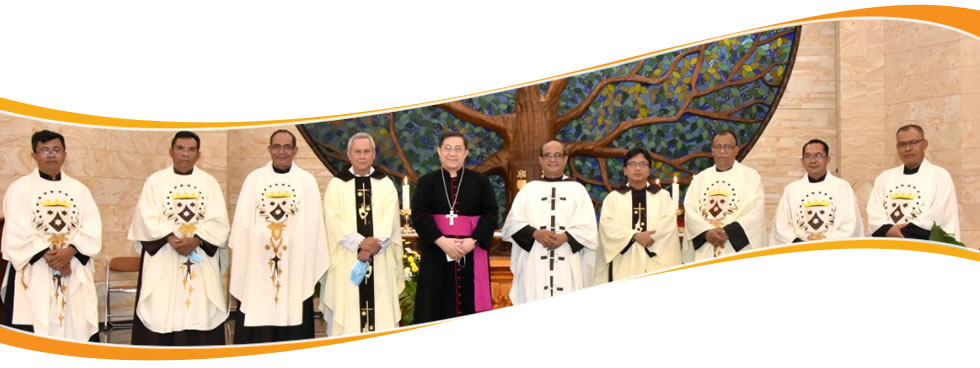
During the Provincial Chapter of the Polish Province held on 18-22 May 2015 were elected:
- Prior Provincial: Fr. Bogdan Meger, O.Carm.
- First Councilor: Fr. Tadeusz Popiela, O.Carm.
- Second Councilor: Fr. Zbigniew Czerwien, O.Carm.
- Third Councilor: Fr. Wieslaw Strzelecki, O.Carm.
- Fourth Councilor: Fr. Marcin Siemek, O.Carm.
Diocesan process for the Beatification of Mother Mary Ellerker of the Blessed Sacrament finishes its work.
On 16th May 2015, in the Holy Rosary Church in the Port of Spain, Trinidad and Tobago, Archbishop Joseph Harris, CSSp concluded the diocesan phase of the process for the Beatification of the Servant of God, Mother Mary Ellerker of the Blessed Sacrament (1875-1949), foundress of the Corpus Christi Carmelites. Now the process will be delivered to the Congregation for the Causes of Saints for the Roman phase.