Flowers for Easter Mass a Blessing from St. Titus Brandsma to the Church
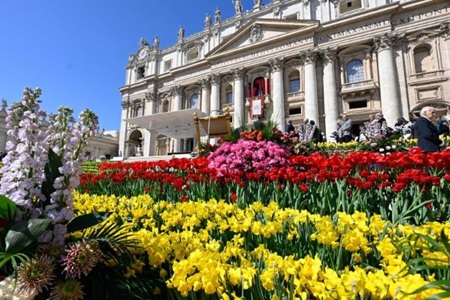
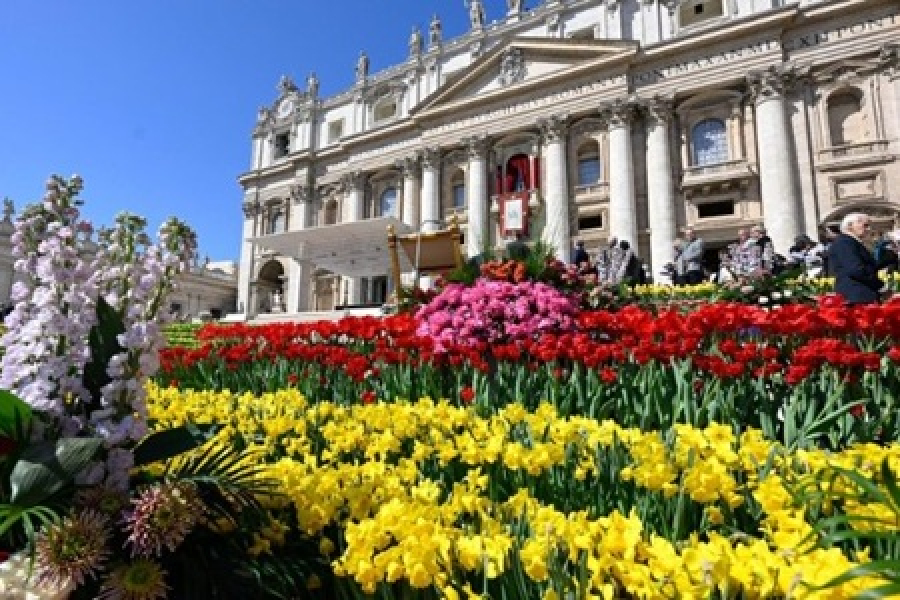
When Titus Brandsma was beatified as a martyr by Pope John Paul II on November 3, 1985, St Peter’s was alive with thousands of flowers from the martyr’s home country of the Netherlands. This set off a tradition of Dutch florists providing the flowers for the decoration of St. Peter’s Square and the basilica each Easter Sunday. The flowers are also part of the backdrop for the Urbi et Orbi blessing delivered by the pope from the balcony at the center entrance to St. Peters.
The NL Times reports that the tradition started following Pope John Paul II’s visit to Utrecht on May 12, 1985. The floral display during that visit is thought to have left such a powerful impression that the Dutch flower industry was asked to supply flowers for the beatification of Brandsma. They have been an annual Easter gift since 1986.
In 2026 there were 65,000 tulip bulbs, daffodils, hyacinths, and mini-daffodils; 220 white and orange violets; 7,800 flowers, including roses, delphiniums, anthuriums, chrysanthemums, gerberas, and mathiolas; 600 branches of plumosa; 80 azaleas and 600 long branches of willow catkins, long branches of eucalyptus, as well as various types of foliage,” according the Vatican.
Before leaving the Netherlands, all the plants were blessed by the president of the Dutch Bishops’ Conference.
Paul Deckers, in an online article in Thursd reminisced about his involvement in the floral decorations of St. Peter’s Square for Easter. He had been the “Head Arranger” for the Vatican donation for many years until 2021. His arrangements are noted for including branches, roots, leaves, mosses, and other natural materials, creating compositions that are symbolic, emotional, and often spiritual in character. His philosophy is “doing more by using less.” His efforts resulted in audiences with Popes John Paul II, Benedict XVI, and Francis.
For pictures of the flowers at the Vatican, go to: https://thursd.com/posts/thank-you-for-the-flowers-from-the-netherlands
On Easter Sunday afternoon, an article from the same NL Times pointed out the pope’s message on global conflict and his urging world leaders to “choose peace” as there is a growing public indifference to violence. But he failed to include a “Bedankt voor de bloemen (“Thank you for the flowers”) which ended a 40-year tradition in the papal address. The article also noted that his address included Arabic, Polish, and English among the 10 languages but not Dutch among the 10 languages he spoke.