









Displaying items by tag: Calendar of Feasts and Memorials
St. Albert of Trapani, Priest
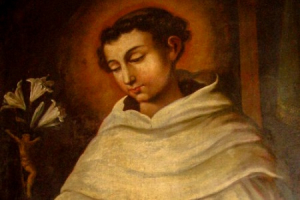
7 August Feast
The word of the Lord came to Elijah saying: Depart from here and go eastward, and hide yourself by the brook Cherith near the Jordan, and there you will drink from the brook. Now these salutary commands which the Holy Spirit prompted Elijah to obey, and this promise of good things which he was moved to desire, ought to be weighed word by word with the greatest care by us, monks and solitaries, and this in a mystical sense, for they contain the full meaning of our vocation. Indeed they point the way to prophetic perfection, which is the goal of our religious, eremitical life.
It will be seen that this type of life has two aims. One of them we can, with the help of God’s grace, achieve by our own efforts and the practice of virtue. This aim is to offer God a heart holy and pure from all actual stain of sin, and we achieve it when we become perfect and hidden in Cherith—that is, in charity, of which the Wise Man says: Charity covers all offenses. It was to bring Elijah to this state that God said to him: Hide yourself by the brook Cherith.
The other aim of this kind of life is something that can be bestowed on us only by God’s generosity: namely, to taste in our hearts and experience in our minds, not only after death but even during this mortal life, something of the power of the divine presence and the bliss of heavenly glory. And this is to drink from the brook of the enjoyment of God—the reward God promised Elijah when he said: There you will drink from the brook.
The prophetic, eremitical life must be undertaken by the monk with both these aims in view, as the Psalmist makes clear when he says to God: In a desert land where there is no road and no water I have come before you in the sanctuary to see your power and your glory. By choosing to live in a desert land where there is no road and no water as the means of coming before God in the sanctuary—with a heart, that is, free from sin—he demonstrates the first aim of the solitary life he has chosen, which is to offer God a heart that is holy, or pure from all actual sin. By adding the words to see your power and your glory he declares the second aim, which is in some measure to experience or see the power of the divine presence mystically in one’s heart and to taste the bliss of heavenly glory here already in this life.
The first aim, purity of heart, can be achieved with the help of God’s grace by effort and the practice of virtue. The second aim, experimental knowledge of divine power and heavenly glory, can be realized through purity of heart and perfect love; for our Lord said: Whoever loves me will be loved by my Father, and I will love him and reveal myself to him.
To read more ...
St. Titus Brandsma, priest and martyr

July 27 | Obligatory Memorial (Feast: Ger, Phil, Del Colombia)
A noted writer and journalist, in 1935, St. Titus was appointed adviser to the Dutch bishops for Catholic journalists. In the period leading up to and during the Nazi occupation in the Netherlands, he argued passionately against the National Socialist ideology, basing his stand on the Gospels. He continually defended the right to freedom in education and for a free the Catholic Press. As a result, he was imprisoned.
He passed from one prison or camp to another until he arrived in Dachau where he was killed on July 26, 1942. He was beatified as a martyr by Pope John Paul II on November 3, 1985 and was canonized by Pope Francis on May 15, 2022, in St Peter’s Square.
The Order’s petition to have the celebration of St. Titus Brandsma changed from an optional memorial to an obligatory memorial for the whole Order was accepted. The Provinces of Germany and the Philippines as well as the General Delegation in Columbia who have St. Titus as their patron celebrate the day as a feast.
Read more about the life of St. Titus Brandsma
Edizioni Carmelitane offers an incredible collection of writings, speeches, and letters by Tito Brandsma, the Carmelites’ most recent saint, including a play, a professional television production on DVD, and books in various languages.
St. Joachim and St. Anne, Protectors of the Order

26 July Memorial
The names of the parents of Mary are known from the apocryphal “Proto-Gospel of James” (II century). The cult to Saint Anne is documented in the East in the VI century, in the West in the X century; that of Saint Joachim in the XIV century. In the Byzantine rite the 25 of July reminds us the dedication in Constantinople of a Basilica in honour of Saint Anne.
To read more ...
Blessed John Soreth, priest

July 24 | Memorial
John Soreth was unflagging in his efforts at renewal, during what was an especially critical period for both the Church and the Order. He dedicated himself entirely to the reform of the Order, travelling across Europe, making canonical visitations and promoting a more faithful observance of religious life both in the older Provinces and convents and in the Mantuan Reformed Congregation.
He was instrumental in the development of the Lay Carmelite Third Order.
Read more ...
Books on John Soreth (in Italian) from Edizioni Carmelitane, the Carmelites' online bookstore:
Expositio paraenetica in regulam carmelitarum: Un commento alla regola del Carmelo
Giovanna D’Aniello, O. Carm.
Il B. Jean Soreth (1394-1471). Priore generale, riformatore e maestro spirituale dell’Ordine Carmelitano
Giovanni Grosso, O. Carm.
Elijah and His Portrayal in Modern Art

20 July Solemnity
Many representations are now on display in churches and museums around the world of the Prophet Elijah. Their quality varies greatly but each has the potential to draw the viewer into prayer and reflection on the various actions the Prophet of God performed. Marc Chagall (1887-1985) is a more recent artist who attempted to bring the Old Testament stories to life as part of his 105-etching series of the Old Testament.
The prints, created between 1930 and 1956 contain a number specific to Elijah and are referred to as the “Elijah Series.” They include Elijah's vision, his interactions with the widow of Zarephath, and his fiery ascent to heaven in a chariot of fire.
Born Moishe Shagal in 1887, in the Pale of Settlement under Imperial Russia (today: Belarus), Chagall was a devoutly cultural and spiritual Hasidic Jew. He was not strictly observant. Yet his art mixed his ideas of Eastern European culture and Jewish folklore. Flying figures, elements of Jewish tradition, peasant life, and animals are frequent motifs in his art.
Jackie Wullschlager, who wrote a biography of Chagall, says his work on the biblical scenes portrayed a "human story, ... not with the creation of the cosmos but with the creation of man, and his figures of angels are rhymed or combined with human ones." Drawing on an example of an earlier work “Abraham and the Three Angels," she points out that the angels sit and chat over a glass of wine "as if they have just dropped by for dinner."
The Elijah etchings—such as Elijah on Mount Carmel and Elijah Touched by an Angel—are celebrated for their dreamlike, expressionistic style. Rather than focusing on historical realism, Chagall infused these Old Testament scenes with spiritual intensity and mysticism, utilizing light and shadow to distinguish the mortal from the divine. They provide us with the opportunity to enter deeply into the biblical event.
To read more ...
St. Teresa of Jesus "of the Andes," Virgin
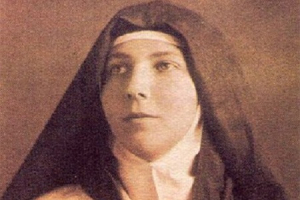
July 13 | Optional Memorial in Latin America
Second Reading from the Office of Readings for July 13
Jesus alone is beautiful; he is my only joy. I call for him, I cry after him, I search for him within my heart. I long for Jesus to grind me interiorly so that I may become a pure host where he can find his rest. I want to be athirst with love so that other souls may possess this love. I would die to creatures and to myself, so that he may live in me.
Is there anything good, beautiful or true that we can think of that would not be in Jesus? Wisdom, from which nothing would be secret. Power, for which nothing would be impossible. Justice, which made him take on flesh in order to make satisfaction for sin. Providence, which always watches over and sustains us. Mercy, which never ceases to pardon. Goodness, which forgets the offenses of his creatures. Love, which unites all the tendernesses of a mother, of a brother, of a spouse, and which, drawing him out of the abyss of his greatness, binds him closely to his creatures. Beauty which enraptures ... what can you think of that would not be found in this Man-God?
Are you perhaps afraid that the abyss of the greatness of God and that of your nothingness cannot be united? There is love in him. His passionate love made him take flesh in order that by seeing a Man-God, we would not be afraid to draw near him. This passionate love made him become bread in order to assimilate our nothingness and make it disappear into his infinite being. This passionate love made him give his life by dying on the cross.
Are you perhaps afraid to draw near him? Look at him, surrounded by little children. He caresses them, he presses them to his heart. Look at him in the midst of his faithful flock, bearing the faithless lamb on his shoulders. Look at him at the tomb of Lazarus. And listen to what he says of the Magdalene: “Much has been forgiven her, because she has loved much.” What do you discover in these flashes from the Gospel except a heart that is good, gentle, tender, compassionate; in other words, the heart of a God?
He is my unending wealth, my bliss, my heaven.
Blessed Jane Scopelli, Virgin
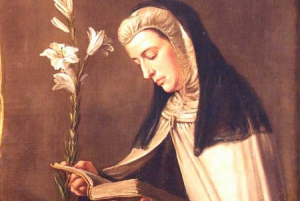
9 July Optional Memorial
Read more about Blessed Jane Scopelli here
Blessed Maria Crocifisso Curcio, Virgin

July 4 | Optional Memorial in the Italian provinces
GREETINGS BY HIS HOLINESS BENEDICT XVI AT THE CONCLUSION OF THE BEATIFICATION CEREMONY
I now greet the pilgrims who have come from various regions of Italy and the world to honor Blessed Maria Crocifissa Curcio. My heartfelt thoughts go out to each and every one of you, especially to those who are part of the spiritual family of the Missionary Carmelite Sisters of Saint Teresa of the Child Jesus.
This newly beatified woman placed the presence of the merciful Jesus—whom she encountered and adored in the Sacrament of the Eucharist—at the center of her life. A genuine passion for souls characterized the life of Mother Maria Crocifissa, who zealously practiced “spiritual reparation” to reciprocate Jesus’ love for us. Her life was one of constant prayer, even as she went about serving others, especially poor and needy young women. May Blessed Maria Crocifissa Curcio continue to watch over from heaven the Congregation she founded and all her devotees.
St. Elisha, prophet

June 14 | Memorial
Elisha, the Disciple Par Excellence
Elisha is not Elijah's only disciple. According to a Jewish tradition found in the Vitae prophetarum, in Jerome's introduction to his Commentary on the Book of Jonah, and in some other patristic writings, Jonah was the son of the widow of Zarephath, brought back to life by the prophet and became Elijah's disciple: “Jonah, after his death, was resurrected by the prophet Elijah: he followed him, suffered with him, and, because of his obedience to him, merited the favor of the gift of prophecy” (Arabic Jacobite Synaxarion of September 22).
G. Baconthorp knew this tradition, which he derived from Jerome. G. de Cheminot, following F. Ribot, makes a disciple of the man whom Elijah sent back when he was fleeing from Jezebel, the first one. It is this man whom Elijah sends to the top of Mount Carmel to watch for the coming of the rain.
According to the Vitae prophetarum, Obadiah, Ahab's steward who hid the hundred prophets, fifty by fifty, sent by Ahaziah, became a disciple of Elijah. Theodore Bar-Koni, an eighth-century Nestorian author, specifies that he was endowed with the gift of prophecy after following Elijah. Medieval Carmelites list Obadiah among the great disciples of Elijah. Philippe Ribot is the only 14th-century Carmelite to also make the prophet Micah a disciple of Elijah.
In this group of disciples, Elisha occupies the first place (Cheminot, Ribot).
Read more ...
Photo © Nick ThompsonProphet Elisha from a series produced c1690 for the Chapel of Our Lady of Mount Carmel, Couvent de Grande Carme, Toulouse by Marc Arcis. Musée des Augustins, Toulouse.
Bl. Hilary Januszewski, Priest and Martyr

June 12 | Optional Memorial
Hilary Januszewski was born on 11 June 1907 in Krajenki (Poland) and was given the name of Pawel. He received a Christian education from his parents, Martin and Marianne. In 1927 entered the Order of Carmel. He completed his noviciate in Leopoli and on 30 December 1928 made his simple profession. At the end of his philosophical studies in Cracow he was sent to Collegio Internazionale Sant'Alberto, Rome. He was ordained priest on 15 July 1934. He obtained his lectorate in theology and the prize for the best students of the Roman Academy of St. Thomas and in 1935 returned to Poland to the monastery in Cracow.
On 18 September 1940 the gestapo deported four friars from the Carmel in Cracow. In December, when other friars were arrested, Fr. Hilary decided to present himself in exchange for an older and sick friar. From that day his Calvary began. He was sent to the prison of Montelupi (Cracow), then to the concentration camp of Sachsenchausen and in April 1941 to the concentration camp of Dachau. There he was a model of prayer life, encouraging others and giving hope for a better tomorrow. Together with the other Carmelites, among whom was Saint Titus Brandsma, they often joined in prayer.
Meanwhile in barrack 25 of the concentration camp, typhus was spreading. To help the sick, 32 priests presented themselves to the authorities. A couple of days later, Fr. Hilary Januszewski spontaneously joined the group. His apostolate lasted 21 days because, infected by typhus, he died on 25 March 1945, a few days before the liberation of the concentration camp.
Read more ...
A multi-lingual book on Bl. Hilary Januszewski is available from Edizioni Carmelitane. The book, giving the reader insight into this Carmelite's life and ultimate gift of his own life for other prisoners, is written in Polish, English, Italian and Spanish and is available at a special price in our webstore with a 30% discount (shipping expenses not included).
Enter the code Januszewski2026 at checkout to use the promo.


